What should you look for when choosing?
If you have coeliac disease, first check that the packaging says gluten-free. Only then should you compare varieties based on other ingredients, nutritional information and how easy they are to find.
| What to look for | What to check when buying | Who is this important for? |
|---|
| Gluten-free labelling |
Look for ‘gluten-free’ or the Crossed Grain symbol on the current packaging. Don’t rely on oats or buckwheat appearing in the product name. |
If I have coeliac disease, I need to be able to identify gluten-free products before choosing based on flavour. For around 36% of consumers, this check comes first. |
| Ingredients and allergens |
Read the ingredients list and allergen information for each flavour, including any ‘may contain’ statements. |
I want to know whether a granola contains ingredients I need to avoid, even if it is labelled gluten-free. Around 29% of consumers put this check first. |
| Sweetness and nutritional information |
Compare sugars and fibre per 100 g; distinguish the sugars figure from information about added sugars. |
For my sweet breakfast, I want to choose a flavour whose nutritional information suits my preferences. This is the most important follow-up question for around 21% of consumers. |
| Pack size and availability |
Check the pack size and make sure that particular variety is available in your shop or online. |
I want to be able to buy my chosen granola as part of my usual shop, without having to switch to another flavour. This matters most to around 14% of consumers. |
Brands and product ranges compared
The information below applies to specific varieties, not every granola from these brands. Use the current packaging to make your final choice.
AH Glutenvrij
Albert Heijn describes a 250 g granola made with gluten-free wholegrain oats, seeds, almonds and rice syrup.
- According to Albert Heijn, this variety is produced in a completely gluten-free environment.
- This variety contains almonds and lists 11 g of added sugars per 100 g. Check the current ingredients and allergen information on the packaging.
Holie's
The Gluten Free Granola Buckwheat & Nuts described by Jumbo is a variety made with buckwheat and nuts.
- Jumbo lists 1,9 g of sugars and 14 g of fibre per 100 g for this variety.
- This variety contains almonds and hazelnuts, and may also contain other nuts, peanuts and soya, among other things. This information does not necessarily apply to other Holie's flavours.
Free Of gluten
Jumbo describes a gluten-free crunchy granola with hazelnuts and honey.
- According to Jumbo, the nut and honey variety described carries the Crossed Grain symbol.
- This variety contains hazelnuts and soya, and lists 21 g of sugars per 100 g. If sweetness matters to you, compare this figure with other varieties.
Eat Natural
The Super Granola described combines gluten-free oats, buckwheat, seeds and honey.
- The product information shows the Crossed Grain symbol and lists 17 g of protein per 100 g for this variety.
- This variety may contain nuts, peanuts, soya, sesame and milk, among other things. Also check availability before relying on it being in stock when you shop.
Gluten-free granola at Joybuy
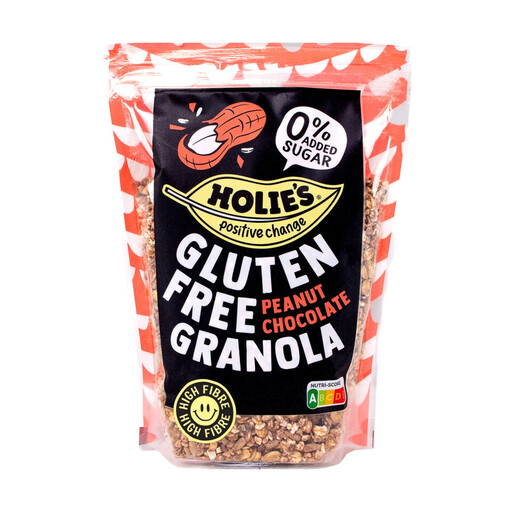
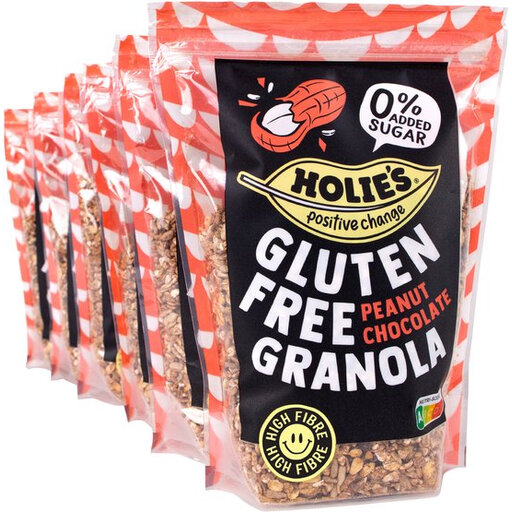
These two packs are the Holie's Peanut Chocolate variety for a sweet breakfast: one bag or a pack of six bags. If you have coeliac disease or need to avoid allergens, always check the labelling on the packaging you receive.
 No image available
Holie's Granola Glutenfree Peanut Chocolate 330 g
This is an option to consider if you’re looking for granola with peanuts and chocolate. The product name says Glutenfree; check that labelling on the current packaging.
The product information lists peanuts and possible traces of almonds, cashews, hazelnuts, pecans and soya, among other things. Read the allergen information on the packaging before choosing this variety.
View at Joybuy
 No image available
Holie's Granola Glutenfree Peanut Chocolate 6 × 330 g
This pack of six bags is an option to consider if you have the same flavour for breakfast regularly. The product name says Glutenfree; check that labelling on each pack you receive.
The product information lists peanuts and possible traces of almonds, cashews, hazelnuts, pecans and soya, among other things. Read the allergen information on the packaging before choosing this variety.
View at Joybuy
Frequently asked questions
Is granola with oats automatically suitable if you have coeliac disease?
No. Choose granola whose current packaging says ‘gluten-free’ or displays the Crossed Grain symbol. The European Union also sets requirements for oats used in products labelled gluten-free, including protection against contamination with wheat, rye and barley.
How can I keep my gluten-free granola separate from regular breakfast cereal at home?
Use clean bowls, spoons and storage jars, and make sure the granola does not come into contact with regular granola, bread crumbs or other gluten-containing products. Also take care with shared scoops and open packets.
Should I also check nuts and sugars in gluten-free granola?
Yes. Gluten-free does not mean nut-free, and it tells you nothing about the sugar content. The Holie's Buckwheat & Nuts described by Jumbo lists 1,9 g of sugars per 100 g and contains almonds and hazelnuts; the Free Of gluten nut and honey variety lists 21 g of sugars per 100 g and contains hazelnuts and soya.
Why should I check the packaging again if I’m buying the same granola?
Because the information on the current packaging applies to the variety you’re buying. Albert Heijn warns that product information can change, so check the gluten-free labelling, ingredients and allergens again.


