What should you look for when choosing?
Start with the packaging and whether the product is suitable for the person taking part. Then decide whether the treat needs to look like an Easter egg, or whether an individually wrapped biscuit or cake would work just as well for the hunt.
| What to consider |
What to check when buying |
Who is this important for? |
| Gluten-free labelling |
Look for the ‘gluten-free’ label or Crossed Grain symbol on the current packaging, and read the ingredients and allergen information too. |
If someone with coeliac disease is taking part, I don't want to judge by the look of the chocolate. For around 36% of consumers, being able to verify that a product is gluten-free comes first. |
| A suitable treat |
Decide whether it needs to be shaped like an Easter egg, or whether a wrapped gluten-free biscuit or cake will do. If choosing an oat product, check whether oats are suitable for the person taking part. |
I'm looking for a small Easter treat, even if it's not a Kano or an Easter egg. Around 29% of consumers put this kind of seasonal alternative first. |
| Easy to identify when handing out |
Keep regular and gluten-free treats separate and easy to identify; keep the packaging so you can check it when handing them out. |
With different treats hidden around, I want to be able to find the gluten-free option without any mix-ups. For around 21% of consumers, this is their main concern. |
| Availability |
Check the latest product information and stock in store; use a product category to help with your search, not as confirmation that every item is suitable. |
If I'm shopping shortly before Easter, I want to find a suitable treat without relying on an old promotion. For around 14% of consumers, practical availability comes first. |
A biscuit alternative on Joybuy
This product is a chocolate-coated biscuit alternative for the Kano's treat occasion, not an Easter egg. If someone has coeliac disease, its suitability still depends on the current packaging and on whether oats are suitable for them.
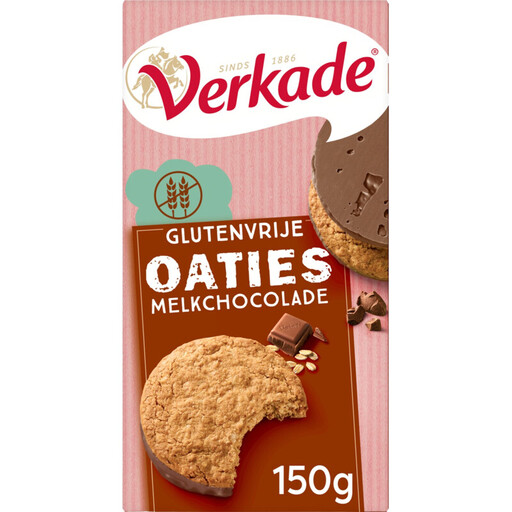 Image unavailable
Verkade Gv Oaties milk chocolate 150 g
A biscuit-style treat for anyone who doesn't necessarily want to hand out a chocolate egg during the Easter egg hunt.
Joybuy describes this 150 g variety as containing milk chocolate, gluten-free oats and gluten-free oat flour.
If someone has coeliac disease, check the gluten-free label, ingredients and allergen information on the current packaging. According to the Joybuy product description, a small number of people with coeliac disease may be sensitive to oat protein (avenin).
View on Joybuy
Frequently asked questions
Is a chocolate Easter egg gluten-free if there’s no wheat in the ingredients list?
You can't tell just from the absence of wheat. If someone has coeliac disease, choose an Easter egg based on the current gluten-free label or Crossed Grain symbol, and read the full ingredients and allergen information for that specific product.
When can a product be labelled ‘gluten-free’ in the Netherlands?
According to the Dutch Coeliac Society, under EU rules a product can be labelled ‘gluten-free’ if it contains less than 20 mg of gluten per kg. Check the label on the packaging you're actually buying; a general product category doesn't provide this information for every item.
Can I use loose Easter eggs without packaging?
If you're buying unwrapped Easter eggs, ask for the allergen information before choosing them; according to the Netherlands Food and Consumer Product Safety Authority, this information must also be available for unpackaged food. If you're arranging a clearly identifiable gluten-free treat for someone with coeliac disease, an individually wrapped product with a gluten-free label makes it easier to check.
Are biscuits made with gluten-free oats suitable for everyone with coeliac disease?
No. Gluten-free oats aren't automatically suitable for everyone taking part. Joybuy notes that a small number of people with coeliac disease may be sensitive to oat protein (avenin) in Verkade Gv Oaties. Check whether oats are suitable for the person in question and read the current packaging.
Should I read the label again if I've bought the same product before?
Yes, read the packaging every time you buy it. The Dutch Coeliac Society points out that a change in ingredients can affect whether a familiar product is suitable, particularly if the packaging says it has been updated.


