
Anyone who needs to be strict about gluten-free
You’re looking for breakfast cereal for someone with coeliac disease. Check the gluten-free label and current packaging first; taste and any wholegrain claim come afterwards.


With coeliac disease, a clear gluten-free label takes priority over choosing wholegrain cornflakes. If you mainly want cornflakes, compare gluten-free options. If wholegrain is more important, look for gluten-free wholegrain oats that you can tolerate. For either choice, check the current packaging and compare nutritional values on the same basis.
You’re looking for breakfast cereal for someone with coeliac disease. Check the gluten-free label and current packaging first; taste and any wholegrain claim come afterwards.
You want to consider wholegrain products as part of a gluten-free diet. Compare cornflakes with gluten-free wholegrain oats or oat flakes, without assuming that a fibre claim means the same thing as wholegrain.
You’re looking for a breakfast that takes little preparation. For gluten-free cornflakes, compare fibre, sugars and salt per 100 g, and bear in mind what you add yourself.
If you have coeliac disease, start with the gluten-free label. Then decide whether you want cornflakes or a wholegrain oat product; only then compare nutritional values and portion sizes.
| What to consider | What to check when buying | Especially relevant for |
|---|---|---|
| Gluten-free label | Read the label and check the current ingredients and allergen information. Under Commission Implementing Regulation (EU) No 828/2014, products labelled ‘gluten-free’ must contain no more than 20 mg/kg of gluten in the final product. | When I’m buying breakfast cereal for someone with coeliac disease, I don’t want to judge whether it’s suitable based on the type of grain alone. For around 46% of consumers, the gluten-free label comes first. |
| Wholegrain and fibre | Look separately for a wholegrain claim and compare fibre per 100 g. If choosing oats, opt for a gluten-free variety. | Once I’ve checked that a product is gluten-free, I also want to know whether it’s genuinely wholegrain. Around 36% of consumers say this is their top priority. |
| Nutritional value and convenience | Compare fibre, sugars and salt per 100 g; also check the stated portion size and what you add to your breakfast. | For a quick everyday breakfast, I want to compare products using the same nutritional basis. For around 18% of consumers, this practical comparison matters most. |
The raw ingredient alone doesn’t tell you whether the finished product is suitable for someone with coeliac disease.
Check the current packaging to make sure the cornflakes are explicitly labelled gluten-free.
Wholegrain breakfast cereals may contain wheat or barley. Kellogg's lists both grains as ingredients in Special K Original.
Check the gluten-free label first. Then see whether the suitable product also meets your wholegrain preference.
A gluten-free label doesn’t tell you how much fibre, sugar or salt a product contains.
Compare the nutritional information per 100 g and also check the portion size and any extras you add.
Jumbo says its Lekker Vrij van Gluten Cornflakes product is no longer available in its online range.
Before buying, check which product the shop currently offers and read the packaging for that version again.
Compare the specific product from each brand: gluten-free cornflakes and wholegrain breakfast cereal don’t automatically meet the same requirements.
Albert Heijn lists both gluten-free cornflakes and gluten-free wholegrain oat products.
Jumbo has listed cornflakes in its Lekker Vrij van Gluten range.
Consenza Pure & Free Glutenvrije Cornflakes is a specific cornflake product to assess by checking its label.
Kellogg's products include both cornflakes and other breakfast cereals, so check each variety separately.
Lidl lists cornflakes in its range.
ALDI lists both cornflakes and wholegrain breakfast products under Golden Bridge.
These two pack options are granola, not cornflakes. They may suit anyone who wants to consider a breakfast cereal with ‘glutenfree’ in the product name as an alternative to cornflakes; the name doesn’t confirm a wholegrain claim on the packaging. If you have coeliac disease, check the current gluten-free label and whether you can tolerate oats.
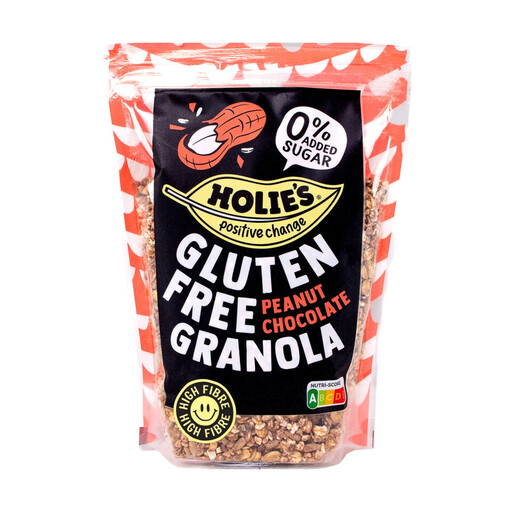 Image unavailable
A single pack of granola to consider as an alternative to cornflakes. If you have coeliac disease, check the gluten-free label on the packaging and read the allergen information, particularly for oats and peanuts.
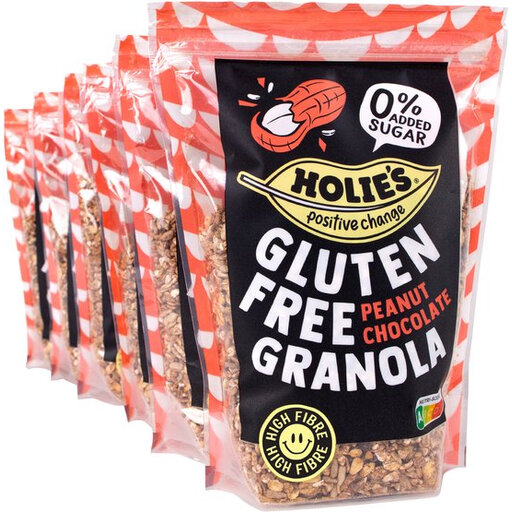 Image unavailable
This multipack is a handy option if you want to buy several bags of the same granola. As with the single pack, check the current gluten-free label, the allergen information and whether you can tolerate oats.
Not based on the name or the fact that they’re made from maize alone. Check that the current packaging explicitly labels the cornflakes gluten-free; under Commission Implementing Regulation (EU) No 828/2014, products with this label must contain no more than 20 mg/kg of gluten in the final product.
Not necessarily: gluten-free and wholegrain describe different properties. Albert Heijn states that AH Glutenvrij Cornflakes contains 95% maize grits; if wholegrain matters to you, look for a separate wholegrain claim.
Yes. A product labelled both gluten-free and wholegrain oats could fit the bill, provided you can tolerate oats. The Dutch Coeliac Society recommends choosing oats with the Crossed Grain symbol where possible and notes that a small number of people with coeliac disease also react to pure oats.
Because packaging information can change. Albert Heijn warns that product information may change, so check the ingredients, allergens and nutritional information again each time you buy it.
No. A wholegrain claim doesn’t make wheat or barley gluten-free. Kellogg's lists wholegrain wheat and barley in Special K Original; if you have coeliac disease, choose a breakfast cereal whose current packaging confirms that it’s gluten-free.