If you have coeliac disease, only choose chocolate breakfast cereals after checking that the current packaging says ‘gluten-free’. Then decide whether you also need the strict ‘sugar-free’ claim: under EU rules, this means no more than 0.5 g of sugars per 100 g, while ‘no added sugars’ means something different. If you need both claims, check for them on the same packaging; don’t assume one from the other.
Who is this choice relevant to?
People with coeliac disease
You’re looking for chocolate breakfast cereals with an explicit ‘gluten-free’ statement on the packaging. Under EU rules, this claim can be used when the food contains no more than 20 mg/kg of gluten for the final consumer.
People keeping an eye on sugar
You want a chocolate flavour, but you know there’s a difference between ‘sugar-free’ and ‘no added sugars’. Under EU rules, the ‘sugar-free’ claim has a limit of no more than 0.5 g of sugars per 100 g.
Families looking for a regular breakfast option
You want to find a chocolate product that fits into your usual shopping routine. Compare the exact variant and check the packaging again before use for the ‘gluten-free’ statement, ingredients and allergens.
What should you look for when choosing?
If you have coeliac disease, an explicit ‘gluten-free’ statement is essential, even if the sugar claim, other ingredients or your shopping routine are your first consideration.
| What to look for |
What to check when buying |
Who it matters to |
| ‘Gluten-free’ statement |
Check that the packaging for the exact variant says ‘gluten-free’. Under EU rules, this claim means no more than 20 mg/kg of gluten. |
If I’m choosing chocolate breakfast cereals with coeliac disease, I want to see that statement on the packaging of the product I’m buying; around 33% of consumers prioritise this confirmation. |
| Sugar claim |
Know the difference between ‘sugar-free’ and ‘no added sugars’. Also check ‘of which sugars’ in the nutrition information per 100 g. |
If you have a strict sugar target, you don’t want ‘no added sugars’ to be mistaken for ‘sugar-free’; around 33% of consumers put this distinction first. |
| Ingredients and allergens |
Read the ingredients and allergen information for the exact variant; if it contains oats, check for a ‘gluten-free’ statement too. |
If I have an additional allergy, I want to know what ingredients the product contains before choosing it; for around 20% of consumers, this is the most important additional consideration. |
| Practical availability |
Check that your chosen variant is available through your usual shop or ordering route, and check the packaging again when it arrives. |
If I’m buying breakfast regularly, I want to be able to find a variant that I can check against the same criteria each time; around 14% of consumers prioritise this practical consideration. |
Common mistakes
-
Reading ‘no added sugars’ as ‘sugar-free’
Under EU rules, ‘sugar-free’ can only be used when a product contains no more than 0.5 g of sugars per 100 g. A ‘no added sugars’ statement doesn’t confirm that the product meets this limit.
Decide which claim you’re looking for. For products with no added sugars, also check ‘of which sugars’ in the nutrition information.
-
Mistaking a sugar claim for a ‘gluten-free’ statement
Jumbo describes Quaker Cruesli Zero Sugar Added Chocolate as being made without added sugars and/or sweeteners. This description doesn’t confirm that the chocolate cruesli is suitable for people with coeliac disease.
If you have coeliac disease, first check that the packaging for the specific product says ‘gluten-free’, then look at the sugar information.
-
Relying only on an online category page
Product information can change. Albert Heijn therefore advises reading the packaging before using the product.
When buying and before eating, check the packaging for the exact variant for a ‘gluten-free’ statement, ingredients and allergens.
-
Choosing oat-based granola without checking the product
The presence of oats doesn’t in itself mean that granola is gluten-free. If you have coeliac disease, the statement on the specific product is what matters when choosing.
Only choose chocolate granola containing oats after checking that its packaging explicitly says ‘gluten-free’.
Brands and supermarket ranges to explore
Albert Heijn / AH Glutenvrij
Albert Heijn includes AH Glutenvrij Krokante muesli chocolade in its range of gluten-free breakfast cereals.
- You can find a chocolate muesli option within its gluten-free range.
- Check the current packaging for sugar information and ingredients; being in this category isn’t a ‘sugar-free’ claim.
Jumbo
Jumbo stocks products including Quaker Cruesli Zero Sugar Added Chocolate and Holie's Gluten Free Granola Peanut Chocolate.
- The two products offer separate points of reference for checking a sugar statement and a ‘gluten-free’ statement.
- Don’t assume that a claim for one product applies to the other; check both requirements on the packaging of the same variant.
Kellogg's
Jumbo lists Kellogg's Coco Pops Chocos among its standard breakfast cereals.
- This product can be a familiar chocolate breakfast cereal to compare labels against.
- If you have coeliac disease or a strict sugar target, don’t rely on the product category; check the packaging for the statements you need.
Chocolate granola on Joybuy
These two packs of Holie's Peanut Chocolate are chocolate granola options to compare if you’re looking for a gluten-free choice. If you have coeliac disease, check the current packaging for a ‘gluten-free’ statement. Assess any sugar target separately using the nutrition information.
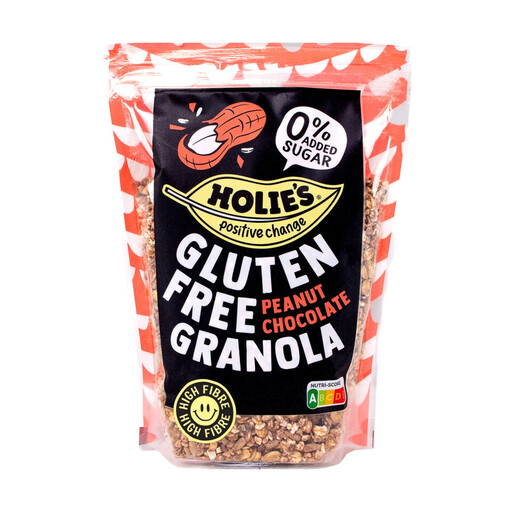 Image unavailable
Holie's Granola Glutenfree Peanut Chocolate, 330 g
This chocolate and peanut granola is worth comparing with other gluten-free breakfast options, provided you check the statement on the current packaging.
Pack size: 330 g. To check your sugar target, read the nutrition information per 100 g and check the ingredients and allergens.
View on Joybuy
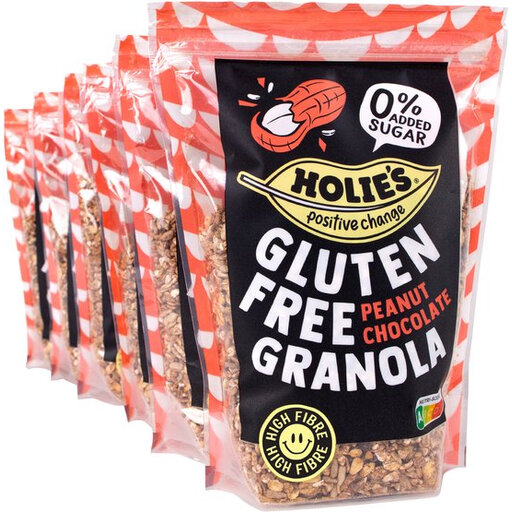 Image unavailable
Holie's Granola Glutenfree Peanut Chocolate, 6 x 330 g
This chocolate and peanut granola comes in a pack of six for anyone comparing gluten-free breakfast options; check the statement on the current packaging.
Pack size: 6 x 330 g. To check your sugar target, read the nutrition information per 100 g and check the ingredients and allergens.
View on Joybuy
Frequently asked questions
What does ‘gluten-free’ mean for breakfast cereals?
Under EU regulations, ‘gluten-free’ can be used if the food contains no more than 20 mg/kg of gluten for the final consumer. Check for this statement on the packaging of the exact breakfast cereal variant you choose.
Does ‘no added sugars’ mean the same as ‘sugar-free’?
No. EU rules only allow the claim ‘sugar-free’ when a product contains no more than 0.5 g of sugars per 100 g; a ‘no added sugars’ statement doesn’t confirm that it meets this limit. So also check ‘of which sugars’ in the nutrition information.
Is chocolate cruesli with no added sugars suitable for people with coeliac disease?
A sugar statement alone doesn’t make chocolate cruesli suitable for people with coeliac disease. Jumbo describes Quaker Cruesli Zero Sugar Added Chocolate as being made without added sugars and/or sweeteners; check separately whether the current packaging for the product says ‘gluten-free’.
Why should I read the label if the online shop says ‘gluten-free’?
The label on the exact variant is what you should check before use. Albert Heijn advises reading the packaging because product information can change; look for a ‘gluten-free’ statement, ingredients and allergens.


