Who is this relevant to?

A student with coeliac disease in a shared kitchen

They’re looking for chocolate biscuits labelled gluten-free and a place to store the packet separately and securely. The Dutch Coeliac Society highlights the importance of limiting contact with crumbs and shared kitchen utensils.

A student who also avoids lactose

As well as a gluten-free label, they need a separate lactose-free product label and should check the other allergens. Jumbo displays both labels for Céréal chocolate biscuits.

A student looking to stock up

Consider packet size, availability and a suitable place to store them. You still need to check the label on every product you intend to keep as a gluten-free staple.

What should you look for?

Start by checking that the specific packet is labelled gluten-free. Then consider any other dietary requirements and how you’ll store the biscuits in a shared kitchen.

What to consider What to check when buying Who it matters to
Gluten-free label Read the current packaging: does it say ‘gluten-free’, and what does it say about the ingredients, allergens and any warnings? In a shared kitchen, I don’t want to rely on the brand name when I have coeliac disease. For around 50% of consumers, being able to verify that a product is gluten-free is the top priority.
Other dietary requirements Check for a separate lactose-free label if you need one, as well as other allergens and any ‘may contain’ statements. If I also avoid lactose, the biscuit needs to meet both requirements. For around 20% of consumers, this additional dietary requirement matters most.
Stocking up and storage Check the packet size and current availability, and find a way to store the packet sealed and separately once opened. For my student room, I want to store biscuits somewhere my housemates can’t get into an open packet. For around 30% of consumers, practical stock planning is the top priority.

Common mistakes

  • Assuming a familiar brand has a gluten-free version

    A brand name or chocolate flavour tells you nothing about the ingredients in a specific biscuit. Lotus lists wheat flour in its regular Biscoff Original Speculoos.

    If you have coeliac disease, choose a specific version based on the current gluten-free label, ingredients and allergen information on the packet.

  • Confusing gluten-free with free from other allergens

    According to its product information, Verkade Glutenvrije Oaties Melkchocolade contains milk and soya, among other ingredients. A lactose-free label on another biscuit doesn’t mean it’s free from all other allergens either.

    Also read the information about milk, soya and any other allergens that are relevant to you, including ‘may contain’ statements.

  • Leaving an opened packet unsealed

    In a shared kitchen, crumbs or shared utensils can bring gluten-containing food into contact with your biscuits. The Dutch Coeliac Society advises keeping gluten-free food well sealed and separate.

    Agree on a separate storage place with your housemates, and make sure worktops and utensils are clean when you take a biscuit.

  • Assuming a limited-time product will always be in stock

    Jumbo no longer lists Damhert Glutenvrije Chocolade Haverkoek in its online range. Lidl says its extra gluten-free products are currently unavailable.

    Check availability before relying on a regular supply, and have another suitable product in mind.

    If your usual packet isn’t available, you may need to make an extra trip to the shops.

Brands and supermarket ranges to consider

Verkade

Glutenvrije Oaties Melkchocolade is an option if you’re specifically looking for an oat biscuit with milk chocolate.

  • Albert Heijn lists this version as gluten-free in a 150 g packet.
  • According to the product information, this version contains oats, milk and soya, and may contain nuts.

Jumbo Lekker Vrij

This range is worth considering if you’re looking for a gluten-free chocolate digestive at Jumbo.

  • Jumbo lists Lekker Vrij van Gluten Digestives Melkchocolade in a 165 g packet.
  • Check the allergens on the specific packet; the product name doesn’t tell you about other versions in the range.

Céréal

Céréal chocolate biscuits are worth considering if you need both a gluten-free and a lactose-free label.

  • Jumbo displays both labels on the 150 g packet.
  • Check the current packet for soya and any warnings about other allergens.

Albert Heijn Glutenvrij

The supermarket’s gluten-free biscuit category is a good starting point for exploring specific chocolate options.

  • Albert Heijn lists, among others, AH Glutenvrij Chocolate chip cookies and Verkade Glutenvrije Oaties Melkchocolade.
  • Check the packaging of the version you choose; a supermarket category doesn’t replace the product information.

Lotus

Lotus Biscoff Original Speculoos shows why you can’t assume a familiar biscuit name means a product is gluten-free.

  • Lotus publishes the ingredients for this specific version.
  • Biscoff Original Speculoos lists wheat flour and isn’t a gluten-free alternative.

Gluten-free chocolate biscuits at Joybuy

If you’re looking for an oat biscuit with milk chocolate and a gluten-free product label, this Verkade version is one option. If you have coeliac disease, check the current packaging and any warnings. The label alone doesn’t answer every question about other allergens or handling in a shared kitchen.
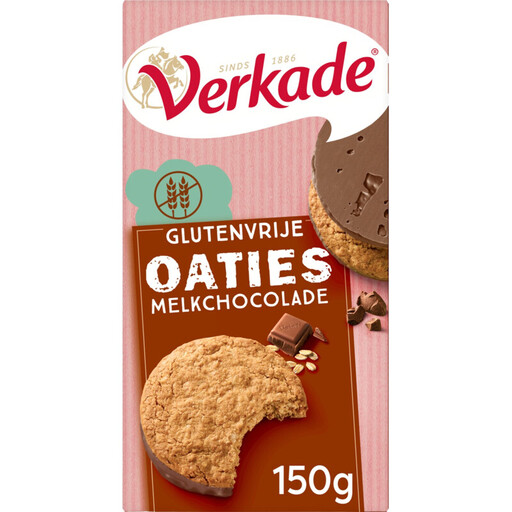
Verkade Glutenvrije Oaties Melkchocolade, 150 g

Verkade Glutenvrije Oaties Melkchocolade 150 g

An oat biscuit with milk chocolate for anyone looking for a chocolate biscuit labelled gluten-free.

150 g packet. According to the product information, this version contains oats, milk and soya, and may contain nuts. Check the current packet for warnings that are relevant to you, and keep it sealed and separate once opened.

View at Joybuy

Frequently asked questions

What does ‘gluten-free’ mean on a packet of chocolate biscuits?

Under European Commission Regulation (EU) No 828/2014, the label ‘gluten-free’ may be used when the finished product contains no more than 20 mg/kg of gluten. Also check the current ingredients, allergens and any warnings on the packet.

Are regular Lotus Biscoff biscuits gluten-free?

No. Lotus Biscoff Original Speculoos lists wheat flour and isn’t a gluten-free alternative. Always check the specific version you want to buy, rather than relying on the brand name alone.

How should I store gluten-free biscuits in a shared kitchen?

Keep the biscuits sealed and separate from food containing gluten, as advised by the Dutch Coeliac Society. Agree with your housemates how you’ll prevent crumbs on the worktop and contact with shared kitchen utensils.

Do I still need to check the allergens if the packet says ‘gluten-free’?

Yes. ‘Gluten-free’ doesn’t mean a biscuit is also free from milk, soya, nuts or other allergens. If you have additional dietary requirements, always check the ingredients and the packaging information about allergens that are present or may be present.

Can I rely on Lidl’s extra gluten-free range as a regular staple?

Don’t rely on that extra range without checking current availability: Lidl says its extra gluten-free products are currently unavailable. Before choosing an alternative for your supplies, check that the specific packet is labelled gluten-free too.
