
People with coeliac disease
When choosing a biscuit to enjoy with coffee or cake, the gluten-free label comes before the flavour or type of biscuit. Also check the ingredients and warnings on the packaging of the product you buy.


If you have coeliac disease, choose a chocolate biscuit with an explicit gluten-free label on the current packaging. Then compare oat biscuits, digestives and chocolate chip cookies according to the type of biscuit you’re looking for, but check separately whether milk, soya, nuts or other allergens are a concern for you.
When choosing a biscuit to enjoy with coffee or cake, the gluten-free label comes before the flavour or type of biscuit. Also check the ingredients and warnings on the packaging of the product you buy.
If you’re looking for a biscuit-style digestive, an oat biscuit or a chocolate chip cookie, you can compare those types once the gluten-free status of the product in question is clear.
Gluten-free doesn’t automatically mean lactose-free or free from milk, eggs, soya or nuts. So read the other allergen information for the specific biscuit too.
For someone with coeliac disease, an explicit gluten-free label is the first requirement. Only then should you choose the type of biscuit to suit your coffee break and check for any additional allergens.
| What to consider | What to check when buying | Who it matters to |
|---|---|---|
| Gluten-free label | Look for ‘gluten-free’ on the current packaging. For oat products, check the ingredients and warnings too. | If I have coeliac disease, I don’t want to base my choice solely on the absence of wheat from the ingredients list. For around 36% of consumers, checking gluten-free status comes first. |
| Other allergens | Read the ingredients, allergen information and any ‘may contain’ warning. | If I also need to avoid milk, soya or nuts, a gluten-free biscuit may still not be suitable. Around 29% of consumers give this additional restriction top priority. |
| Type of biscuit | Compare an oat biscuit or digestive with a chocolate chip cookie, paying attention to the ingredients used. | With my coffee, I’d rather have a biscuit-style biscuit than a cookie with chocolate pieces, or vice versa. For around 21% of consumers, this is the main deciding factor. |
| Availability | Check the current range and read the label again if you choose an alternative product. | If my usual biscuit isn’t available, I want to be able to choose an alternative without skipping the label check. For around 14% of consumers, this practical choice comes first. |
A biscuit with no mention of wheat doesn’t necessarily have confirmed gluten-free status. The label on the specific product matters for oat products too.
First look for ‘gluten-free’ on the packaging, then read the ingredients and warnings. The Dutch Coeliac Society highlights the importance of this gluten-free label.
The oat biscuits, digestives and chocolate chip cookies mentioned have different labelling for ingredients including milk, eggs, soya, hazelnuts and other nuts that may be present.
As well as gluten, check for every other allergen or intolerance that’s relevant to you. This check is still necessary with a lactose-free option.
The packaging you receive is what determines the ingredients and warnings for that product.
Read the label again before serving a biscuit, especially if coeliac disease or an additional allergy is a factor.
Oaties Milk Chocolate are an oat biscuit with chocolate, ideal with coffee.
Choco Chip Cookies are an option if you’re looking for a gluten-free cookie with chocolate pieces.
The chocolate chip cookies combine milk chocolate pieces with hazelnuts.
Digestives Milk Chocolate are a gluten-free digestive for anyone looking for a biscuit to enjoy with coffee.
These chocolate biscuits are for anyone looking for a product labelled both gluten-free and lactose-free.
This product selection is for anyone looking for a gluten-free oat biscuit with milk chocolate to enjoy with coffee. The oats and other allergens mean you should check the current packaging here too.
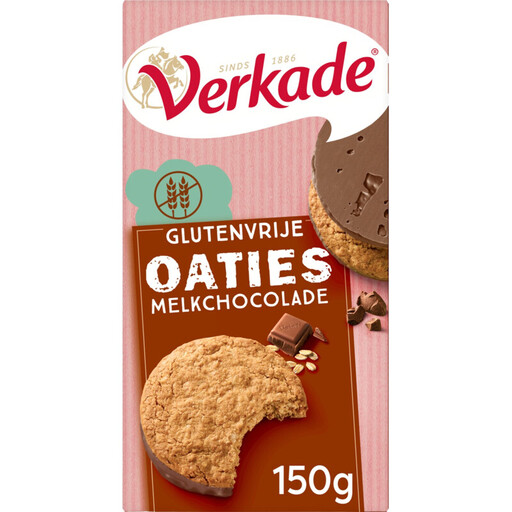 Image unavailable
For anyone looking for a crunchy gluten-free oat biscuit with milk chocolate to enjoy with coffee.
Albert Heijn lists Verkade Oaties Milk Chocolate as containing 31% gluten-free oat flakes and 25% milk chocolate. The product information lists milk, oats and soya and warns that it may contain nuts; check the current label.
According to the Joybuy product description, a small number of people with coeliac disease may be sensitive to oat protein.
No. Choose a biscuit that is explicitly labelled gluten-free. The Dutch Coeliac Society advises people with coeliac disease to look for this label; also read the ingredients and warnings on the current packaging.
An oat biscuit is only suitable if the specific product is explicitly labelled gluten-free. According to the Netherlands Nutrition Centre, oats can be contaminated with gluten-containing grains; it recommends looking for the official Crossed Grain symbol. Check the other ingredients and allergens too.
No, that doesn’t follow from a gluten-free label. The varieties mentioned have different labelling for ingredients including milk, lactose, soya, hazelnuts and other nuts that may be present. Check the current packaging for your specific dietary restriction.
Yes. According to the Netherlands Food and Consumer Product Safety Authority, information about the 14 EU allergens must be available for both prepacked and non-prepacked foods. If a biscuit is served loose, ask which allergens it contains and how it is served; if you’re unsure, don’t assume it’s suitable for someone with coeliac disease.