
Anyone filling a calendar for someone with coeliac disease
You want to choose a product with a clear gluten-free claim for the calendar, and avoid the biscuits coming into contact with gluten-containing crumbs while you fill it.


If you’re choosing chocolate biscuits for someone with coeliac disease, look for a clear gluten-free claim on the current packaging and check for any other allergens relevant to the recipient. Then consider how to divide the biscuits into suitable portions and keep them separate. The Dutch Coeliac Society advises that crumbs, hands and kitchen utensils can cause cross-contamination while you’re filling the calendar.
You want to choose a product with a clear gluten-free claim for the calendar, and avoid the biscuits coming into contact with gluten-containing crumbs while you fill it.
You want to divide the biscuits between the days, but shouldn’t assume that one pack contains individually wrapped portions for every compartment.
Alongside gluten, the recipient may need to avoid ingredients such as milk, egg, hazelnut or soya. A gluten-free claim says nothing about these other ingredients.
First, check the gluten-free claim and any allergens the recipient needs to avoid. Then consider how many biscuits you need, how you’ll keep them separate and whether the product you choose is available.
| What to consider | What to check before buying | Who it matters to |
|---|---|---|
| Gluten and cross-contamination | Read the gluten-free claim on the current packaging and set aside a clean, separate area for filling the calendar. | If I’m filling a calendar for someone with coeliac disease, I also want to avoid contact with gluten-containing crumbs while dividing up the treats. For around 33% of consumers, gluten safety comes first. |
| Portions and calendar size | Check how many biscuits there are and compare their size with the compartments or bags. | I want to divide the treats between the calendar days without assuming that each biscuit is individually wrapped. Around 27% of consumers give this practical consideration top priority. |
| Other allergens and flavour | Compare the ingredients and allergen information with what the recipient needs to avoid; remember that lactose-free is not the same as milk-free. | If the recipient also needs to avoid certain other ingredients, I’ll only then choose between, for example, a chocolate chip cookie and a chocolate oat biscuit. For around 20% of consumers, these additional requirements matter most. |
| Availability | Check current availability and have a second product in mind whose label you’ve also checked. | I don’t want to rely on one product that may only be available for a limited time when it’s time to fill the calendar. For around 20% of consumers, availability is the deciding factor when choosing a product. |
A familiar name or small pack doesn’t make a biscuit gluten-free. Lotus Bakeries, for example, lists wheat flour and gluten for Lotus Biscoff Original.
If you’re choosing for someone with coeliac disease, pick a specific product with a gluten-free claim and check the current packaging.
The Dutch Coeliac Society advises that gluten can get onto a gluten-free product via crumbs, hands or kitchen utensils.
Use clean hands, a clean work surface and clean utensils. Keep the biscuits separate and, where possible, leave them sealed or individually wrapped.
Albert Heijn’s gluten-free chocolate chip cookies contain milk, egg and hazelnuts, among other ingredients; soya is listed for the Schär biscuits sold by Jumbo. Gluten-free doesn’t mean free from other allergens.
Check the full allergen information too, and consider warnings about possible traces in light of what’s relevant to the recipient.
Verkade Oaties Milk Chocolate is an oat biscuit labelled gluten-free, coated with a layer of milk chocolate. It isn’t a chocolate chip cookie.
The 160 g Chocolate chip cookies are gluten-free biscuits with milk chocolate pieces and roasted hazelnuts.
Jumbo sells Schär Choco Chip Cookies as gluten-free and lactose-free chocolate biscuits.
Jumbo describes the 150 g chocolate biscuits as gluten-free and lactose-free.
This own-brand range includes Digestives Milk Chocolate, which are part of Jumbo’s gluten-free biscuit selection.
Lotus Biscoff Original is a standard speculoos biscuit, not a gluten-free alternative for this calendar.
This product selection features a gluten-free oat biscuit with milk chocolate, for anyone considering this type of treat instead of a chocolate chip cookie. Check that oats, milk and soya are suitable for the recipient, and that the biscuits will fit in the calendar.
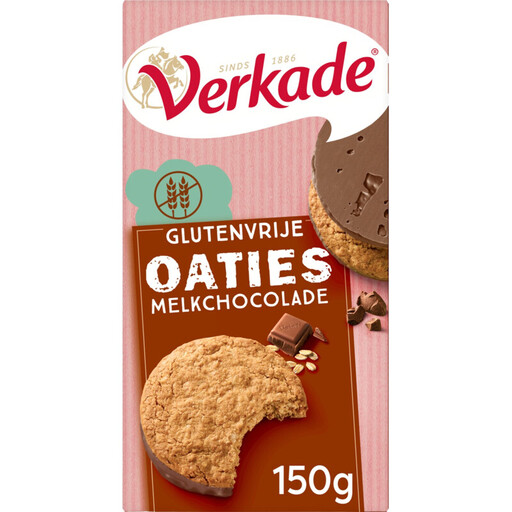 Image unavailable
A chocolate oat biscuit for a calendar where this type of biscuit and its ingredients are suitable for the recipient.
Verkade labels Oaties Milk Chocolate as gluten-free and says it has a 25% milk chocolate coating. The product contains milk and soya; check the current packaging for any other relevant allergens too.
Before filling the calendar, check the number of biscuits, their size and how they’re packaged. This will help you work out how to divide them between the days while keeping them separate.
Under Commission Implementing Regulation (EU) No 828/2014, ‘gluten-free’ may be stated when the gluten content of the food sold to the final consumer is no more than 20 mg/kg. Check the claim on the packaging of the specific product rather than relying on your impression of the ingredients.
No. Check the gluten-free claim for the specific oat biscuit and make sure oats are suitable for the recipient. Verkade lists gluten-free oat flakes and gluten-free oat flour for Oaties Milk Chocolate; this doesn’t tell you anything about other oat biscuits.
Use clean hands, a clean work surface and clean kitchen utensils, and keep the treats separate from biscuits containing gluten. The Dutch Coeliac Society points out that crumbs can also cause cross-contamination, so leave gluten-free biscuits sealed or individually wrapped wherever possible.
Use the product page to help you make an initial choice, but check the current packaging before use. Albert Heijn says that the ingredients and allergen information for its Chocolate chip cookies can change.
No, not as a gluten-free biscuit: Lotus Bakeries lists wheat flour as an ingredient and gluten as an allergen in Biscoff Original. If you’re choosing for someone who needs to eat gluten-free, pick a product with an explicit gluten-free claim.