If you have coeliac disease, start by choosing breakfast cereals whose current packaging says ‘gluten-free’; oats as an ingredient alone are not enough to be certain. Granola and flakes are ideal for a crunchy breakfast bowl, while gluten-free porridge made with teff, maize, buckwheat and rice is a good choice if you prefer a warm bowl. Then compare the nutritional information and check for any other allergens.
Which breakfast bowl is right for you?
People with coeliac disease looking for reassurance
If you want to eat oats, the gluten-free label on the product matters more than the fact that oats are naturally gluten-free. The Dutch Coeliac Society recommends looking for the Crossed Grain symbol where possible, or another gluten-free logo or claim.
Fans of a crunchy weekend breakfast
Granola, muesli and flakes offer a range of ingredients and textures for a bowl with milk or yoghurt. Compare the nutritional information, and if you have a nut or other allergy, read the full allergen information too.
Anyone who prefers a warm breakfast bowl
A gluten-free porridge base made with teff, maize, buckwheat and rice is an alternative to a crunchy bowl. However, the Zonnatura Teff Multigrain Breakfast described by Albert Heijn needs to be prepared with milk or a plant-based drink.
What should you look for when choosing?
If you have coeliac disease, start by checking the gluten-free label on the current packaging. Then choose between a crunchy or warm bowl and compare products based on the nutritional information that matters to you.
| What to consider |
What to check when buying |
Who it matters to |
| Gluten-free label |
Look for ‘gluten-free’ on the current packaging; if the product contains oats, also check the ingredients and allergen information. |
If I have coeliac disease, I don’t want to have to rely on the name of an oat product to decide whether it’s suitable. For around 42% of consumers, a clear gluten-free label comes first. |
| Crunch and flavour |
Compare granola, muesli and flakes by ingredients, texture and any nuts they contain. |
For a leisurely weekend breakfast, I mainly want a crunchy bowl that goes well with what I’m eating it with. Crunch and flavour are the main priority for around 25% of consumers. |
| Fibre and sugars |
Compare fibre and sugars per 100 g and per serving; distinguish total sugars from added sugar. |
When choosing between gluten-free products, I want to know how their nutritional values compare with my usual portion. Around 17% of consumers give top priority to fibre and low levels of added sugar. |
| Warm porridge and preparation |
Read the preparation instructions and check which milk or plant-based drink you’ll need to add. |
On a relaxed morning, I’d rather make a warm bowl than pour out flakes straight away. Around 16% of consumers put a preference for warm porridge first. |
Common mistakes
-
Assuming ordinary oats are automatically gluten-free
Oats can come into contact with cereals containing gluten. Quaker itself says it cannot guarantee that its products are completely gluten-free; the Quaker Cruesli Zero Sugar Added Nuts & Seeds described by Albert Heijn also contains wheat and barley.
If you have coeliac disease, choose an oat product with a gluten-free label or appropriate certification, and read the current packaging.
-
Relying only on the front of the packaging
‘Gluten-free’ doesn’t tell you how much fibre or sugar a breakfast cereal contains. And ‘no added sugar’ doesn’t mean a product contains no sugars.
Compare the nutritional information per 100 g and per serving, alongside any ingredients that matter to you.
-
Overlooking other allergens
A gluten-free label tells you nothing about nuts or milk. The Dutch Food and Consumer Product Safety Authority lists these separately as allergens that consumers must be informed about.
If you have other allergies, check the ‘contains’ and ‘may contain’ statements on the packaging too.
-
Trusting an older version of the packaging
Ingredients and allergen information can change even when a product name stays the same.
When you buy a new pack, check the gluten-free label, ingredients and allergens again.
Brands compared
AH Glutenvrij
This product range includes both granola and flakes labelled as gluten-free.
- Albert Heijn says AH Gluten-free Granola contains gluten-free oat flakes and is made in a completely gluten-free environment. AH Gluten-free High-fibre Bran Flakes are made with rice and maize.
- For the granola, check the information about nuts. For both products, compare the current nutritional and allergen information.
Zonnatura
Zonnatura Teff Multigrain Breakfast is a gluten-free base for warm porridge, not a ready-to-eat crunchy cereal.
- Albert Heijn describes it as a blend of teff, maize, buckwheat and rice, and states that this product contains 0% added sugar.
- To make a warm bowl, you’ll need to prepare it with milk or a plant-based drink.
Freee
Freee Chocolate Stars is a sweeter, crunchy breakfast cereal made with maize and rice.
- Albert Heijn labels this specific product as gluten-free and vegan.
- Compare the sugars and fibre in the nutritional information if these matter to your choice.
Quaker / Cruesli
This brand’s regular oat and Cruesli products are not a substitute for a verified gluten-free product.
- The brand is relevant when you’re weighing up the difference between ordinary oats and products labelled as gluten-free.
- According to its own information, Quaker cannot guarantee that its products are completely gluten-free. The Cruesli Zero Sugar Added Nuts & Seeds described by Albert Heijn contains wheat and barley.
Nestlé
Assess Nestlé breakfast cereals product by product, rather than by brand name.
- For a specific product, the ingredients list tells you which cereals it contains.
- The Nestlé KitKat Cereals described by Albert Heijn contains wheat ingredients and barley malt extract, so it isn’t a gluten-free choice for people with coeliac disease.
Granola at Joybuy
These two pack sizes of Holie's Peanut Chocolate granola are a good fit if you’re looking for a crunchy weekend breakfast. If you have coeliac disease, check the gluten-free label on the current packaging before eating it. If you have allergies, read the ingredients information too.
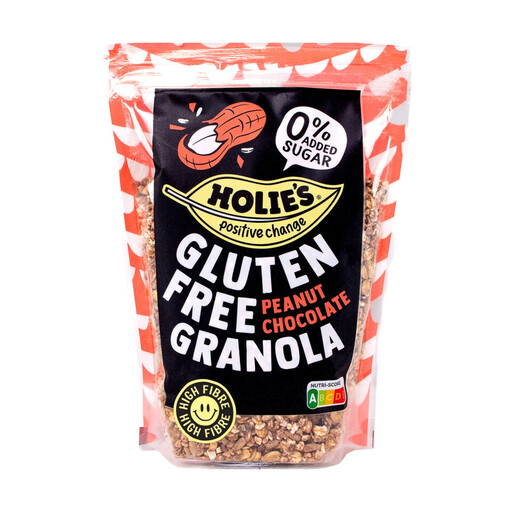 Image unavailable
Holie's Granola Glutenfree Peanut Chocolate, 330 g
For anyone who wants granola as part of a crunchy weekend breakfast. If you have coeliac disease, check the current gluten-free label. If you have a peanut or other allergy, read the allergen information.
Pack size: 330 g.
View at Joybuy
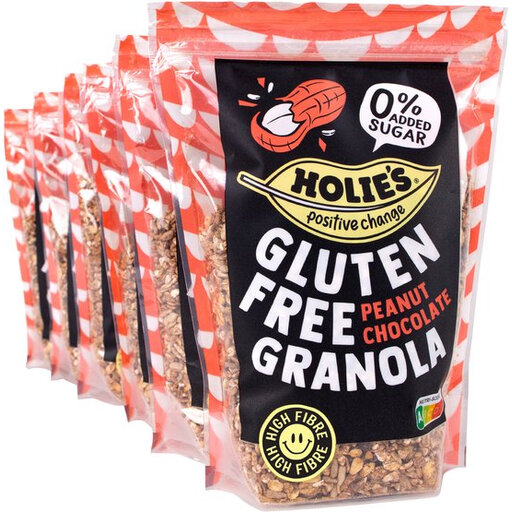 Image unavailable
Holie's Granola Glutenfree Peanut Chocolate, 6 x 330 g
For anyone looking for a multipack of this granola. If you have coeliac disease, check the current gluten-free label. If you have a peanut or other allergy, read the allergen information.
Pack size: 6 x 330 g.
View at Joybuy
Frequently asked questions
Is ordinary porridge oats suitable for coeliac disease?
Not unless the product has a gluten-free label. Oats can come into contact with cereals containing gluten during growing and processing. The Dutch Coeliac Society recommends choosing a product with the Crossed Grain symbol where possible, or another gluten-free logo or claim; Quaker says it cannot guarantee that its products are completely gluten-free.
What does ‘gluten-free’ mean on breakfast cereals in the Netherlands?
Under European Commission Implementing Regulation (EU) No 828/2014, ‘gluten-free’ may only be used if the food sold to the final consumer contains no more than 20 mg/kg of gluten. When you buy a product, check that this label appears on its packaging.
What should I follow if online product information differs from the packaging?
Before eating the product, check the current packaging for the ingredients, nutritional information and allergens of the product you have in front of you. An earlier product description is no substitute for checking.
Do I need to check for nuts or milk in gluten-free granola too?
Yes. A gluten-free label says nothing about other allergens. The Dutch Food and Consumer Product Safety Authority lists nuts and milk separately as allergens, so if you have another allergy, check the ‘contains’ and ‘may contain’ statements on the packaging too.


