For a toddler with coeliac disease, choose breakfast flakes with a clear gluten-free statement on the current packaging. A maize base alone is not enough, as ordinary cornflakes may contain barley malt extract, for example. Then compare added sugar, salt and fibre, and consider the flakes as part of the whole breakfast and daily menu. The Netherlands Nutrition Centre recommends wholegrain breakfast cereals with no added sugar or salt for children aged 1 to 3.
Who is this choice relevant to?
Parents of a toddler with coeliac disease
For them, choosing starts with the gluten-free statement and the current ingredients and allergen information. The Dutch Coeliac Society advises reading labels carefully and also highlights the crossed-grain symbol.
Parents looking for breakfast variety
Flakes can be an alternative breakfast choice when bread is less convenient in the morning. The Netherlands Nutrition Centre advises keeping in mind the contribution bread makes, including fibre and iodine, at other times of the day.
Parents comparing nutritional information
As well as checking the gluten-free statement, they look at added sugars, salt and fibre per 100 g. This lets them compare products without relying solely on the front of the packaging.
What should you look for when choosing?
If your child has coeliac disease, first check that the specific product is gluten-free. Only then compare the nutritional information and consider how breakfast will be served at home or at childcare.
| What to look for |
What to check when buying |
Who is this most important for? |
| Gluten-free status |
Look for the gluten-free statement on the current packaging, and read the ingredients and allergen information too. Don’t rely on maize being the main ingredient. |
If my toddler has coeliac disease, I don’t want to assume flakes are suitable based on the type of grain. For around 42% of these consumers, confirmed gluten-free status comes first. |
| Nutritional information |
Compare added sugars, salt and fibre per 100 g; also check whether the cereal is wholegrain. |
After checking that it is gluten-free, I want to see how the flakes fit into the rest of my toddler’s diet. Around 33% of these consumers give this comparison top priority. |
| Breakfast practicality |
Check the preparation instructions and serving information on the packaging. If it contains oats, also check for an explicit gluten-free statement. |
I’m looking for something my toddler will eat and that I can prepare on an ordinary morning. For around 25% of these consumers, practicality matters most. |
A gluten-free statement does not tell you how much sugar, salt or fibre a product contains. Under Commission Implementing Regulation (EU) No 828/2014, a food may be labelled ‘gluten-free’ if it contains no more than 20 mg of gluten per kg for the final consumer. The Netherlands Nutrition Centre recommends wholegrain breakfast cereals with no added sugar or salt for children aged 1 to 3. So check both aspects separately on the label.
Common mistakes
-
Assuming maize guarantees a gluten-free product
The main ingredient doesn’t tell the whole story: according to Kellogg's Netherlands, Kellogg's Corn Flakes contains barley malt extract. This product’s ingredients don’t tell you anything about all other cornflakes, but they show why the full product name matters.
If your child has coeliac disease, check for a gluten-free statement and read the ingredients and allergen information again every time you buy the product.
-
Comparing only the gluten-free statement
Gluten-free flakes can still contain added sugar and salt. Albert Heijn lists 4.1 g of added sugars and 0.9 g of added salt per 100 g for AH Glutenvrij Cornflakes.
Compare the current nutritional information per 100 g and consider the choice as part of your child’s overall daily menu.
-
Using ordinary oats without checking
According to the Dutch Coeliac Society, oats can come into contact with gluten-containing cereals during production or processing. It also points out that a small number of people with coeliac disease react to pure oats.
If your child has coeliac disease, choose an oat product that is explicitly labelled gluten-free. Discuss recurring symptoms with a healthcare professional or specialist dietitian.
-
Relying on an old product page or packaging
Ingredients and allergen information can change. This means a product photo you saw previously may not match the packaging you buy.
Read the packaging again just before buying. Before sending flakes in with your child, also ask the relevant school or childcare provider about its policy on allergens, shared food and food brought from home.
Brands to compare
These product ranges show which labels and ingredients are worth comparing; a brand name alone does not confirm that every product from that brand is gluten-free.
AH Glutenvrij
Albert Heijn explicitly states that its 200 g AH Glutenvrij Cornflakes is gluten-free.
- Albert Heijn lists 95% maize grits and 5 g of fibre per 100 g.
- The same product information lists 4.1 g of added sugars and 0.9 g of added salt per 100 g. Check the values on the packaging you buy.
Jumbo Lekker Vrij van Gluten
Jumbo labelled its Lekker Vrij van Gluten Cornflakes as ‘gluten-free’ and included the crossed-grain symbol.
- The product information listed 5 g of fibre per 100 g.
- The same information listed sugar and salt as ingredients, and 0.97 g of salt per 100 g. Check the current packaging and availability.
Consenza
Consenza Pure & Free Cornflakes is a separate gluten-free cornflakes option listed by Jumbo.
- The product information listed 4.6 g of fibre per 100 g.
- Jumbo’s listing stated that the product may contain nuts, soya and sesame. Check the allergen information on the current packaging.
Kellogg's
Two well-known Kellogg's products show why you can’t judge ordinary breakfast flakes by brand or grain type alone.
- The Dutch product pages list the ingredients for each individual variety, so you can check them carefully.
- According to Kellogg's Netherlands, Corn Flakes contains barley malt extract; Special K Original contains wholegrain wheat and barley, among other ingredients. Don’t assume this applies to every product from the brand.
ALDI
ALDI lists gluten-free muesli and porridge oats as breakfast cereals; these are different product categories from cornflakes.
- These categories give you something different to compare if cornflakes aren’t essential.
- Don’t assume Golden Bridge Cornflakes is gluten-free because it is made with maize or carries that brand name; check the specific packaging.
Lidl
At Lidl, your choice still depends on the label of the individual breakfast cereal product.
- Compare each product’s own gluten-free statement, ingredients and nutritional information.
- A mention of additional gluten-free products does not confirm that a standard product is gluten-free. Check local availability too.
Breakfast cereal at Joybuy
This granola is an alternative for anyone considering oat-based breakfast cereals as well as cornflakes. Granola isn’t cornflakes: if your child has coeliac disease, check the gluten-free statement on the current packaging and separately consider whether the ingredients and preparation suit your toddler.
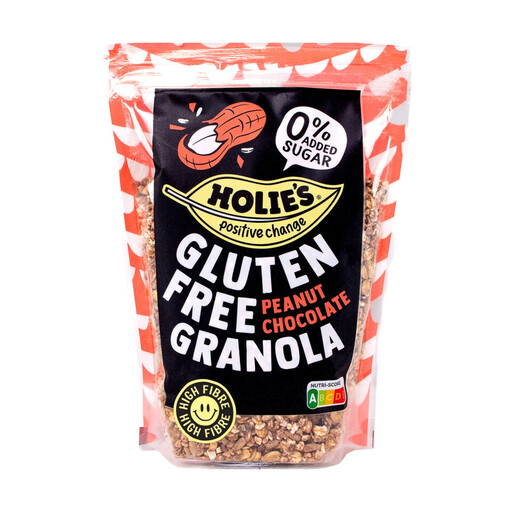 Image unavailable
Holie's Granola Glutenfree Peanut Chocolate, 330 g
A granola option if you’re considering something other than cornflakes for your toddler’s breakfast.
The product name includes Glutenfree, and the pack contains 330 g. Check the gluten-free statement and information about oats and peanuts on the current packaging; adjust the portion to suit your child.
View at Joybuy
Frequently asked questions
What does ‘gluten-free’ mean on breakfast flakes?
Under Commission Implementing Regulation (EU) No 828/2014, a food may be labelled ‘gluten-free’ for the final consumer if it contains no more than 20 mg of gluten per kg. Check the statement on the packaging of the specific product; maize as an ingredient is not a substitute for it.
Are ordinary cornflakes made from maize automatically gluten-free?
No. A maize base doesn’t guarantee that ordinary cornflakes are gluten-free. For example, according to Kellogg's Netherlands, Kellogg's Corn Flakes contains barley malt extract. If your child has coeliac disease, check the current gluten-free statement and ingredients list for the variety you want to buy.
Can I choose oat flakes for a toddler with coeliac disease?
Only choose oat flakes whose specific product is explicitly labelled gluten-free. The Dutch Coeliac Society highlights the risk of oats being contaminated with gluten-containing cereals and the fact that some people react to pure oats. Discuss recurring symptoms with a healthcare professional or specialist dietitian.


