What should you look for when choosing?
First, check that the specific product is labelled gluten-free. Then choose between warm oat porridge, oat-free porridge and a crunchy bowl. Only after that should you compare the nutritional information of products that suit your choice.
| What to consider |
What to check when buying |
Who it matters most to |
| Gluten-free assurance |
Check the gluten-free label on the current pack and read any warnings about cereals containing gluten. |
If I’m choosing breakfast cereals with coeliac disease in mind, I don’t want to rely on the ingredient or brand name alone. For around 46% of consumers, this product-specific assurance comes first. |
| Warm porridge and oats |
Choose only oats labelled gluten-free if you tolerate oats; otherwise, look for a gluten-free oat-free porridge base. |
For a warm bowl or overnight oats, I want to choose a base that suits how I tolerate oats. For around 27% of consumers, this preparation is the first thing to consider. |
| Crunchiness and nutritional information |
For crunchy products labelled gluten-free, compare fibre, sugars and other nutritional values per 100 g. |
I want a cold, crunchy bowl, but I also want to be able to compare the labels of suitable products. This combination comes first for around 27% of consumers. |
Brands to compare
These brands offer different breakfast cereals for the preparations discussed here. Always check the specific variant and the current packaging, rather than judging the brand as a whole.
AH Glutenvrij
This range includes wholegrain oats, cornflakes and bran flakes that Albert Heijn labels gluten-free. That gives you the option to compare a warm bowl of oats with crunchy flakes.
- Albert Heijn says its wholegrain oats are produced in a completely gluten-free environment.
- Compare the nutritional values of each variant and check the current packaging: ingredients and allergen information can change.
Zonnatura
The Teff meergranenontbijt labelled gluten-free is a porridge base made with teff, maize, buckwheat and rice. It’s an option if you’re looking for a warm bowl without oats as a listed ingredient.
- Its ingredients offer an alternative to porridge made with oats.
- This porridge needs to be prepared and isn’t the same as ready-to-eat, crunchy flakes.
Leev
According to the product information, Leev Simply Free offers organic wholegrain oats labelled gluten-free for porridge or overnight oats.
- The listed ingredients are gluten-free wholegrain oats.
- A gluten-free label doesn’t change the fact that you need to be able to tolerate pure oats.
Semper
According to the product information, Semper Havregryn gv is a gluten-free oat flake option for anyone who wants to make their own warm porridge.
- The simple oat flake base lets you make the porridge your own.
- Check the packaging before buying and bear in mind your personal tolerance of oats.
Gluten-free granola at Joybuy
These Joybuy products are two pack sizes of Holie’s gluten-free peanut and chocolate granola. They’re suited to a crunchy breakfast bowl; if you have coeliac disease, check the current packaging and bear in mind your tolerance of oats.
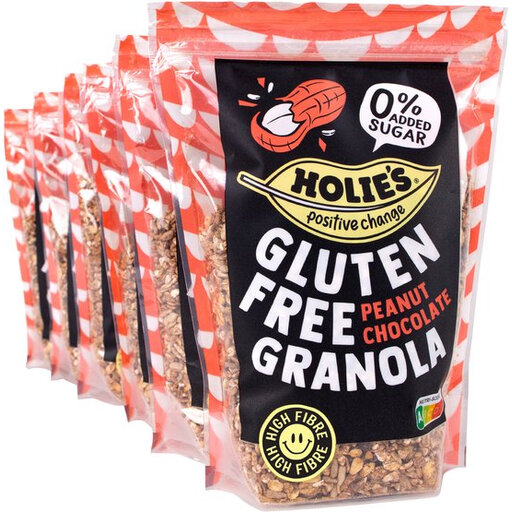 Image unavailable
Holie’s Glutenfree Peanut Chocolate granola, 6 × 330 g
A pack size for anyone looking for gluten-free granola for a crunchy breakfast bowl.
The pack contains 6 × 330 g. Check the current label for the gluten-free claim and allergen information; according to the product information, this granola contains peanuts and oats.
View at Joybuy
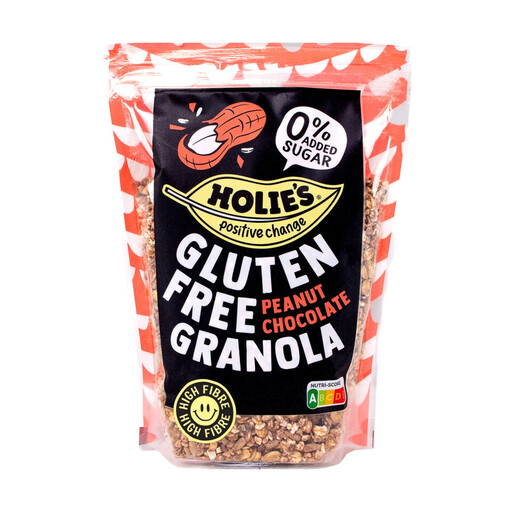 Image unavailable
Holie’s Glutenfree Peanut Chocolate granola, 330 g
A single pack of gluten-free granola for anyone who wants to put together a crunchy breakfast bowl.
The pack contains 330 g. Check the current label for the gluten-free claim and allergen information; according to the product information, this granola contains peanuts and oats.
View at Joybuy
Frequently asked questions
Is ordinary porridge oats automatically suitable for coeliac disease?
No. Oats can come into contact with cereals containing gluten during harvesting or processing, so choose oats labelled gluten-free. The Dutch Coeliac Society also points out that not everyone with coeliac disease tolerates pure oats.
Can I choose Brinta Volkoren graanontbijt or Quaker Cruesli Luchtig?
Not if you need a strictly gluten-free product for coeliac disease: according to Albert Heijn’s product information, Brinta Volkoren graanontbijt contains wheat, while Quaker Cruesli Luchtig lists wheat and barley malt, among other ingredients. Always check the specific variant and the current label.
What should I compare in gluten-free cornflakes and bran flakes?
Once you’ve checked that they’re gluten-free, compare the nutritional information for both products per 100 g. According to Albert Heijn’s product information, AH Glutenvrij Cornflakes list 5 g of fibre and 4,1 g of added sugars per 100 g, while AH Glutenvrij Vezelrijke bran flakes list 12 g of fibre and 8,2 g of added sugars per 100 g. So, for these variants, more fibre doesn’t go hand in hand with less added sugar.
What should I rely on if the product page and packaging differ?
Check the current packaging before use. Albert Heijn says that product ingredients, nutritional values and allergen information can change, so check the gluten-free label again and review any information that’s relevant to your choice.


