If you have coeliac disease or gluten sensitivity, first choose breakfast cereals explicitly labelled gluten-free, then compare the carbohydrates, sugars, fibre and your portion size. According to diabetes.nl, eating gluten-free is usually unnecessary if you don’t have coeliac disease or gluten sensitivity; a gluten-free label alone says nothing about nutritional value.
Who is this choice relevant to?
People who need to choose strictly gluten-free products
If you have coeliac disease or gluten sensitivity, it’s important to check that the specific product is labelled gluten-free. The Dutch Coeliac Association recommends looking for a gluten-free claim or the Crossed Grain symbol on oats. If you have a wheat allergy, check the ingredients for wheat too.
People comparing carbohydrates
If you’re keeping track of the carbohydrates in your breakfast because of diabetes, it helps to check the nutritional information per 100 g and for your own portion. A gluten-free label doesn’t replace this comparison.
People looking for gluten-free granola
Portion sizes and ingredients can vary between granola varieties. As well as checking that it’s labelled gluten-free, compare the nutritional information and check whether the packaging lists ingredients such as nuts, peanuts or soya.
What should you look for when choosing?
If you need to eat gluten-free, first check the product label. Then compare the nutritional information on a like-for-like basis and decide how much you’ll actually have.
| What to consider | What should you check? | Who is it most relevant to? |
|---|
| Gluten-free labelling |
Check for an explicit gluten-free claim or the Crossed Grain symbol. If you have other allergies, check the ingredients too. |
With coeliac disease, I want to know that my breakfast cereal is labelled gluten-free before comparing its nutritional value; around 42% of consumers would put this reassurance first. |
| Carbohydrates and fibre |
Compare carbohydrates, including sugars, and fibre per 100 g and for the portion you’re having. |
If I spread my carbohydrate intake across my meals, I want to know what’s in my breakfast portion. Around 33% of consumers would make this their main priority. |
| Ingredients and portion size |
Check the ingredients, any stated added sugars and the serving size on the current packaging. |
For an easy breakfast, I want to choose a flavour and portion size that suit my preferences, rather than relying on the wording on the front of the pack alone; around 25% of consumers would consider this their main priority. |
Common mistakes
-
Assuming gluten-free means suitable for diabetes
Gluten-free granola can still contain carbohydrates and sugars. According to diabetes.nl, eating gluten-free is usually unnecessary if you don’t have coeliac disease or gluten sensitivity.
Choose gluten-free products when you need to, then compare the nutritional information and your portion size.
-
Assuming regular oats are automatically gluten-free
Oats can come into contact with grains containing gluten during production. Quaker Netherlands says it cannot guarantee that its oat products are completely gluten-free.
If you follow a strict gluten-free diet, choose oats with an explicit gluten-free claim or the Crossed Grain symbol, as recommended by the Dutch Coeliac Association.
-
Looking only at added sugars
Information about added sugars doesn’t tell you how many total carbohydrates or sugars are in a portion.
Compare the nutritional information per 100 g and for the amount you plan to eat.
-
Overlooking ingredients and allergens
A product labelled gluten-free may still contain ingredients that aren’t suitable if you have another allergy.
Check the ingredients and allergen information on the packaging you receive, especially if you also need to avoid peanuts, nuts or soya.
Brands to consider
AH Glutenvrij
Albert Heijn lists a range of breakfast products under AH Gluten-free, including granola, muesli and cornflakes.
- Albert Heijn states that AH Gluten-free Granola is made in a completely gluten-free environment.
- The same granola lists 11 g of added sugars per 100 g; check the nutritional information for the specific variety.
Holie's
Holie's stocks a gluten-free granola with nuts; Holie's Granola glutenfree protein nuts is a separate variety.
- For this variety, Albert Heijn lists 22 g of protein per 100 g and a claim stating 0% added sugars.
- This variety contains soya, oats, hazelnuts and almonds. If you have allergies, check the current packaging.
Quaker / Cruesli
Quaker Netherlands offers oat products and Cruesli varieties.
- You can compare the ingredients and nutritional information of the different varieties.
- Quaker Netherlands says it cannot guarantee that its oat products are completely gluten-free. So don’t consider regular varieties suitable for a strict gluten-free diet unless they’re explicitly labelled gluten-free.
Gluten-free granola at Joybuy
These two pack options of Holie's Granola Glutenfree Peanut Chocolate may suit you if you’re looking for gluten-free granola. Choose how much you’d like to buy, then check the current ingredients and nutritional information for your breakfast.
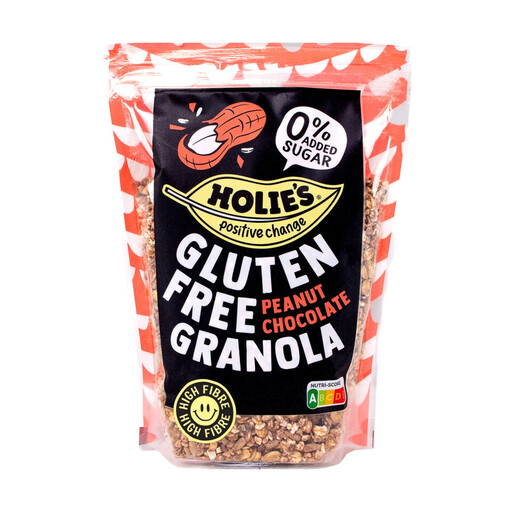 Image unavailable
Holie's Granola Glutenfree Peanut Chocolate 330 g
An option if you’re looking for gluten-free granola with peanuts and chocolate in a 330 g pack.
If you have a peanut allergy, check the current label and compare the carbohydrates in your own portion.
View at Joybuy
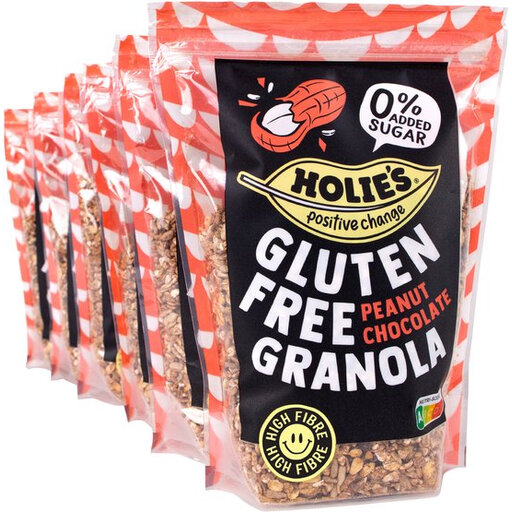 Image unavailable
Holie's Granola Glutenfree Peanut Chocolate 6 x 330 g
An option if you’d like to buy multiple packs of gluten-free granola with peanuts and chocolate.
This option contains 6 packs of 330 g. Check the current label for the ingredients, allergens and nutritional information for your portion.
View at Joybuy
Frequently asked questions
Should I choose gluten-free breakfast cereal if I have diabetes?
Not just because of diabetes: according to diabetes.nl, eating gluten-free is usually unnecessary if you don’t have coeliac disease or gluten sensitivity. Compare breakfast cereals by their nutritional information and the portion you have too.
Is regular porridge oats suitable for a strict gluten-free diet?
Don’t assume that it is. The Dutch Coeliac Association recommends checking that oats have an explicit gluten-free claim or the Crossed Grain symbol; Quaker Netherlands cannot guarantee that its oat products are completely gluten-free.
How do I compare two gluten-free granolas if I’m counting carbohydrates?
Compare the total carbohydrates and sugars on a like-for-like basis, preferably per 100 g and for the portion you actually have. Check the fibre and other nutritional information too, but don’t assume that a gluten-free label means the product has a particular carbohydrate content.
Is the online ingredients and nutritional information enough to make a choice?
Check the packaging of the product you receive too. Ingredients, allergen information and nutritional values can change. This is especially important if you need to eat strictly gluten-free or have another allergy.


