If you have coeliac disease, first look for a clear gluten-free label on breakfast cereal, then check the ingredients. For a sweet breakfast, you can compare cornflakes, suitable oat products and crunchy mixes for taste, sugar and fibre. Standard Kellogg's Corn Flakes and Special K Original are not gluten-free alternatives: according to Kellogg's Netherlands, these products contain barley and/or wheat.
Who is this relevant for?
People with coeliac disease who need a strict gluten-free breakfast
You want to know whether a breakfast cereal is suitable for a gluten-free diet before choosing it for its taste. For oats, the Crossed Grain trademark is an important indicator, as the Netherlands Nutrition Centre explains; always check the current packaging too.
Fans of crunchy cornflakes
You’re looking for the texture of cornflakes to enjoy with milk, yoghurt, quark or a plant-based alternative. Once a product meets your gluten-free requirements, you can compare its nutritional information and serving size.
Those looking for a sweeter variety
You might be considering oat pops, crunchy muesli or a flavoured variety instead of plain cornflakes. Check the ingredients, other allergens and nutritional values for each product. Compare granola separately, as it’s a different type of product from flakes.
What should you look for when choosing?
If you have coeliac disease, checking for gluten comes before choosing by taste or nutritional value. After that, the type of breakfast cereal determines which differences matter to you.
Gluten-free cornflakes
Choose these if: you’re looking for the simple texture of cornflakes and the packaging clearly labels the product as gluten-free.
Bear in mind: corn as the main ingredient doesn’t, by itself, prove that the finished product is gluten-free. Check the label to compare nutritional values.
Oat flakes or porridge oats
Choose these if: you want an oat-based breakfast and the packaging carries the Crossed Grain trademark.
Bear in mind: according to the Netherlands Nutrition Centre, standard oat products aren’t automatically suitable for people with coeliac disease, partly because of the risk of gluten contamination.
Crunchy mixes and flavoured varieties
Choose these if: you’re after more variety in flavour and texture, such as crunchy muesli, granola or oat pops.
Bear in mind: ingredients and other allergens vary between varieties. A gluten-free label doesn’t tell you how much sugar, fat or fibre the product contains.
| What to consider | What to check when buying | Who it matters to |
|---|
| Gluten-free suitability |
Look for the gluten-free label on the current packaging. For oats, check for the Crossed Grain trademark and read the ingredients list. |
If I have coeliac disease, I don’t want to rely on the type of grain alone when choosing breakfast flakes. For around 50% of consumers, this check comes first. |
| Taste and texture |
Compare cornflakes, oat products and crunchy mixes. For sweet varieties, also check the sugar per 100 g. |
For my breakfast, I mainly want to know whether I’d prefer simple flakes or a more flavourful crunchy mix. Around 30% of consumers give this choice the highest priority. |
| Nutritional information |
Compare sugar, fibre, fat and salt per 100 g, and check the stated serving size. |
If I eat breakfast cereal regularly, I want to compare the nutritional values of different varieties as well as their taste. For around 20% of consumers, this matters most. |
Common mistakes
-
Assuming all corn, rice or oat products are gluten-free
The type of grain shown on the front of the pack isn’t enough to confirm that a product is gluten-free. According to Kellogg's Netherlands, its standard Corn Flakes contain barley malt extract; the Netherlands Nutrition Centre highlights the risk of gluten contamination in oats.
Check for a gluten-free label, look for the Crossed Grain trademark on oat products and read the full ingredients list.
-
Confusing gluten-free with a particular nutritional profile
A gluten-free label tells you nothing about the amount of sugar, fat, fibre or salt in a particular breakfast cereal.
Compare the nutritional information per 100 g of products that meet your gluten-free requirements.
-
Assuming a product page confirms current availability
Jumbo says that Jumbo Lekker Vrij van Gluten Cornflakes and Consenza Pure & Free Cornflakes are no longer part of its online range.
Check the current range before buying, and assess any alternatives by checking their own packaging.
Brands to consider
AH Glutenvrij
Albert Heijn’s gluten-free breakfast cereal range includes cornflakes, oat products, bran flakes and crunchy varieties.
- The product information for AH Glutenvrij Cornflakes lists ingredients and nutritional values, making it easy to compare this variety.
- Albert Heijn warns that ingredient and allergen information may change, so check the packaging of the product you buy.
Jumbo Lekker Vrij van Gluten
Jumbo’s product page describes 200 g cornflakes from this gluten-free range.
- For this specific product, Jumbo lists the Crossed Grain trademark and ingredients including corn, sugar and salt.
- Jumbo says these cornflakes are no longer part of its online range, so check current alternatives separately.
Consenza
Consenza Pure & Free Cornflakes are an example of a product that Jumbo describes as suitable for a wheat-free and gluten-free diet.
- Jumbo’s product information lists 4,6 g of fibre per 100 g for these particular cornflakes.
- The product page notes that the cornflakes may contain nuts, soya and sesame, and says they’re no longer part of the online range. If you buy them elsewhere, check the current packaging.
Kellogg's
Kellogg's standard Corn Flakes and Special K Original show why you shouldn’t assume a familiar flakes product is gluten-free without checking the label.
- Kellogg's Netherlands publishes ingredient lists so you can check these specific products.
- Corn Flakes lists barley malt extract; Special K Original lists wheat and barley, among other ingredients. These two standard products aren’t suitable if you need to follow a strict gluten-free diet for coeliac disease.
Granola for a sweet breakfast on Joybuy
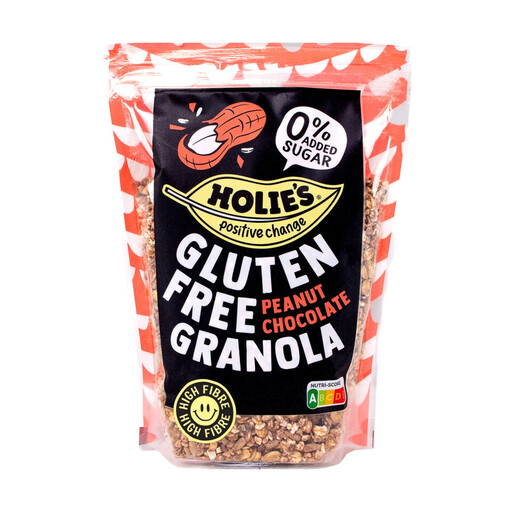
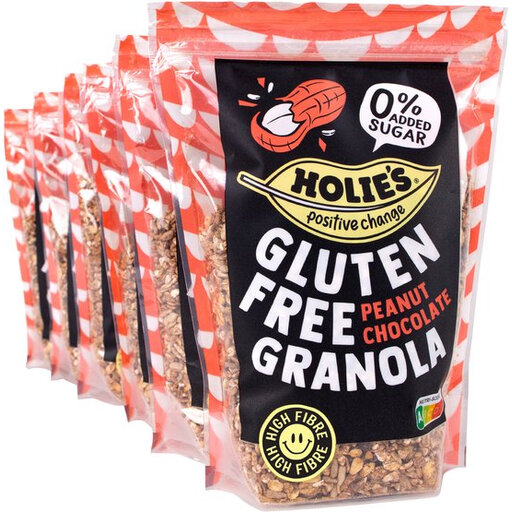
These two pack options are granola with peanut and chocolate flavour, not cornflakes. If you have coeliac disease and are looking for a crunchy breakfast cereal, check the current gluten-free label and packaging before buying.
 No image available
Holie's Granola Glutenfree Peanut Chocolate, 330 g
For anyone looking for peanut and chocolate-flavoured granola for a sweet breakfast instead of cornflakes. The pack contains 330 g. If you have coeliac disease, check the current gluten-free label, and if you have allergies, read the ingredients and warnings on the packaging.
View on Joybuy
 No image available
Holie's Granola Glutenfree Peanut Chocolate, 6 × 330 g
For anyone looking for the same peanut and chocolate-flavoured granola in a pack of six 330 g bags. This is granola, not cornflakes. If you have coeliac disease, check the current gluten-free label, and if you have allergies, read the ingredients and warnings on the packaging.
View on Joybuy
Frequently asked questions
Are standard cornflakes suitable if I have coeliac disease?
Don’t assume they are: according to Kellogg's Netherlands, standard Kellogg's Corn Flakes contain barley malt extract. Choose a product with a clear gluten-free label and check the ingredients on the current packaging.
Can I choose standard oat flakes if I have coeliac disease?
No, standard oat flakes aren’t automatically suitable if you have coeliac disease. The Netherlands Nutrition Centre highlights the risk of gluten contamination in oats and recommends oat products with the Crossed Grain trademark.
What should I check on a pack of breakfast flakes?
First check for a gluten-free label, then read the full ingredients list. Look out for wheat, rye, barley and ingredients such as barley malt extract. For oat products, also check whether the pack carries the Crossed Grain trademark.
Does gluten-free also mean breakfast flakes are low in sugar?
No, a gluten-free label doesn’t in itself tell you how much sugar a product contains. Compare the nutritional information per 100 g for suitable products, and check the stated serving size for your own breakfast too.


