What should you look for when choosing?
First check the gluten-free statement and plan how you’ll serve the cereal separately. Then compare the ingredients and product type to find one that suits your brunch.
| What to consider |
What to check when buying |
Who is this important for? |
| Gluten-free status and cross-contamination |
Check the current gluten-free statement; use clean hands, bowls and spoons when serving. |
If I’m preparing brunch for someone with coeliac disease, I don’t want crumbs from other dishes ending up in the breakfast cereal. For around 36% of consumers, choosing and serving food safely would be their main concern. |
| Oats and other allergens |
Read the ingredients and allergen information; if the product contains oats, choose one with a gluten-free statement or logo. |
If any guests have a nut allergy or a known sensitivity to oats, I want to know which option is suitable for them. Around 29% of consumers would put this individual suitability first. |
| Texture and presentation |
Compare granola, muesli and flakes by product type; check the ingredients of mixed varieties too. |
For a bowl with yoghurt or fruit, I’m looking for a breakfast cereal with a texture that works well with the dish. This would be the main consideration for around 21% of consumers. |
| Simple base |
Check the ingredients list and serve checked toppings in separate, clean bowls. |
If guests are making their own bowls, I want to keep the base and toppings clearly separate. For around 14% of consumers, simplicity would be the most important factor. |
Brands and product ranges to consider
Albert Heijn’s range includes several types of breakfast cereal labelled gluten-free. Always assess suitability for each individual product and its current packaging, rather than relying on the brand name alone.
AH Glutenvrij
Albert Heijn lists granola, crunchy muesli, cornflakes and oat flakes among the products in this range.
- The range of product types makes it easy to choose either a topping or a simple base.
- Check the ingredients and allergens for each variety; a gluten-free product is not automatically suitable for someone with a nut allergy or sensitivity to oats.
Holie's
Albert Heijn lists gluten-free granola varieties from Holie's; a Peanut Chocolate variety is also available on Joybuy.
- A granola option if you’d like to serve breakfast cereal as a topping for a brunch bowl.
- Check the current gluten-free statement and allergen information for each variety, especially if peanuts or nuts are a concern.
Freee
Albert Heijn lists Freee Chocolate Stars as a gluten-free breakfast cereal in a different format from granola or muesli.
- An alternative to consider if you don’t want to serve granola or muesli.
- Read the ingredients and allergen information on the packaging you choose before serving the product.
Zonnatura
Albert Heijn lists Zonnatura Teff meergranenontbijt as gluten-free in its range of gluten-free breakfast cereals.
- A multigrain breakfast option to consider alongside granola and flakes.
- Check the current packaging for ingredients and allergens that may be relevant to your guests.
Granola options on Joybuy
These two packs of Holie's Peanut Chocolate suit the granola option for a brunch bowl. If you’re looking for a simple cornflake base, you won’t find it among these two varieties. Before serving the granola, check its current gluten-free statement and allergen information.
 No image available
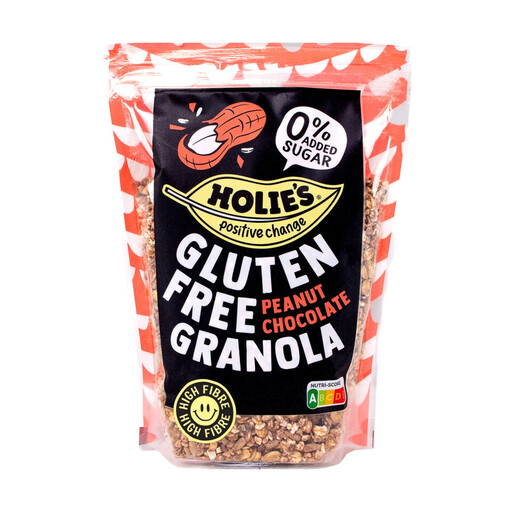
Holie's Granola Glutenfree Peanut Chocolate, 330 g
A granola variety to consider as a topping for a brunch bowl. For a guest with coeliac disease, check the current gluten-free statement on the packaging and read the allergen information, particularly for peanuts and oats.
View on Joybuy
 No image available
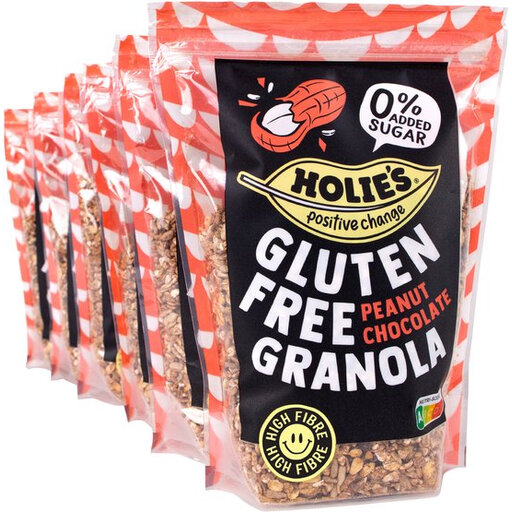
Holie's Granola Glutenfree Peanut Chocolate, 6 × 330 g
The pack of six bags is an option if you’re making several brunch bowls with the same granola. Check the current gluten-free statement and allergen information on each pack, particularly for peanuts and oats, and use clean serving utensils.
View on Joybuy
Frequently asked questions
What does ‘gluten-free’ mean on breakfast cereals?
Under Commission Implementing Regulation (EU) No 828/2014, a food may be labelled ‘gluten-free’ if the product sold to the final consumer contains no more than 20 mg/kg of gluten. For your Easter brunch, check the statement on the current packaging; it does not, by itself, prevent cross-contamination while serving.
Can I serve oat granola to someone with coeliac disease?
Only choose oat granola with a gluten-free statement or logo, and check whether your guest can tolerate gluten-free oats. The Dutch Coeliac Association points out that ordinary oats can be contaminated with gluten-containing grains, and recommends products carrying the Crossed Grain trademark for oats. Discuss any known reactions to oats with a doctor or specialist dietitian.
How can I keep breakfast cereals gluten-free on a shared brunch table?
Serve the gluten-free breakfast cereal separately with its own clean spoon. Use clean hands, a clean work surface and a clean bowl, and make sure crumbs or utensils from dishes containing gluten don’t come into contact with the cereal.
Is gluten-free granola also suitable for someone with a nut allergy?
No. A gluten-free statement tells you nothing about whether a product is suitable for someone with a nut allergy. For example, Albert Heijn describes AH Glutenvrij Granola as granola with almonds and seeds. Always read the current ingredients and allergen information for the specific variety, and choose according to your guest’s allergy.


