Who are these options relevant for?

Breakfast eaters whose choices are guided by coeliac disease

You want to eat cereal during the week without relying solely on the grain used. The Dutch Coeliac Society advises checking breakfast cereals for a gluten-free logo or an explicit gluten-free statement.

Breakfast eaters who compare nutritional values

You’re looking for a simple breakfast you can eat regularly. The Netherlands Nutrition Centre recommends comparing similar breakfast cereals per 100 g, including their sugar and fibre content.

Breakfast eaters who want to include oats

You’re considering oat flakes or porridge oats. According to the Dutch Coeliac Society, oats should be explicitly labelled gluten-free, and a small number of people with coeliac disease also cannot tolerate pure oats.

What should you look for when choosing?

For coeliac disease, a gluten-free finished product is essential. Beyond that, different consumers prioritise different things when choosing breakfast.

What to consider What to check when buying Most relevant for
Confirmed gluten-free Look for a gluten-free statement or suitable certification on the current packaging. Check this for oat products too. If I have coeliac disease, I don’t want to decide whether a cereal is suitable based on the main ingredient alone. Around 50% of consumers prioritise confirmed gluten-free status.
Nutritional value for regular use Compare similar products per 100 g for sugars, salt and fibre, not just per serving. If I eat the same cereal almost every working day, I want its nutritional make-up to suit my eating habits. Around 30% of consumers prioritise nutritional value.
A quick breakfast Check the serving instructions and portion size on the packaging, as well as the gluten-free statement. On busy mornings, I want a breakfast I can serve without cooking. For around 20% of consumers, convenience is the main priority.

Common mistakes

  • Assuming corn or oats prove a product is gluten-free

    The main ingredient doesn’t tell you everything about the other ingredients or the risk of contamination during production. Under Commission Implementing Regulation (EU) No 828/2014, a food may only be labelled gluten-free in the EU if it contains no more than 20 mg/kg of gluten when sold to the final consumer.

    So check the gluten-free statement on the finished product. For oats, the Dutch Coeliac Society recommends choosing a product with the Crossed Grain certification where possible.

  • Assuming gluten-free means nutritionally suitable

    A gluten-free statement tells you nothing about the amount of sugars, salt or fibre in a serving of breakfast cereal.

    If you eat cereal regularly for breakfast, compare similar products per 100 g.

  • Choosing regular cereal because it seems to be mostly corn or rice

    Kellogg's Netherlands lists barley malt extract in regular Corn Flakes, and wheat and barley in Special K Original. These ingredients mean the standard versions are not a substitute for cereal explicitly labelled gluten-free.

    Read the full ingredients list and, if you have coeliac disease, choose a finished product with a gluten-free statement or suitable certification.

  • Confusing a product listing with current availability

    Jumbo says that its Lekker Vrij van Gluten Cornflakes and Consenza Pure & Free Glutenvrije Cornflakes are no longer part of its online range.

    Check what’s currently available and read the packaging before buying, rather than relying on an older product listing.

Brands and product ranges to consider

AH Glutenvrij

Albert Heijn describes AH Glutenvrij Cornflakes as gluten-free cornflakes for breakfast.

  • The product information lists ingredients and nutritional values, so you can compare its make-up with other products.
  • Albert Heijn points out that ingredients and allergen information can change. Check the packaging of the product you buy.

Jumbo Lekker Vrij van Gluten

Jumbo’s product page describes its 200 g Lekker Vrij van Gluten Cornflakes as carrying a gluten-free certification.

  • The listed ingredients include corn, sugar, salt and sunflower lecithin.
  • Jumbo says on that product page that the item is no longer part of its online range. Check current availability before relying on it.

Consenza

Jumbo describes Consenza Pure & Free Glutenvrije Cornflakes as a product for a gluten-free diet.

  • The product information includes ingredients, nutritional values and an allergen warning.
  • The listing mentions possible traces of nuts, soya and sesame; check the current packaging. Jumbo also says the product is no longer part of its online range.

Kellogg's

Kellogg's regular Corn Flakes and Special K Original are not confirmed gluten-free options for this breakfast choice.

  • According to Kellogg's Netherlands, regular Corn Flakes contain barley malt extract, while Special K Original contains wheat and barley, among other ingredients.
  • If you have coeliac disease, don’t rely on the grain shown on the front of the pack; check the ingredients and gluten-free statement for the specific product.

Gluten-free granola on Joybuy

These two pack options are gluten-free oat granola, not regular cornflakes. They’re most relevant if granola suits your weekday breakfast and you tolerate gluten-free oats.
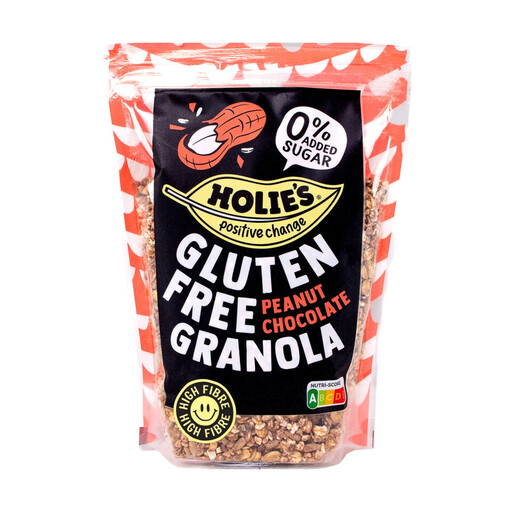
Holie's Granola Glutenfree Peanut Chocolate, 330 g

Holie's Granola Glutenfree Peanut Chocolate 330 g

Gluten-free granola for an easy breakfast if you tolerate oats; this isn’t cornflakes.

330 g pack. Check the current ingredients and allergen information, especially if peanuts, nuts or soya are relevant to you.

View on Joybuy
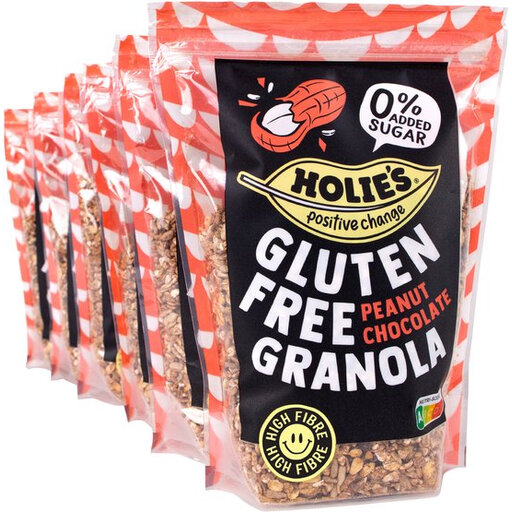
Holie's Granola Glutenfree Peanut Chocolate, 6 × 330 g

Holie's Granola Glutenfree Peanut Chocolate 6 × 330 g

The same gluten-free granola for anyone who tolerates oats and wants to buy several packs; it’s not a substitute for regular cornflakes if cereal flakes are what you’re looking for.

Six 330 g packs. Check the current ingredients and allergen information, especially if peanuts, nuts or soya are relevant to you.

View on Joybuy

Frequently asked questions

Are cornflakes automatically suitable for coeliac disease?

No. Corn as an ingredient doesn’t guarantee that the finished product is gluten-free. Choose cereal with an explicit gluten-free statement or suitable certification; under Commission Implementing Regulation (EU) No 828/2014, food sold to the final consumer in the EU can only be labelled gluten-free if it contains no more than 20 mg/kg of gluten.

What should I look out for if I want to eat oat flakes?

Choose oat flakes explicitly labelled gluten-free, and consider whether you tolerate oats. The Dutch Coeliac Society highlights the risk of oats being contaminated with gluten-containing grains, as well as the small number of people with coeliac disease who cannot tolerate even pure oats. If you’re unsure about your own situation, speak to your healthcare professional or a specialist dietitian.

How do I compare cereal for everyday breakfasts?

Compare similar gluten-free cereals per 100 g for sugars, salt and fibre. The Netherlands Nutrition Centre recommends comparing labels side by side; also check the ingredients list and the portion you actually eat.

Are regular Kellogg's Corn Flakes and Special K Original gluten-free?

These standard products are not gluten-free substitutes for people with coeliac disease. Kellogg's Netherlands lists barley malt extract in Corn Flakes and wheat and barley, among other ingredients, in Special K Original. If you’re considering a different product, always check its specific packaging.
