If you want to make cookie dough, choose a flour or baking mix labelled gluten-free and intended for cookies. Gluten-free breakfast cake that’s already baked is suitable when your recipe specifically calls for breakfast cake or crumbs, not as a flour substitute. If you have coeliac disease, you’ll also need to check the other ingredients and prevent cross-contamination while baking.
Who is each option for?
Home baker with coeliac disease
You want to make cookie dough using flour or a baking mix labelled gluten-free. According to the Netherlands Nutrition Centre, even a small amount of gluten from cross-contamination can be significant, so make sure your ingredients, worktop and utensils are free from gluten residue.
Baker using breakfast cake in a recipe
Your recipe calls for pieces or crumbs of breakfast cake that’s already baked. In that case, you’re looking for gluten-free breakfast cake rather than a flour substitute.
Shopper with an additional allergy
As well as checking the gluten-free label, you check the allergens in the specific product. The Peijnenburg and Jumbo breakfast cakes discussed here list milk and lupin.
What should you look for when choosing?
Start with the role the ingredient plays in your recipe: are you making dough, or adding breakfast cake that’s already baked? Then check the gluten-free label, the other ingredients and any additional allergens.
| What to consider |
What to check when buying |
Who it matters to |
| Gluten-free baking |
Check for a gluten-free label or the Crossed Grain mark on the ingredients you use. Also make sure your worktop and utensils are free from gluten residue. |
If I’m baking for someone with coeliac disease, I want to prevent ordinary flour or crumbs from coming into contact with the dough. For around 42% of consumers, gluten-free preparation is the top priority. |
| Role in the recipe |
Choose a gluten-free flour or baking mix intended for cookies if you’re making dough; choose gluten-free breakfast cake if the recipe calls for cake that’s already baked. |
When my recipe calls for dough, I don’t want to use breakfast cake that’s already baked as flour. The right type of baking ingredient matters most to around 33% of consumers. |
| Other allergens |
Read the allergen information on the current packaging, even if the product is labelled gluten-free. |
If I have an additional allergy, I want to know whether the mix or breakfast cake I’ve chosen lists that allergen. Around 25% of consumers give this check top priority. |
Common mistakes
-
Buying breakfast cake for a recipe that calls for flour
Breakfast cake is already baked. If you use it instead of flour or baking mix, you won’t be following the method specified in the cookie recipe.
Check the ingredients and method before you buy: for dough, choose a gluten-free mix intended for that purpose; for pieces or crumbs, choose gluten-free breakfast cake.
-
Looking only for the words ‘gluten-free’
A gluten-free product may contain other allergens. The Peijnenburg and Jumbo breakfast cakes discussed here list milk and lupin; Albert Heijn says that Schär Mix Kuchen und Kekse may contain soya.
If you need to take an additional allergy into account, read the allergen information on the specific packaging every time you buy.
-
Using gluten-free ingredients on a contaminated worktop
According to the Netherlands Nutrition Centre, even a stray bread crumb can matter if you have coeliac disease. A gluten-free baking mix on its own won’t prevent contact with gluten during preparation.
Clean your worktop, baking tray and utensils, and keep gluten-free ingredients separate from ordinary flour and crumbs.
-
Assuming every breakfast cake contains iodised baker’s salt
The product category doesn’t tell you which salt was used in a specific breakfast cake.
If the presence of iodised baker’s salt matters to your choice, check the product’s ingredients list.
Brands to consider
Schär
According to Albert Heijn, Schär Mix Kuchen und Kekse is a gluten-free baking mix for cakes and cookies.
- The product description says it’s intended for cookie and cake dough.
- Albert Heijn says this mix may contain soya; check the packaging if you have a soya allergy.
AH Glutenvrij
According to Albert Heijn, this range includes both a gluten-free self-raising baking mix for items such as cookies and a gluten-free breakfast cake bar.
- The baking mix is for dough; the breakfast cake bar is already baked.
- The breakfast cake bar lists milk and lupin. Check whether the raising agent in the self-raising mix is suitable for your recipe.
Peijnenburg
The gluten-free Peijnenburg breakfast cake described by Albert Heijn is unsliced and weighs 285 g.
- An option when your recipe calls for pieces or crumbs of breakfast cake that’s already baked.
- It isn’t a flour or baking mix. The product information lists milk and lupin.
Jumbo Lekker Vrij
Jumbo describes its 300 g unsliced gluten-free breakfast cake as carrying the Crossed Grain mark.
- Suitable when a recipe calls for breakfast cake that’s already baked as an ingredient.
- The ingredients information lists milk and lupin, and says that other allergens may be present; check the current packaging.
Joybuy products for cookie dough
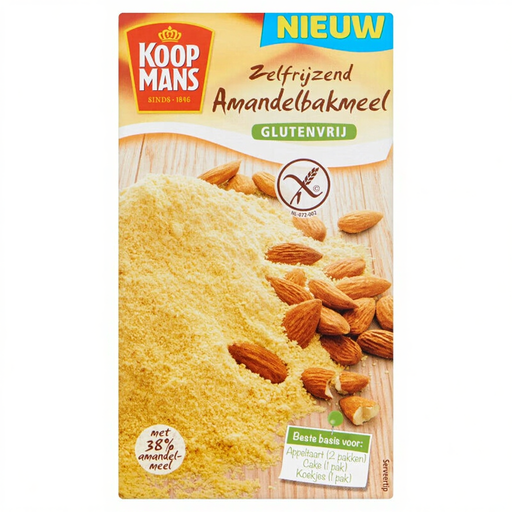
This self-raising almond flour is a baking base for recipes that use dough, not breakfast cake that’s already baked. If you have coeliac disease, check the gluten-free label on the current packaging and all the other recipe ingredients before use.
 No image available
Koopmans Self-Raising Almond Flour, 200 g
A self-raising almond flour base to consider for a cookie recipe that suits this mix. Check the preparation instructions and any additional ingredients required on the packaging; if you have an almond or lupin allergy, also check the allergen information.
View at Joybuy
Frequently asked questions
Can I use gluten-free breakfast cake in any cookie recipe?
No. Gluten-free breakfast cake is already baked, so it can’t replace flour in a cookie dough recipe. Use breakfast cake when the recipe calls for it as an ingredient; for dough, choose a flour or baking mix labelled gluten-free and intended for cookies.
What does ‘gluten-free’ on a food product mean?
Under EU Regulation 828/2014, a food product can be labelled ‘gluten-free’ if it contains no more than 20 mg of gluten per kg. When baking, also check the other recipe ingredients and take steps to prevent cross-contamination.
How can I prevent cross-contamination when baking gluten-free cookies?
Keep gluten-free ingredients away from ordinary flour and crumbs, and clean your worktop, baking tray and utensils before you start. The Netherlands Nutrition Centre points out that even a small amount of gluten can matter if you have coeliac disease.
How can I check whether breakfast cake contains iodised baker’s salt?
Check the ingredients list for the specific breakfast cake rather than assuming it contains iodised baker’s salt based on the product category.


