
Host with a guest who has coeliac disease
You’re looking for bread clearly labelled gluten-free and want to prevent it coming into contact with regular bread during preparation or serving.


If you’re hosting someone with coeliac disease, choose bread clearly labelled ‘gluten-free’. Under Implementing Regulation (EU) No 828/2014, this claim may only be used when the product sold to consumers contains no more than 20 mg of gluten per kg. Then choose a format that suits how you plan to serve it, check the current label for any other relevant allergens and keep the bread separate from regular bread.
You’re looking for bread clearly labelled gluten-free and want to prevent it coming into contact with regular bread during preparation or serving.
You’re looking for small bread formats to serve alongside other snacks, such as mini baguettes, ciabatta or pistolets.
As well as the gluten-free claim, you want to check each product’s ingredients, other allergens, nutritional information and storage instructions.
Start by checking the gluten-free claim and planning how to prevent contact with regular bread. Then compare the format, preparation instructions and other label information.
| What to consider | What to check when buying | Who it matters to |
|---|---|---|
| Serving gluten-free bread | Look for the ‘gluten-free’ claim on the packaging and plan to use separate, clean equipment for preparation and serving. | If a guest has coeliac disease, I want to check which bread I’m serving and avoid contact with crumbs from regular bread. For around 46% of consumers, this is their top concern when shopping. |
| Format and preparation | Compare the number of pieces and the preparation instructions with what you want to serve at the table. | For a shared snack spread, I want to be able to serve individual rolls without having to prepare more than I’ve planned for. Around 27% of consumers give format and convenience top priority. |
| Other label information | Read the allergen information, nutritional values per 100 g and storage or freezing instructions. | If guests also need to avoid other ingredients, or if there’s bread left over, I want to be able to compare products on that basis. This is the main shopping concern for around 27% of consumers. |
A gluten-free claim doesn’t mean a product is also free from ingredients such as milk, egg, soya or nuts.
If a guest has additional allergies, check the current ingredients and allergen information on the packaging. The Netherlands Food and Consumer Product Safety Authority says that prepacked products display allergen information on their labels.
Even after you’ve bought it, gluten-free bread can come into contact with regular bread through crumbs, kitchen utensils or shared spreads.
Use a clean work surface, separate utensils and individual spreads. Keep the bread separate when serving it, too.
A listing of gluten-free products doesn’t mean the bread you want is available at your chosen shop.
Check the specific product and the shop shortly before buying. Lidl’s page stated that additional gluten-free products were unavailable at the time.
The ‘gluten-free’ claim doesn’t tell you what kind of salt has been used in the bread.
If iodised salt matters to your choice, check the ingredients list for the specific product. The Netherlands Food and Consumer Product Safety Authority explains how iodine compounds may be present in bread through baker’s salt; this doesn’t confirm that they’re used in every loaf.
Albert Heijn has a gluten-free bread category, including AH Gluten-free Light Multiseed Bread, 480 g.
Jumbo’s gluten-free bread range includes sliced bread, mini baguettes and ciabatta.
Lidl has a page for gluten-free products alongside its general bread range.
ALDI lists gluten-free bread among its bake-off rolls and snacks.
PLUS’s online range includes gluten-free white bread, multiseed bread and pistolets.
Search results for gluten-free bread at Dirk include Schär Meisterbackers Classic, Meisterbackers Vital and Mini Baguette.
These products offer two ways to plan bread for your snack spread: choose a small bread format or make your own bread from a mix. Before serving anything to a guest with coeliac disease, always check the specific product’s gluten-free claim, current label and preparation instructions.
 No image available
The product name lists seven mini baguettes, a format to consider for individual portions. Before buying, check the packaging to see whether these are rolls or a mix that needs to be prepared; the product information gives conflicting preparation instructions. Also check the current gluten-free claim and allergen information.
 No image available
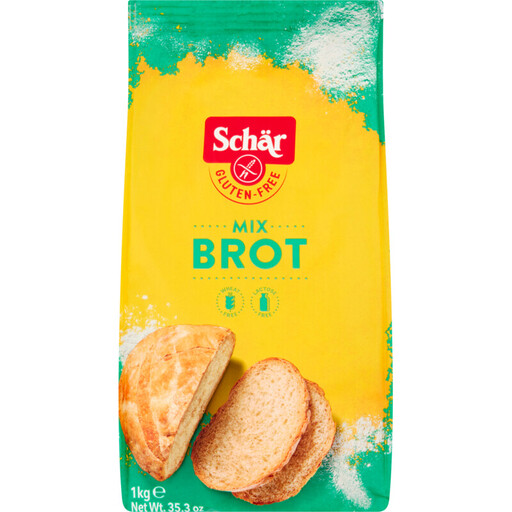
This bread mix is a good fit if you can bake ahead of your snack night. According to the product information, you can knead the mix by hand or use a bread maker. Follow the instructions on the packaging and check how much bread it makes. Before use, also read the current ingredients and allergen information.
Choose bread clearly labelled ‘gluten-free’ and prevent it coming into contact with regular bread during preparation. Under Implementing Regulation (EU) No 828/2014, this claim is subject to a limit of 20 mg of gluten per kg of the product sold to consumers.
No. The gluten-free claim says nothing about other allergens. If ingredients such as milk, egg, soya or nuts are relevant to a guest, check the ingredients and allergen information on the current packaging.
Use a clean knife, a clean board and a separate serving plate for the gluten-free bread. Keep it away from crumbs from regular bread and shared spreads, too.
You can’t tell from the gluten-free claim, so check the ingredients list for the bread you’re considering. The Netherlands Food and Consumer Product Safety Authority explains that iodine compounds may be present in bread through baker’s salt, but that doesn’t establish the ingredients of any individual loaf.