For a car journey, choose bread labelled ‘gluten-free’ or bearing the Crossed Grain symbol, and avoid contact with ordinary bread crumbs while preparing and packing it. Sliced bread is practical for sandwiches made in advance; rolls are handy for individual portions, provided you can prepare and store them according to the packaging. Also compare allergens, fibre, salt and whether iodised salt is used in each product.
Who is this choice relevant to?
Travellers with coeliac disease
You need gluten-free bread and want to avoid it coming into contact with ordinary bread when spreading it or carrying it. According to the Dutch Coeliac Society, cross-contamination with gluten can also cause symptoms. So check both the packaging and the place where you prepare your snack.
Travellers who prepare everything at home
You want to be able to eat on the go without an oven or chopping board. In that case, portion size, the bread’s storage instructions and keeping any perishable fillings chilled all matter.
Consumers comparing nutritional information
As well as checking that it is labelled gluten-free, you look at fibre, salt, other allergens and the ingredients. For the iodine content of bread, it matters whether baker’s salt or another type of iodised salt has been used, according to the Netherlands Nutrition Centre.
What should you look for when choosing?
If you have coeliac disease, start by checking the gluten-free labelling and making sure the bread can be prepared without contact with ordinary bread crumbs. Then choose a type of bread you can prepare before setting off, and compare the nutritional information on a like-for-like basis.
| What to consider |
What should you check? |
Who is this important for? |
| Gluten-free and prepared separately |
Check the packaging for ‘gluten-free’ or the Crossed Grain symbol. Use clean utensils and keep the bread separate from ordinary bread crumbs. |
If I have coeliac disease, I want a clearly labelled product that also stays separate from ordinary bread while it is being prepared and packed. This precaution comes first for around 33% of consumers. |
| Preparation and storage |
Check whether baking is required and follow the storage instructions. Keep perishable fillings chilled; the Netherlands Nutrition Centre advises not leaving them out of the fridge for more than 2 hours. |
I want to prepare my snack before setting off and eat it without any further preparation, while keeping the filling stored safely. This convenience is the main consideration for around 27% of consumers. |
| Fibre, salt and iodine |
Compare fibre and salt per 100 g or per portion on the same basis. Check the ingredients list for baker’s salt or iodised salt. |
When choosing between breads, I want to know how much fibre and salt a portion contains and whether iodised salt has been used. Around 20% of consumers prioritise this nutritional information. |
| Packaging and availability |
Compare the pack size with the number of snacks you want to take, and check availability at the shop where you do your food shopping. |
I want to be able to buy enough suitable portions before setting off, without having to look for bread along the way. This preparation is the main concern for around 20% of consumers. |
Common mistakes
-
Assuming ‘wheat-free’ means ‘gluten-free’
The shape of a loaf or a statement about wheat does not give you the same assurance as a gluten-free label. Other allergens also matter, depending on the product.
If you have coeliac disease, check the current packaging for ‘gluten-free’ or the Crossed Grain symbol, and read the allergen information.
-
Preparing gluten-free bread with shared kitchen utensils
According to the Dutch Coeliac Society, contact with crumbs from ordinary bread can cause cross-contamination. This risk remains even after you have chosen a gluten-free product.
Use clean spreading utensils and a clean chopping board. Pack the gluten-free snack separately for the journey.
-
Judging bread by its colour or name
‘Dark’ and ‘multiseed’ do not tell you how much fibre or salt a particular portion contains. The Netherlands Nutrition Centre also notes that using baker’s salt is not compulsory.
Compare the nutritional information per 100 g or per portion, and check the ingredients list for iodised salt.
-
Assuming the bread’s shelf life also applies to its filling
Bread that can be stored outside the fridge does not make a perishable filling suitable for being left unrefrigerated in the car for hours.
Use a cool bag with ice packs for rolls with these types of filling. The Netherlands Nutrition Centre advises not leaving perishable food out of the fridge for more than 2 hours.
Brands to compare
Schär
Jumbo lists several types of Schär bread, including sliced bread and smaller rolls. This makes the brand worth considering if you’re looking for a type that suits your travel plans.
- For Schär Meesterbakker Classic, Jumbo lists details including fibre, iodised salt and instructions for storing the bread after opening.
- These details apply to Meesterbakker Classic. For another Schär variety, check the allergens, nutritional information and storage instructions again.
AH Glutenvrij / Vrij Van
Albert Heijn’s own gluten-free range includes white bread, multiseed bread and white rolls. This lets you compare different types of bread for different kinds of snacks.
- The types and pack sizes shown can help you choose portions to take on the go.
- Check the information for the specific variety for its ingredients, allergens and nutritional values.
Consenza
Albert Heijn lists a gluten-free Consenza chia seed loaf for anyone who wants to compare seeded bread with other types.
- This type of product offers a specific alternative to white sliced bread.
- Compare the fibre content, allergens and ingredients on the packaging; the name alone does not tell you these values.
Nairn’s
Albert Heijn lists gluten-free Nairn’s flatbreads. A flatbread is a different kind of snack from sliced bread or a roll.
- The flat shape may suit you if you want to prepare a snack at home that you can take with you without cutting it.
- Check the current gluten-free labelling, ingredients and allergens on the packaging for each variety.
Products to prepare for the journey
These Joybuy products include mini baguettes to bake before setting off and a bread mix for making bread at home. Neither is a ready-to-eat snack straight from the pack; before use, check the current gluten-free labelling, ingredients and preparation instructions.
 No image available
Gluten-free mini baguettes, 7 pieces
For anyone who wants to take individual portions of bread and can bake them at home. If you have coeliac disease, check the current packaging for gluten-free labelling and avoid contact with ordinary bread crumbs during preparation.
View at Joybuy
 No image available
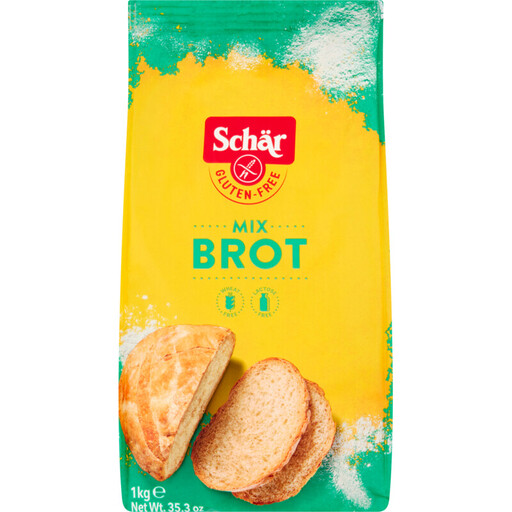
Schär Bread Mix-Mix B Gluten Free, 1 kg
For anyone who wants to bake their own bread before travelling. This is a mix, not bread you can pack straight away; follow the preparation instructions and check the current packaging for allergens and the type of salt used.
View at Joybuy
Frequently asked questions
What should I look for in bread for someone with coeliac disease?
Check that the packaging says ‘gluten-free’ or carries the Crossed Grain symbol, and avoid cross-contamination during preparation. The Netherlands Nutrition Centre lists these as indicators for gluten-free products; also use clean utensils and keep the bread separate from ordinary bread crumbs.
Can gluten-free bread go in the same lunchbox as ordinary bread?
If you’re packing it for someone with coeliac disease, wrap it separately if there is any risk of contact with ordinary bread or crumbs. The Dutch Coeliac Society points out that cross-contamination with gluten can also cause symptoms.
How should I take rolls with perishable fillings on the go?
Keep them chilled, for example in a cool bag with ice packs. According to the Netherlands Nutrition Centre, perishable food should not be left out of the fridge for more than 2 hours; follow the storage instructions on the packaging for the bread itself.
Does gluten-free bread always contain iodised baker’s salt?
No. According to the Netherlands Nutrition Centre, bread does not have to be baked with baker’s salt. Check the ingredients list for the specific bread to see whether baker’s salt or iodised salt has been used.
Does ‘gluten-free’ tell me anything about fibre and salt?
No, the gluten-free label does not tell you how much fibre or salt a product contains. Compare the nutritional information for the breads you’re considering per 100 g or per portion, on the same basis.


