
Hosting someone with coeliac disease
You’re looking for bread labelled gluten-free and want to prevent it coming into contact with crumbs from regular bread when it’s sliced, toasted or served.


Choose a loaf clearly labelled ‘gluten-free’ and pick a shape to suit the meal: a larger loaf for slicing, or mini baguettes and rolls to serve individually. Standard tiger bread isn’t a safe default for someone with coeliac disease: Albert Heijn lists wheat gluten, barley and rye among the ingredients in AH Tijger volkoren. Keep the gluten-free bread separate from bread containing gluten when slicing, preparing and serving it, too.
You’re looking for bread labelled gluten-free and want to prevent it coming into contact with crumbs from regular bread when it’s sliced, toasted or served.
You want to serve bread with the meat, gravy and vegetables. Whether you choose a sliced loaf or smaller rolls depends on how you want to lay the table; you can’t assume it will have the same crust as tiger bread.
As well as the shape of the bread, you’re checking ingredients, fibre per 100 g, allergens and whether the label mentions iodised salt or baker’s salt.
First, check that the bread is labelled gluten-free and consider how you’ll keep it separate. Then choose a shape to serve at the table and compare the other information on the label.
| What to consider | What to check when buying | Who is this most important for? |
|---|---|---|
| Buying and serving gluten-free bread | Look for the words ‘gluten-free’ on the product and use clean, separate utensils for slicing and serving. | If someone with coeliac disease is joining us, I want to make sure the bread doesn’t come into contact with regular bread crumbs before it’s served. Around 42% of consumers put this safety requirement first. |
| Bread shape and portions | Choose between a loaf for slicing and smaller rolls; check how the bread needs to be prepared, too. | When everyone at the table will be having bread with their meal, I want a shape that’s easy to share. Around 33% of consumers prioritise this when it comes to serving. |
| Ingredients | Compare fibre per 100 g, allergens and whether the ingredients list mentions iodised salt or baker’s salt. | When choosing between different gluten-free breads, I want to know what’s in them and whether the label mentions baker’s salt. This is the most important consideration for around 25% of consumers. |
Those words alone don’t confirm that the finished product is gluten-free. Under EU Implementing Regulation 828/2014, the term ‘gluten-free’ may only be used if the food contains no more than 20 mg/kg of gluten when sold to the final consumer.
Check that the specific product is clearly labelled gluten-free, and review its current ingredients and allergen information.
According to the Dutch Coeliac Society, crumbs and shared utensils can lead to cross-contamination.
Use clean hands, a clean chopping board and a separate knife. Keep dips and the serving area separate from bread containing gluten, too.
The Netherlands Nutrition Centre says that bakers aren’t required to use baker’s salt. So the type of bread alone won’t tell you whether iodised salt has been used.
If it matters to your choice, look for ‘iodised salt’ or ‘baker’s salt’ on the label.
Ingredients and allergen information can change between product versions. When preparing a meal for someone with coeliac disease, the information on the packaging of the product you’re actually using is what matters for your final check.
Before preparing the bread, compare the packaging with what you intended to buy and follow the preparation instructions for that product.
Albert Heijn offers several gluten-free own-brand breads, including white and seeded varieties.
Jumbo offers white and brown gluten-free bread from Jumbo Lekker Vrij, both in 500 g packs.
PLUS offers its own-brand gluten-free bread in white, brown and seeded varieties.
Schär offers gluten-free bread in several shapes, including sliced loaves, ciabatta and mini baguettes.
PLUS describes Yam Desem as gluten-free sourdough bread made with gluten-free oats and sourdough starter.
For your Sunday roast, here are two different ways to prepare bread: bake-off mini baguettes, or use a gluten-free mix to make your own loaf. Whichever you choose, prepare and serve it separately from bread containing gluten.
 No image available
The seven mini baguettes are ideal for serving individual portions at the table. You bake them yourself, so check the instructions on the packaging and use clean utensils.
 No image available
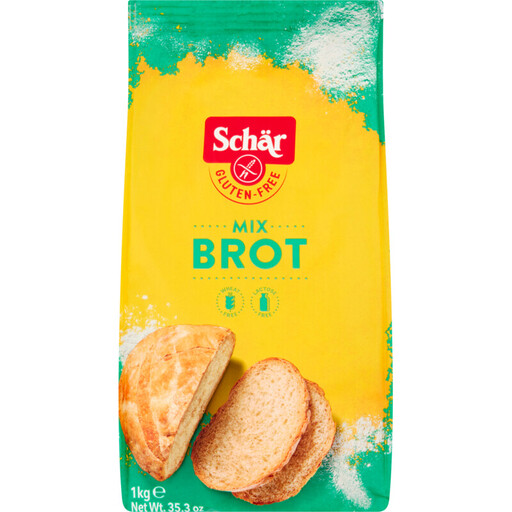
This gluten-free bread mix is for anyone who wants to bake their own bread for the meal, rather than serve bread straight from the pack. Follow the instructions on the packaging and keep your work surface and utensils free from regular bread crumbs.
Don’t assume it is. Albert Heijn lists wheat flour, wheat gluten, barley and rye in AH Tijger volkoren; this product isn’t a gluten-free option. If you’re choosing an alternative, look for the words ‘gluten-free’ on the specific product packaging.
Under EU Implementing Regulation 828/2014, the term may only be used if the food sold to the final consumer contains no more than 20 mg/kg of gluten. This label doesn’t replace the need to take care when preparing and serving the bread.
Keep it separate from regular bread, even after opening the packet. The Dutch Coeliac Society highlights the risk of cross-contamination: use clean hands and utensils, and provide a separate serving plate and dip for your gluten-free guest.
No. The Netherlands Nutrition Centre says that bakers aren’t required to use baker’s salt. So check the ingredients list for the specific bread for ‘iodised salt’ or ‘baker’s salt’.