If coeliac disease is your main concern, start with prepacked bread that’s clearly labelled gluten-free or carries the Crossed Grain symbol, and keep it away from ordinary bread crumbs when serving. Then choose between sliced bread for a no-bake breakfast and rolls if you have time to prepare them. Check each pack for other allergens, nutritional information and, if relevant, iodised salt.
Who is this choice important for?
Breakfast lovers who need to put coeliac disease first
People with coeliac disease need to follow a gluten-free diet for life, according to the Nutrition Centre. As well as checking the label, take care to avoid contact with ordinary bread crumbs when preparing and serving the bread.
Families sharing a mixed breakfast table
If ordinary bread is also on the table, keep the gluten-free bread recognisable in its packaging and use a clean board or serving plate. This helps prevent contact with crumbs when serving.
Breakfast lovers looking for a different type of bread
Sliced bread is handy for making sandwiches without any preparation; rolls suit a breakfast you want to take your time over. Albert Heijn, Jumbo and PLUS offer various types of gluten-free bread, but check the packaging of the variety you choose.
What should you look for when choosing?
Start by checking for a gluten-free label and taking care to prepare the bread safely. Then compare the types of bread and any other information that matters for your breakfast.
| What to look for | What to check when buying | Who it matters to |
|---|
| Gluten and crumbs |
Look for ‘gluten-free’ on the packaging or the Crossed Grain symbol. Keep the bread separate from ordinary bread crumbs when serving. |
If I have coeliac disease and others are eating ordinary bread, I want to serve my breakfast without it coming into contact with their crumbs; an estimated 39% of consumers put this assurance about gluten first. |
| Type of bread |
Choose between sliced bread that’s ready to serve and rolls that may need to be prepared. |
If I want to serve sandwiches on Sunday without baking, or would rather make time for rolls, that choice determines what I buy; around 23% of consumers give the type of bread top priority. |
| Nutritional information and allergens |
Compare fibre per 100 g and read the ingredients and allergen information for the variety you choose. |
If I need to avoid an ingredient as well as gluten, or want to compare fibre content, I look beyond the product name; an estimated 23% of consumers consider this the most important check. |
| Iodised salt |
Check the ingredients list for iodised salt; don’t assume it’s included based on the gluten-free label. |
If I want to know whether this particular bread contains iodised salt, I need to check the label on that pack; an estimated 15% of consumers put this question first. |
Common mistakes
-
Assuming every loaf contains iodised salt
A gluten-free label doesn’t tell you whether iodised salt has been used. PLUS product pages list it for specific Schär breads, but that doesn’t tell you anything about a different loaf.
Check the ingredients list on the packaging if the presence of iodised salt matters to your choice.
-
Choosing based on the type of grain alone
Bread made with ingredients that are naturally gluten-free isn’t the same as a product that’s clearly labelled gluten-free. At a shared breakfast, it may also come into contact with ordinary bread crumbs.
If you have coeliac disease, choose a prepacked product labelled ‘gluten-free’ or bearing the Crossed Grain symbol, and use a clean surface to prepare and serve it.
-
Assuming gluten-free means free from other allergens
Ingredients and allergens vary between types of bread. A gluten-free label won’t answer questions about ingredients such as soya, lupin or mustard.
If you have additional allergies, read the full allergen information on the packaging you’ll be using.
-
Relying on a product page alone
Albert Heijn and PLUS note that ingredients, nutritional values and allergen information can change. That’s why the packaging in your hand matters when making your final choice.
Check the label again before serving the bread, even if you’ve bought the same variety before.
Brands to consider
AH Glutenvrij
Albert Heijn’s own-label range, including gluten-free sliced bread and rolls.
- The types of bread shown give you a choice between slices and rolls for breakfast.
- Check the ingredients and allergens on the pack you receive; product information may change.
Schär
A brand with gluten-free loaves and various types of rolls listed on the supermarket pages mentioned.
- There are both sliced loaves and smaller types of bread to compare for each breakfast.
- Ingredients and allergens vary between products; don’t judge a Vital loaf based on the information for a Mehrkorn loaf.
PLUS
PLUS’s own-label range includes gluten-free white, brown and multiseed bread, as well as pistolets.
- The different types of bread let you choose between slices and rolls.
- Compare the current packaging with the product information, especially for ingredients and allergens.
A bread mix for home baking
This Joybuy pick is a gluten-free bread mix for anyone who wants to make their own bread for Sunday breakfast, rather than a ready-made loaf you can serve straight away.
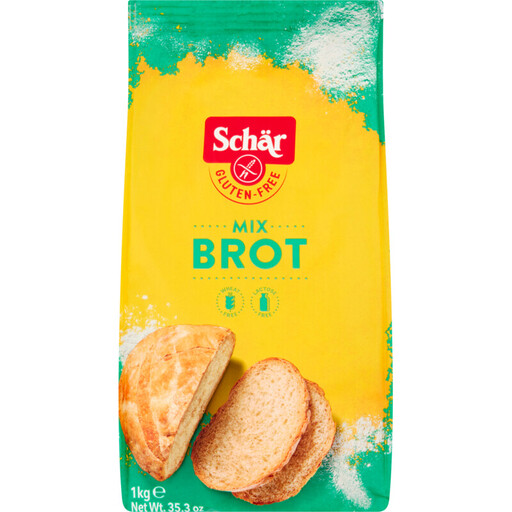 Image unavailable
Schär Bread Mix-Mix B, 1 kg
For anyone who wants to bake their own bread for Sunday breakfast. This is a 1 kg bread mix, so allow time for preparation and check the packaging for ingredients, allergens and the gluten-free label. Avoid contact with ordinary bread crumbs while preparing it.
View on Joybuy
Frequently asked questions
Is a gluten-free label enough if you have coeliac disease?
According to the Nutrition Centre, the ‘gluten-free’ label or the Crossed Grain symbol helps you identify a gluten-free product. If you’re having breakfast with ordinary bread, also keep the gluten-free bread separate from crumbs containing gluten and from utensils that have been used for ordinary bread.
Does all gluten-free bread contain iodised salt?
No, you can’t tell from the ‘gluten-free’ label. PLUS product information lists iodised salt for specific Schär breads; for other breads, check the ingredients list on the packaging itself.
How should I serve gluten-free bread alongside ordinary bread?
Keep the gluten-free bread separate from ordinary bread crumbs. Put it on a clean board or serving plate, and take care with shared utensils when preparing and serving it, too.
How should I store gluten-free bread after opening?
Follow the storage instructions on the packaging for that particular bread. Also check how long it can be used for after opening and whether the packaging recommends freezing it.
Is gluten-free bread automatically a healthier choice?
No, the gluten-free label on its own says nothing about nutritional value. For example, compare the fibre per 100 g in the types of bread you’re considering, and check the ingredients and allergens separately.


