
Parents of a child with coeliac disease
For a school lunch, both the gluten-free label and clean, separate preparation are important. The Voedingscentrum points out that even a bread crumb can cause problems for someone with coeliac disease.


For a child with coeliac disease, choose bread labelled ‘gluten-free’ and avoid contact with ordinary bread and crumbs when preparing it. Then check the allergen information on the exact pack and make sure the portions, nutritional information and preparation suit the school day. A gluten-free label does not mean the bread is free from other allergens.
For a school lunch, both the gluten-free label and clean, separate preparation are important. The Voedingscentrum points out that even a bread crumb can cause problems for someone with coeliac disease.
As well as gluten, ingredients and warnings about allergens such as soya, milk, egg, nuts, lupin or mustard may be important. So check the information for the exact bread variety.
Portion size, fibre per 100 g and storage instructions can help you decide whether a loaf is practical for the lunches you have planned. If freezing, follow the instructions on the pack.
For coeliac disease, checking the gluten-free label always comes first. The other points can then help you choose between breads that also meet your personal allergen requirements.
| What to consider | What to check when buying | Who it matters to |
|---|---|---|
| Gluten-free labelling and clean packing | Read the gluten-free label on the pack. Use a clean lunchbox, a clean knife and a work surface free from crumbs from ordinary bread. | If my child has coeliac disease, I want to prevent gluten getting onto the bread while it’s being packed. For around 36% of consumers, this reassurance comes first. |
| Other allergens | Compare the ingredients and any warnings about traces on the exact pack with the allergens that need to be avoided. | If my child has an additional food allergy, I want to know whether this particular variety contains ingredients or possible traces they need to avoid. Around 22% of consumers give this extra check the highest priority. |
| Nutritional information | Compare details such as fibre per 100 g and the ingredients. Don’t judge by the colour of the bread or the name of a variety alone. | If bread is often taken to school, I want to compare the nutritional information of suitable varieties. For around 21% of consumers, this is the most important point of difference. |
| Portions and storage | Check the pack weight, number of portions and storage instructions, including any advice on freezing. | If I’m planning lunches for several school days, I want to know how many portions I can use and how to store the bread. Around 21% of consumers put these practical considerations first. |
For someone with coeliac disease, contact with crumbs from ordinary bread can be a problem, even if the bread you have chosen is labelled gluten-free. The Voedingscentrum highlights this risk of cross-contact.
Clean the work surface and any equipment you use, and keep the bread separate from ordinary bread while preparing and packing it.
The Lekker Vrij Bruin variety described by Jumbo contains soya and may contain egg, milk and nuts. For Schär Meesterbakker Classic, PLUS lists soya and possible traces of lupin and mustard.
If there are additional allergies, always check both the ingredients and the warnings on the pack of the variety you’re buying.
In its information note from July 2025, the RIVM explains that the Dutch iodine policy focuses, among other things, on iodised salt in bread. This does not tell you which ingredients are in any particular gluten-free bread.
If you want to check this for a specific variety, look at the ingredients list to see whether iodised salt is listed.
These examples show the product information you can compare for each variety of bread. A brand name alone tells you nothing about the allergens or preparation of another variety.
Albert Heijn’s own-brand range includes, among other options, a 480 g light multiseed loaf.
Jumbo’s own-brand range includes 500 g white and brown gluten-free bread.
Schär offers a range of gluten-free breads, including Meesterbakker Classic and Vital, as well as bread products in other shapes.
Jumbo’s range overview includes Yam Desem Brood Glutenvrij, a 600 g gluten-free sourdough loaf.
The PLUS range includes several types of gluten-free bread, including white bread, brown bread, multiseed bread and rolls.
Below are a Gv product with mini baguettes in its name and Schär Mix B, a gluten-free bread mix to prepare at home. Before using the Gv product, check whether the pack contains rolls or a mix, what preparation is required and whether the current pack states ‘gluten-free’.
 Image unavailable
Only consider this product for a school lunch after checking the gluten-free label, product type and preparation instructions on the pack.
If you have a soya, lupin or mustard allergy, the ingredients and warnings about traces are also important.
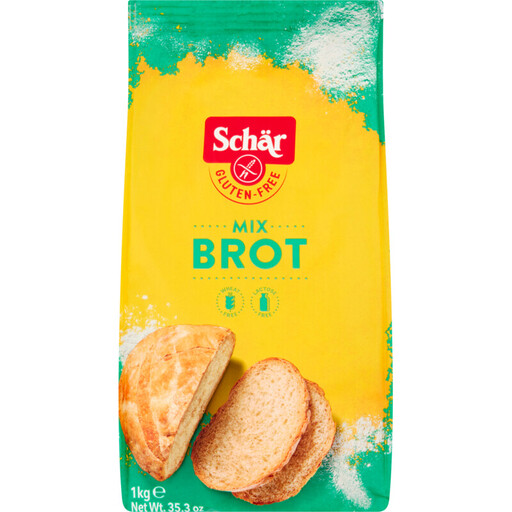 Image unavailable
This mix is a good option if you want to bake bread at home for a school lunchbox; it isn’t ready to pack straight away.
Joybuy describes preparation by hand or in a bread maker. Check the ingredients if you have a soya allergy, and use clean equipment to prevent contact with ordinary bread.
Not based on the name alone: choose bread labelled gluten-free. Spelt is a type of wheat, and ordinary bread made with wheat, rye or barley is also unsuitable for a gluten-free diet for coeliac disease.
No, you need to check each product separately. For Lekker Vrij Bruin, Jumbo lists soya and possible traces of egg, milk and nuts. Before buying, check the allergen information on the exact pack.
Yes, read the pack every time you buy it, especially if coeliac disease or additional allergies are involved. Ingredients and allergen information can change.
Ask what arrangements are in place at your child’s school and in their class for food allergies, meals and treats. For example, the allergy protocol from ODBS de Zuid-Wester, dated June 2024, describes consulting parents. Discuss the arrangements for your child with their own school.
You can’t assume this for every variety; check whether ‘iodised salt’ is on the ingredients list. In its information note from July 2025, the RIVM explains that the Dutch iodine policy focuses, among other things, on using iodised salt in bread. It does not say that every gluten-free variety contains it.