If you have coeliac disease, start by choosing bread labelled gluten-free on its current packaging. Check your savoury toppings too, and avoid contact with ordinary bread. Then choose a format that suits your morning: sliced bread that’s ready to top, or rolls that you can bake or toast according to the packaging. If you eat it regularly, compare the fibre per 100 g and check separately whether iodised salt has been used: according to the Netherlands Nutrition Centre, bakers’ salt is not compulsory.
Which bread is right for you?
If you follow a strict gluten-free diet for coeliac disease
The label on the packaging is the place to start. The Netherlands Nutrition Centre advises checking the ingredients and allergen information too. At home, take care to avoid contact with crumbs from ordinary bread.
If you eat savoury sandwiches every day
Sliced bread is ready to top. If fibre and iodine matter to you, compare the nutritional information for each product and check whether iodised salt is listed in the ingredients.
If you like a warm roll for breakfast
A baguette or panini that you bake or toast is a good choice for a warm breakfast with savoury toppings. Check the preparation instructions and storage advice for an opened pack beforehand.
What should you look for when choosing?
First, check that both the bread and the toppings suit your gluten-free diet. Then compare the nutritional information and preparation method based on how often you eat breakfast and how much time you have.
| What to consider |
What to check when buying |
Who should pay particular attention? |
| Gluten and cross-contamination |
Look for a gluten-free label on the current packaging and check the ingredients, allergens and warnings. Check the toppings separately. |
If I eat strictly gluten-free because of coeliac disease, I also want to avoid bread or toppings coming into contact with ordinary bread crumbs. Around 46% of consumers put this check first. |
| Fibre and iodised salt |
Compare the fibre per 100 g in the nutritional information and check whether iodised salt or bakers’ salt is listed in the ingredients. |
When I eat sandwiches every day, I want to be able to compare the nutritional information for different breads rather than judging by the name ‘multiseed bread’. Around 27% of consumers say this is their main concern when buying. |
| Format and preparation |
Check whether the bread is ready to top or needs baking or toasting. Also check the storage advice once opened. |
On a busy morning, I want to make a sandwich quickly, while on a more relaxed morning I’d rather prepare a warm roll. Around 27% of consumers prioritise this convenience. |
Common mistakes when choosing
-
Relying on ‘wheat-free’ or a dark colour
Wheat-free doesn’t mean the same as gluten-free. The colour of the bread also tells you nothing about whether it contains gluten or whether it came into contact with gluten during preparation.
Check the gluten-free label on the current packaging, as well as the ingredients, allergens and any warnings.
-
Checking the bread but not the toppings
Gluten can also be found in parts of a savoury breakfast, including some sauces and processed meats. Choosing your bread carefully doesn’t automatically make the toppings suitable.
Check the information for spreads, sauces, processed meats and prepared salads separately, and avoid contact with ordinary bread at home.
-
Assuming all gluten-free bread provides iodine
According to the Netherlands Nutrition Centre, bakers’ salt contains iodine, but bakers aren’t required to use it. So a gluten-free label won’t tell you which salt has been used.
Check the ingredients for bakers’ salt or iodised salt in each loaf. If you have questions about eating gluten-free over the long term, speak to a dietitian if needed.
-
Choosing a pack without checking the storage advice
If you only eat bread occasionally, the recommended time for using it after opening may affect how much of a pack you get through.
Choose a pack size that suits your breakfast habits and follow the product advice on storage or freezing.
Brands to compare
AH Glutenvrij
Albert Heijn’s own-brand gluten-free range includes different types of bread, such as sliced loaves and rolls.
- You can choose a type of bread that suits either quick sandwich-making or a breakfast with rolls.
- Check the current ingredients, allergens and nutritional information on the packaging for the variant you choose.
Schär
Schär offers sliced gluten-free bread, as well as types such as ciabatta and baguettes.
- According to PLUS product information, the Meesterbakker Mehrkorn variant lists 9,9 g of fibre per 100 g and iodised salt.
- The Mehrkorn variant reviewed contains soya and may contain traces of lupin, sesame and mustard. This information doesn’t automatically apply to other variants.
Schnitzer
Schnitzer makes gluten-free bake-at-home products, including a baguette and an oat panini, for anyone who likes their bread warm.
- Albert Heijn product information describes the baguette as a bake-at-home product and the panini as a roll to bake or toast.
- Preparation takes time. For the variant you choose, check the warnings and storage advice once opened too.
Jumbo Lekker Vrij
Jumbo’s own-brand gluten-free range includes 500 g white and brown loaves.
- The loaves listed come in a familiar format for making sandwiches.
- Before choosing, compare the ingredients, allergens, fibre and type of salt used in each variant.
Mini baguettes for a savoury breakfast at Joybuy
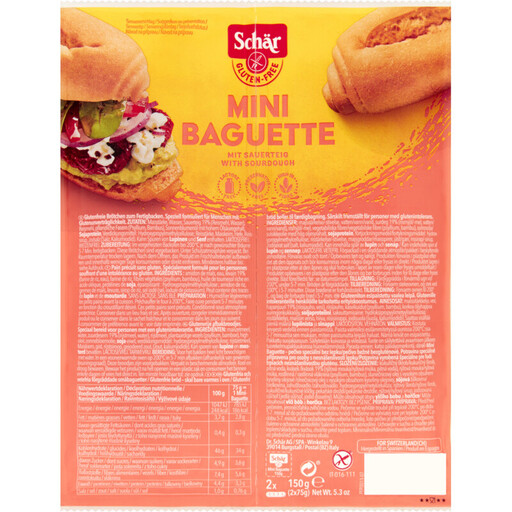
This Joybuy selection features mini baguettes for a savoury breakfast with toppings. Check the current packaging before buying: the available preparation instructions differ between bake-at-home rolls and a mix that you shape yourself.
 No image available
Gv Baguette Mini 7 Pieces
The mini baguette format is ideal for a savoury sandwich. Check the current packaging to see whether you’re buying bake-at-home rolls or a mix, how they need to be prepared and how many rolls are in the pack.
If you follow a strict gluten-free diet, also check the current gluten-free label, ingredients, allergens and warnings. The available product information lists soya and possible traces of lupin and mustard. Check again if these allergens are relevant to you.
View at Joybuy
Frequently asked questions
Is bread without wheat suitable for coeliac disease?
Not automatically: choose bread labelled gluten-free on its current packaging. Also check the ingredients, allergens and warnings. According to the Netherlands Nutrition Centre, grains other than wheat can contain gluten too, so contact with gluten remains a concern.
Does gluten-free bread always contain iodine?
No. According to the Netherlands Nutrition Centre, bakers’ salt contains iodine, but bakers don’t have to use it. So check the ingredients for the specific bread to see whether it contains bakers’ salt or iodised salt.
How can I avoid contact with gluten at breakfast?
Keep gluten-free bread and toppings away from ordinary bread and crumbs, and use clean surfaces and utensils. Check the information for sauces, processed meats and spreads separately too.
How should I store gluten-free bread once opened?
Follow the storage advice on the pack you’ve chosen; the recommended time varies by product. The product information for Schär Meesterbakker Mehrkorn advises resealing the pack after opening and eating the bread within a few days or freezing it straight away. Albert Heijn, meanwhile, advises using Schnitzer Bio Baguette Classic within two days of opening.


