What should you look for when choosing?
If you need to avoid gluten strictly, start by checking the gluten-free label and taking steps to prevent cross-contamination. Then compare the nutritional information and choose a type of bread that suits how you prepare your lunch.
| What to consider |
What should you check? |
Who is this most important for? |
| Gluten-free labelling and cross-contamination |
Read the gluten-free label and allergen information on the pack. Use clean knives, chopping boards and fillings when preparing your lunch. |
If I need to avoid gluten because of coeliac disease, I want to prevent crumbs from ordinary bread getting into my lunch. This is the top concern for around 33% of consumers. |
| Fibre and iodised salt |
Compare fibre per 100 g and check the ingredients list to see whether iodised salt or baker’s salt has been used. |
For my lunch, I want to know not only whether the bread is gluten-free, but also how much fibre it contains and what type of salt it uses. Around 27% of consumers give this nutritional information top priority. |
| Portions and preparation |
Check whether you’re buying a loaf, individual rolls or a bread mix, and read the preparation and storage instructions. |
When I’m short on time to make lunch, it matters whether I can add a filling straight away or need to bake the bread first. For around 20% of consumers, this convenience matters most. |
| Availability |
Check the specific product at your shop or in your delivery area, including the type of bread and pack size. |
When doing my regular food shop, I want to know whether I can find the same suitable bread again. Availability is the main consideration for around 20% of consumers. |
Shops and brands to explore
These shop listings can help you see where to compare different types of bread. The packaging of the product you choose is still the best source for ingredients and nutritional information.
Albert Heijn
Albert Heijn’s online range includes gluten-free bread from its own brand and other brands, including Schär and Consenza.
- The category includes white rolls, multigrain bread, seeded bread and sourdough bread.
- Check the current packaging for ingredients and dietary information, as Albert Heijn advises.
Jumbo
Jumbo’s online Schär category features gluten-free bread, ciabatta, mini baguettes and rolls.
- You can compare different types of Schär bread in this category.
- The Schär category doesn’t show Jumbo’s entire gluten-free range, so check what’s available at your shop.
PLUS
PLUS’s gluten-free bread category features both own-brand loaves and branded products.
- The own-brand options shown include white, brown and multiseed bread.
- The nutritional values and ingredients of a specific Schär loaf don’t necessarily apply to other breads in the category.
Dirk
Dirk has a product page for the 150 g Schär Mini Baguette, which is gluten-free.
- If you’re looking for a mini baguette, this specific product is a useful starting point.
- Check what’s available at your shop; one product page doesn’t tell you what other breads are on offer.
Lidl
Lidl has a page for additional gluten-free products, but these should be considered part of a changing range.
- Current shop or range information can help you plan your food shop.
- Lidl stated on the page consulted that the additional gluten-free products were not available at the time.
ALDI
ALDI lists gluten-free bread and rolls among its bakery options.
- This makes these types of bread worth asking about at a branch with a bakery.
- Check the specific product and its label at your chosen branch before buying it for a gluten-free lunch.
Joybuy products for bread and home baking
Both of these products require you to check the current packaging: one listing mentions mini baguettes, while the other is a bread mix to prepare at home. Choose the type of product based on how much preparation you want to do for lunch.
 No image available
Gv Baguette Mini 7 Pieces
The name suggests mini baguettes for individual lunch portions. Before buying, check the pack for the exact contents and preparation method: the product descriptions aren’t clear about whether this is bread or a mix.
If you need to avoid gluten strictly, also check the gluten-free label and allergen information on the packaging, and take care to prevent cross-contamination during preparation.
View at Joybuy
 No image available
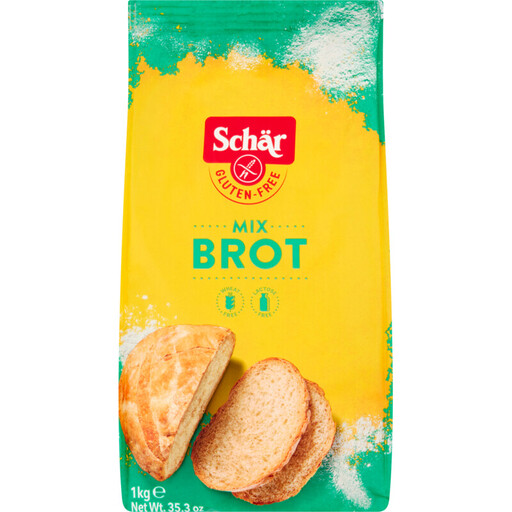
Schär Bread Mix-Mix B Gluten Free, 1 kg
This bread mix is a good option if you’d like to make bread at home rather than simply add a filling to a slice. The product information says it can be prepared by hand or in a bread maker; follow the instructions on the packaging.
The product information lists soya as an allergen. If you’re choosing based on fibre, iodised salt or the need to avoid gluten strictly, check the current nutritional information, ingredients and gluten-free label on the packaging.
View at Joybuy
Frequently asked questions
What does ‘gluten-free’ mean on a bread pack?
Under Commission Implementing Regulation (EU) No 828/2014, the term ‘gluten-free’ may only be used if the food contains no more than 20 mg of gluten per kg when it reaches the final consumer. Also read the ingredients and allergen information, as well as the storage and usage instructions for the bread you choose.
Does gluten-free bread automatically contain iodine from baker’s salt?
No, this varies from one bread to another: according to the Netherlands Nutrition Centre, bakers aren’t required to use baker’s salt. If it matters to your choice, check the ingredients list for baker’s salt or iodised salt.
How can I stop crumbs from ordinary bread getting onto gluten-free bread?
Use a clean chopping board and a clean knife, and watch out for crumbs in shared fillings. According to the Dutch Coeliac Society, a chopping board that has just been used to slice gluten-containing bread can cause cross-contamination.
Should I choose gluten-free bread if I don’t need to avoid gluten?
Not just because it’s gluten-free. If you don’t have coeliac disease, a wheat allergy or gluten sensitivity, it’s better to compare bread based on what matters for your lunch, such as its ingredients and fibre per 100 g.


