Who is this relevant to?

Snack shoppers with coeliac disease

You check that bread is explicitly labelled gluten-free and make sure it doesn’t come into contact with gluten crumbs when spreading, cutting or heating it. The Dutch Coeliac Society also highlights the risk of cross-contamination.

Anyone who doesn’t want to bake late at night

You’re looking for bread you can eat straight away, or packaging that lets you freeze some according to the storage instructions for another snack time.

Anyone comparing nutritional information

You eat gluten-free bread regularly and compare the fibre, salt and other nutritional values of each variety. The ingredients and allergen information are important too.

What should you look for when choosing?

First, decide whether you want to eat the bread straight away or can prepare it safely. If you have coeliac disease, check that it’s labelled gluten-free in either case, and avoid cross-contamination when handling it.

What to consider What to check when buying Who it matters to
Gluten-free labelling and cross-contamination Look for an explicit gluten-free label and read the allergen information. Think about how you’ll store and handle the bread separately at home, using clean utensils. If I have coeliac disease, I want to avoid contact with gluten crumbs even after opening the pack. This safety need comes first for around 33% of consumers.
Ready to eat or needs baking Check whether the bread can be eaten straight away or needs to be prepared, and read the storage and freezing instructions. Late at night, I might want to grab a slice straight away without using the oven or doing any extra preparation. This is the top priority for around 27% of consumers.
Nutritional information Compare fibre and salt on the same basis, such as per 100 g. If you have other allergies, check the ingredients and allergen information too. If I eat gluten-free bread regularly, I want to know how the nutritional values differ between varieties. Around 20% of consumers give this the highest priority.
Stock and packaging Check what your shop stocks, the pack size and the storage or freezing instructions. For a spontaneous late-night snack, I want to be able to buy bread in advance and store it appropriately. For around 20% of consumers, this is the main consideration.

Common mistakes

  • Spreading gluten-free bread with shared utensils

    The Dutch Coeliac Society notes that gluten crumbs can cause cross-contamination even after you’ve bought the bread. Take care with shared knives and chopping boards, as well as spreads that have been touched by a knife carrying crumbs.

    Use clean hands, clean cutlery and a clean surface. Store the bread separately and use spreads that haven’t come into contact with gluten crumbs.

  • Assuming wheat-free means gluten-free

    A wheat-free label alone doesn’t tell you whether the bread is suitable if you need to avoid gluten strictly.

    Look for an explicit gluten-free label and check the ingredients and allergen information too.

  • Taking part-baked bread without a plan for preparing it

    A part-baked roll isn’t ready to eat in the same way as sliced bread. If you’re preparing it in a shared kitchen, you also need to prevent contact with gluten crumbs.

    Choose ready-to-eat bread if you don’t want to bake. If you do want to bake it, make sure you have a clean surface and clean utensils.

  • Treating all gluten-free bread as the same

    The gluten-free label doesn’t tell you how much fibre or salt a variety contains, which other allergens may be relevant or what type of salt has been used.

    Compare the latest nutritional information and allergen details. If you want to know whether iodised salt has been used, check the ingredients list for the bread you’ve chosen.

Brands to consider

Albert Heijn / AH Glutenvrij

The range includes gluten-free bread. According to the product page, AH Gluten-Free Light Multiseed Half Loaf can be eaten straight away or frozen.

  • The product page lists a 480 g pack, 9.9 g of fibre per 100 g and iodised salt.
  • Check the current packaging for ingredients and potential allergens; product information can change.

Jumbo / Lekker Vrij

Jumbo lists Lekker Vrij gluten-free white and brown bread, both in 500 g packs.

  • The two varieties give you a choice of white or brown bread.
  • Check what your shop stocks and read the packaging for the latest ingredients and allergen information.

PLUS

PLUS lists gluten-free white, brown and multiseed bread, as well as gluten-free rolls.

  • The product information for PLUS Multiseed Gluten-Free lists iodised salt and 7,285 g of fibre per 100 g.
  • Check the current packaging for ingredients, nutritional values and potential allergens.

Dirk

Dirk lists gluten-free breads by Schär, including the 150 g Schär Mini Baguette Gluten-Free.

  • The mini baguette is a part-baked option if you’d like to prepare a warm snack.
  • Baking it takes preparation and a space free from contact with gluten crumbs; check local availability too.

ALDI

ALDI lists gluten-free bread and rolls in its bakery range.

  • The rolls mentioned may suit you if you’re looking for a part-baked option.
  • Check which variety is available in store and read the label on the individual product.

Lidl

On its gluten-free range page, Lidl says that additional gluten-free products are currently unavailable.

  • The range page gives you a starting point for checking what’s on offer.
  • Don’t assume a particular bread variety is available without checking current store stock and the gluten-free label on the packaging.

Bread mix for home baking at Joybuy

This bread mix is suited to anyone who wants to bake gluten-free bread at home in advance. If you want a snack you can eat straight away, you’ll need ready-made bread.
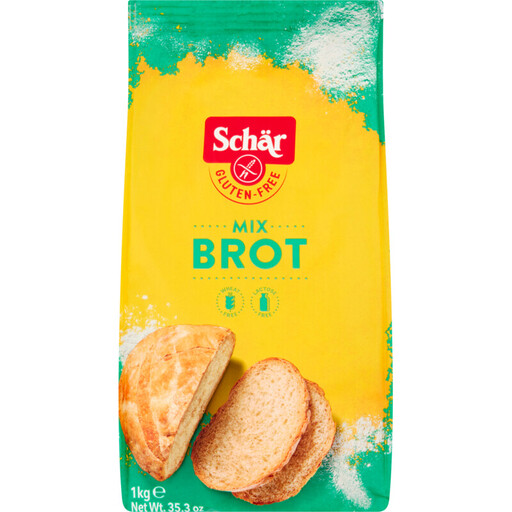
Schär Bread Mix-Mix B gluten-free bread mix, 1 kg

Schär Bread Mix-Mix B gluten-free bread mix, 1 kg

For anyone who wants to bake bread at home in advance in a clean preparation area; the mix isn’t ready to eat.

Check the preparation instructions and allergen information on the packaging, especially if you also need to avoid soya.

View at Joybuy

Frequently asked questions

Is wheat-free bread the same as gluten-free bread?

No. A wheat-free label isn’t the same as an explicit gluten-free label. If you have coeliac disease, choose bread labelled gluten-free and check the ingredients and allergen information too.

How can I avoid gluten crumbs in a late-night snack?

Use clean hands, clean cutlery and a clean surface, and store gluten-free bread separately. Don’t use shared spreads that have been touched by a knife carrying gluten crumbs. If you’re baking bread, make sure the oven rack and preparation area are clean too.

Does gluten-free bread always contain iodised salt?

No, you can’t tell that from the gluten-free label. The product information for AH Gluten-Free Light Multiseed Half Loaf and PLUS Multiseed Gluten-Free lists iodised salt. For other breads, check the ingredients list on the current packaging.

Can I freeze gluten-free bread for a late-night snack?

Yes, if the instructions for your chosen product allow it. AH says its gluten-free light multiseed bread can be frozen. Check the packaging for when to freeze it and how to use it after defrosting.

How do I compare the fibre in gluten-free bread?

Compare the fibre content on the same basis, such as per 100 g, and also consider the serving size. The Netherlands Nutrition Centre lists 0.9 g of fibre for a 25 g slice of gluten-free bread; the product information for AH Light Multiseed lists 9.9 g per 100 g for that particular variety.
