If the bread is for someone with coeliac disease, choose a pack labelled ‘gluten-free’ and prevent contact with crumbs from ordinary bread at home. For everyday family use, the pack size can help you plan how much you’ll need. If you bake your own, you could also consider a bread mix, but factor in the preparation time and the need to prepare it without gluten contamination. Always compare the label on the specific product for fibre, salt, iodised salt and other allergens.
Who is this choice relevant to?
Families with someone who has coeliac disease
For these families, a clear gluten-free label, checking for other allergens and avoiding cross-contamination at home are essential. According to the Voedingscentrum, even a stray bread crumb can cause symptoms in someone with coeliac disease.
Large households that eat gluten-free bread every day
If you need plenty of sandwiches for breakfast and lunch, you can weigh up pack size, storage instructions and whether portions can be frozen.
Families who pay attention to nutritional information
If gluten-free bread is a regular feature at mealtimes, fibre and salt per 100 g are useful points of comparison. Check the ingredients if the use of iodised salt or baker’s salt is also important to your choice.
What should you look for when choosing?
For a family with someone who has coeliac disease, a gluten-free label is essential. Then compare the type and quantity of bread, its nutritional information and the time needed for any preparation at home.
| What to consider |
What to check when buying |
Who it matters most to |
| Gluten-free and free from cross-contamination |
Look for the ‘gluten-free’ label and read the ingredients and allergen information. At home, keep equipment used for preparation free from ordinary bread crumbs. |
If someone in my family has coeliac disease, I want to be sure which bread and kitchen utensils are suitable for them. This check is a top priority for around 33% of consumers. |
| Quantity and storage |
Compare pack weights and follow the instructions for storage after opening or freezing. |
When we eat bread several times a day, I want to have enough at home without opening more than we can use in time. Around 27% of consumers give this kind of planning top priority. |
| Nutritional information |
Compare fibre and salt per 100 g; check the ingredients list for iodised salt or baker’s salt. |
If we eat bread often, I want to be able to compare the nutritional value of individual products. This matters most to around 20% of consumers. |
| Convenience and type of bread |
Decide whether ready-made bread or a bread mix best suits the time you have available. Check the label again each time you try a new variety. |
I want to be able to vary what we have for breakfast and lunch, but baking our own bread needs to fit into our day too. An estimated 20% of consumers prioritise convenience and variety. |
Common mistakes
-
Assuming ‘wheat-free’ means ‘gluten-free’
Wheat-free products may still contain gluten from other grains, such as rye or barley. So, for someone with coeliac disease, that description alone isn’t enough to choose a suitable product.
Look for the ‘gluten-free’ label and check the ingredients and allergen information again whenever you buy a new or changed product.
-
Assuming all gluten-free bread has the same nutritional value
Fibre and salt content can vary from one loaf to another. The Voedingscentrum also notes that bakers aren’t required to use baker’s salt.
Compare the nutritional information per 100 g and check the ingredients if iodised salt is relevant to your choice.
-
Overlooking other allergens
A gluten-free product can still contain other allergens. So, being suitable for someone with coeliac disease doesn’t automatically mean it’s suitable for someone with another allergy too.
Read the allergen information on the specific pack, even if you’re already familiar with another variety of bread from the same brand.
Brands to consider
Jumbo Lekker Vrij van Gluten
Jumbo Supermarkten lists several products in this range, including 500 g loaves of brown and white gluten-free bread.
- The 500 g packs listed provide a useful starting point for planning for the family.
- Check the current ingredients, nutritional information and storage instructions for each variety.
PLUS
PLUS offers Meerzaden gluten-free bread in a 500 g pack, among other products.
- The stated weight makes it easy to compare with smaller packs of bread.
- Use the label on the pack you buy to check the ingredients and allergens.
AH Glutenvrij
Albert Heijn lists several products in this range, including 480 g loaves of light and dark multiseed bread.
- The different varieties offer a choice of bread types within the range.
- Check the nutritional information and allergens for each variety; the name ‘multiseed’ doesn’t tell you enough.
Schär
Schär offers a range of gluten-free breads and bread mixes, including Meisterbäcker Mehrkorn and Mix B.
- A bread mix offers a different way to prepare bread from buying it ready-made.
- Check the allergens for the variety you choose, and take care to prepare a mix safely at home.
Bread mix on Joybuy
If you’d like to bake gluten-free bread for your family at home, you could consider this bread mix. It isn’t ready-made bread: you’ll need to prepare it and take care to prevent cross-contamination.
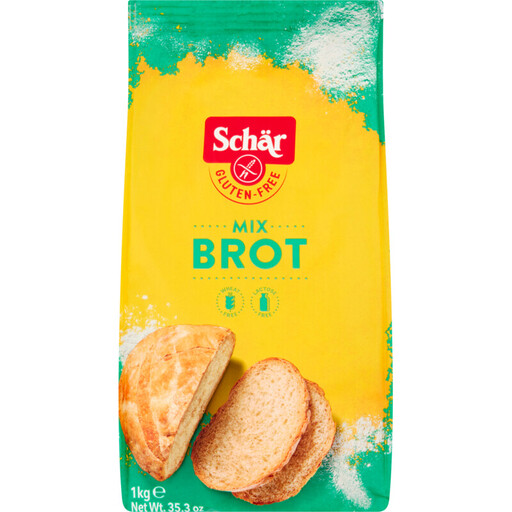 Image unavailable
Schär Mix B gluten-free bread mix, 1 kg
For families who want to bake gluten-free bread at home and can keep preparation separate from ordinary bread.
The pack contains 1 kg of mix. According to the product description, you can knead it by hand or use a bread maker. The allergen information lists soya, so check the current label if someone in your family needs to avoid it.
View on Joybuy
Frequently asked questions
Is ‘wheat-free’ enough if someone has coeliac disease?
No. Don’t choose a product based only on the words ‘wheat-free’: gluten can also come from rye or barley. Look for the ‘gluten-free’ label on the bread and check the ingredients and other allergens.
How can you keep crumbs from ordinary bread away from gluten-free bread?
Store and prepare gluten-free bread so that it doesn’t come into contact with crumbs from ordinary bread, for example via a toaster, chopping board, knife or shared spread. The Voedingscentrum points out that even a stray crumb can cause symptoms in someone with coeliac disease.
Does gluten-free bread always contain iodised salt?
No. According to the Voedingscentrum, bakers aren’t required to use baker’s salt. Check the ingredients list for the specific bread to see whether it contains iodised salt or baker’s salt.
What should you do with a large pack of bread after opening it?
Follow the storage instructions on the pack and work out whether your family will use the bread in time. If the product label recommends freezing, you can store separate portions for later.
Can you compare the nutritional value of gluten-free multiseed bread by brand?
Yes. Compare the nutritional information for the specific products on the same basis, such as fibre and salt per 100 g. The Voedingscentrum says that the nutritional values of gluten-free multiseed bread can vary by brand.


