If you have coeliac disease, choose bread that is explicitly labelled gluten-free or carries the Crossed Grain symbol; a dark colour or the word ‘multigrain’ isn’t enough. Then compare the fibre per 100 g and consider whether you want bread that’s ready to serve or a mix you’ll need to prepare. Cake must be suitable for the guest with coeliac disease too. When serving, take care to prevent contact with crumbs from ordinary bread or cake.
Who is this choice important for?
Guest with coeliac disease
You want to enjoy bread with coffee and cake without it coming into contact with crumbs from ordinary products. According to the Dutch Nutrition Centre, the ‘gluten-free’ label and the Crossed Grain symbol help you identify suitable products. You should also use clean, separate serving utensils.
Bread eater comparing fibre
You’re looking for a gluten-free alternative to the wholemeal bread you’re used to. Compare the nutritional information per 100 g: a gluten-free label alone tells you nothing about the fibre content.
Host planning a coffee break
You want to know whether you’re buying packaged bread, rolls or a mix that still needs to be prepared. Check the preparation instructions and the labels on the bread and cake separately, so you can serve the gluten-free portion on its own.
What should you look for when choosing?
When choosing bread for a coffee break with cake, check the gluten-free label first. Your preference for comparing fibre and the preparation required will then help you decide which product is practical for you.
| What to consider |
What to check when buying |
Who is this most important for? |
| Gluten and cross-contamination |
Check that both the bread and cake are labelled ‘gluten-free’ or carry the Crossed Grain symbol. For unpackaged products, also ask about allergens and preparation. |
If I have coeliac disease, I want to know that my portion won’t come into contact with crumbs from ordinary bread or cake. For around 50% of consumers, this is the top priority. |
| Fibre |
Compare the fibre per 100 g in the nutritional information and check the ingredients; don’t judge by the colour of the bread alone. |
If bread regularly replaces wholemeal bread in my diet, I want to be able to compare the fibre content. Around 30% of consumers give this the highest priority. |
| Serving with coffee |
Check whether you’re buying bread, rolls or a mix, and read the preparation and storage instructions. |
When I’m entertaining, I want to know how much preparation the bread needs and what size I can serve. This is the most important factor for around 20% of consumers. |
Common mistakes when buying and serving
-
Assuming ‘wholemeal’, ‘brown’ or ‘multigrain’ means gluten-free
These words don’t mean that a bread is gluten-free. Bread containing wheat, rye, barley or spelt, for example, can look dark.
If you’re buying for someone with coeliac disease, choose a product explicitly labelled gluten-free or carrying the Crossed Grain symbol, and read the current packaging.
-
Cutting gluten-free bread next to ordinary cake
Once opened, a packaged gluten-free product can come into contact with crumbs from ordinary cake or bread. The Dutch Nutrition Centre points out that even a stray bread crumb matters for someone with coeliac disease.
Use a clean chopping board, separate cutlery and a separate plate for the gluten-free portion. Check the cake separately if the guest with coeliac disease will be eating it.
-
Assuming gluten-free bread has the same nutritional value as wholemeal bread
According to the Dutch Nutrition Centre, some gluten-free flour mixes are low in fibre and certain nutrients. Not every baker uses iodised baker’s salt either.
Compare the nutritional information per 100 g and check the ingredients. If you want to know what salt was used in the bread, read the label or ask the baker.
-
Relying on an old product listing as a current option
Product ranges and availability can vary between shops. A bread you found previously may not be available for the coffee break you’re planning.
Before buying, check the current product, its packaging and availability at the shop where you plan to buy it.
Brands and product ranges to consider
Schär
Albert Heijn lists a range of Schär gluten-free bread options online, including loaves and rolls.
- The different packaged formats give you a starting point when looking for a slice or roll to serve with coffee.
- Check the ingredients, allergens and nutritional information for your chosen variety on the current packaging.
Albert Heijn Glutenvrij
Albert Heijn’s online range includes different types and formats of gluten-free bread under its own-brand range.
- You can look through the range for a bread type or format that suits you.
- Dark bread isn’t necessarily high in fibre just because of its colour. Compare the nutritional information for each product and check availability at your local shop.
Consenza
Albert Heijn lists gluten-free chia seed bread from Consenza in its online bread range.
- The product listing gives you a specific seeded bread to compare with other gluten-free loaves.
- Don’t rely on the product name instead of checking the current fibre content, ingredients and allergen information.
Jumbo Lekker Vrij
Jumbo lists a 500 g brown and a 500 g white gluten-free bread in this product range.
- The two types of bread give you a choice of variety and format within the same range.
- ‘Brown’ doesn’t prove that a bread is wholemeal or has a particular fibre content. Check the packaging of the variety you choose.
Gluten-free bread options at Joybuy
These options are for anyone looking to serve gluten-free bread with coffee: one product name mentions mini baguettes, while the other is a bread mix that still needs to be prepared. Check the current packaging of both before serving them to a guest with coeliac disease.
 No image available
Gv Baguette Mini 7 Pieces
The product name indicates seven mini baguettes, ideal if you want to serve bread with coffee. Check the current packaging to see whether you’re buying rolls that need baking or a mix that still needs to be prepared; this will determine how much preparation is required.
When preparing and serving food for a guest with coeliac disease, use clean, separate utensils and equipment. Also check the allergen information on the packaging and, if it matters to your choice, find out what salt has been used.
View at Joybuy
 No image available
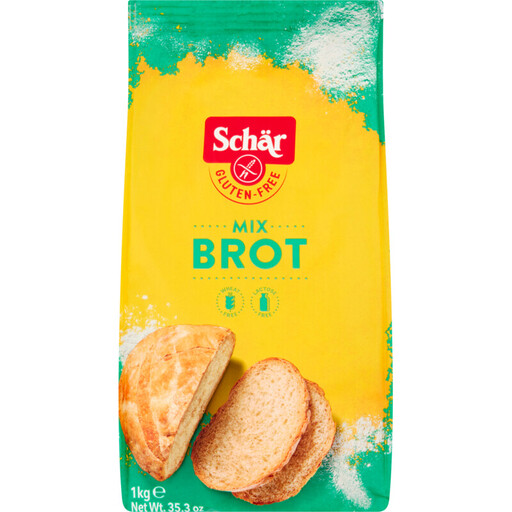
Schär Bread Mix-Mix B Gluten Free, 1 kg
This 1 kg gluten-free bread mix is a good option if you’d like to make your own bread rather than buy bread that’s ready to serve. Remember to allow time to prepare it before your coffee break.
If fibre matters to your choice, compare the nutritional information for the mix with other options; the name of a mix doesn’t tell you the nutritional value of the bread once prepared. Check the current packaging for allergen information and use clean, separate preparation equipment.
View at Joybuy
Frequently asked questions
Is brown or multigrain bread suitable for someone with coeliac disease?
Not based on the name or colour alone. Choose bread explicitly labelled gluten-free or carrying the Crossed Grain symbol; according to the Dutch Nutrition Centre, these help identify gluten-free products.
Can ordinary cake be served alongside gluten-free bread?
Only if the guest with coeliac disease won’t eat the ordinary cake and you prevent crumbs or serving utensils from coming into contact with the gluten-free portion. If the guest would also like cake, choose cake that is separately labelled gluten-free and use separate plates and cutlery.
How can I check unpackaged bread or cakes at a bakery?
Ask for the allergen information. If you have coeliac disease, also ask how the product is prepared and served. According to the Netherlands Food and Consumer Product Safety Authority, allergen information must be available for both prepacked and unpackaged food. That information alone won’t tell you how contact with crumbs is prevented when the food is served.
Does gluten-free bread always contain iodised baker’s salt?
No, you can’t assume that. The Dutch Nutrition Centre says that bakers aren’t required to use baker’s salt. Check the ingredients on packaged bread or ask the baker what salt they’ve used.


