If you’re preparing lunch for someone with coeliac disease, choose bread labelled gluten-free on its current packaging and avoid contact with regular breadcrumbs during preparation. Then compare the fibre content, other allergens and type of bread: dark or multigrain bread isn’t automatically gluten-free or comparable to regular wholemeal bread. If the type of salt matters to you, check the ingredients list too.
Who is this relevant to?
Anyone buying lunch for someone with coeliac disease
You’re looking for bread labelled gluten-free on its current packaging and want to avoid contact with regular breadcrumbs when preparing it. The Voedingscentrum stresses the importance of checking the label and the risk of even a stray crumb for people with coeliac disease.
Shoppers comparing fibre content
You want to check the ingredients and fibre per 100 g as well as the gluten-free label, rather than judging by the bread’s colour or name.
Shoppers planning lunch in advance
You’re looking for a type of bread that suits your lunch routine, such as packaged bread or rolls to bake at home, and checking which products are available at your shop.
What should you look for when choosing?
If you have coeliac disease, start by checking the gluten-free label and how you’ll prepare lunch. Then compare the nutritional information and the type of bread you want to use.
| What to look for |
What to check when buying |
Who it matters to |
| Choosing and preparing gluten-free bread |
Look for a gluten-free label or the Crossed Grain symbol on the current packaging. Avoid contact with regular breadcrumbs when preparing the bread. |
When I’m making lunch for someone with coeliac disease, I don’t want to rely on a dark colour or a grain name, and I also watch out for crumbs when adding toppings. This gluten-free choice comes first for around 42% of shoppers. |
| Fibre and ingredients |
Compare fibre per 100 g and check the ingredients and other allergens on the packaging. |
Once I’ve checked that it’s gluten-free, I want to know how much fibre the bread contains instead of relying on the word ‘multigrain’. Fibre is the main consideration for around 33% of shoppers when making their final choice. |
| Type of bread and availability |
Consider which type of bread and pack size suit your lunch, and check what your shop currently stocks. |
For my lunch routine, I want to know whether I can use bread or rolls and whether I can buy them at my shop. This practical consideration is decisive for around 25% of shoppers. |
Common mistakes
-
Assuming dark, multigrain or spelt bread is gluten-free
The colour and grain name don’t determine whether bread is suitable for someone with coeliac disease. Spelt is a type of wheat and contains gluten.
Check for a gluten-free label or the Crossed Grain symbol on the current packaging before comparing other features.
-
Assuming gluten-free means high-fibre or wholemeal
The gluten-free label doesn’t tell you how much fibre the bread contains. Multigrain and a dark colour don’t tell you that either.
Compare the nutritional information per 100 g and check which ingredients are used in the bread you’re considering.
-
Checking the bread but not how you prepare lunch
According to the Voedingscentrum, even a stray breadcrumb can cause symptoms for someone with coeliac disease. Suitable packaged bread can come into contact with regular bread during preparation.
Use clean or separate utensils for slicing, toasting and adding toppings, and keep regular breadcrumbs away.
-
Assuming all gluten-free bread contains iodised salt
According to the Netherlands Food and Consumer Product Safety Authority, iodine compounds may be used in bread. That doesn’t tell you which type of salt is used in any particular gluten-free loaf.
If the type of salt matters to you, check the ingredients list of the bread you want to buy.
Brands and shops to explore
Albert Heijn
Albert Heijn’s gluten-free range includes both AH bread and Schär bread, including AH Gluten-Free Dark Multiseed Bread, half loaf, 480 g.
- You can compare own-brand and branded products side by side.
- Product and allergen information can change, so check the current packaging.
Jumbo
Jumbo stocks various types of gluten-free Schär bread, including sliced bread and ciabatta.
- The range of bread types makes it easier to find a lunch option that suits you.
- Check which products are available at your local shop and read the packaging of the bread you choose.
PLUS
PLUS lists Schär Meesterbäcker Mehrkorn gluten-free bread as containing 9.9 g of fibre and 0.97 g of salt per 100 g.
- This product information makes it possible to compare fibre and salt content.
- This particular bread contains soya and may contain lupin, mustard and sesame; check the current allergen information.
Dirk
Dirk’s search results include gluten-free Schär bread.
- The search results give you product names to look up.
- Compare fibre and allergens using the information on the product you choose, not just the search results.
ALDI
ALDI lists gluten-free bread options on its bakery page.
- You can check for gluten-free options when planning a trip to the shop.
- Before comparing a specific product, check its ingredients, nutritional information and allergens.
Lidl
Lidl has a page for its gluten-free range.
- The range page is a useful place to check what’s currently available.
- Lidl says its additional gluten-free products are currently unavailable, so check what’s in stock before planning your lunch around them.
Gluten-free bread options on Joybuy
These options suit two different lunch plans: baking mini baguettes or making your own bread with a bread mix. If you have coeliac disease, check for a gluten-free label on the current packaging and avoid cross-contamination during preparation.
 No image available
Gluten-free mini baguettes, 7 pieces
These mini baguettes are ideal for a lunch with freshly baked rolls. They need to be baked before serving; if you have coeliac disease, check for a gluten-free label on the packaging and avoid contact with regular breadcrumbs.
View on Joybuy
 No image available
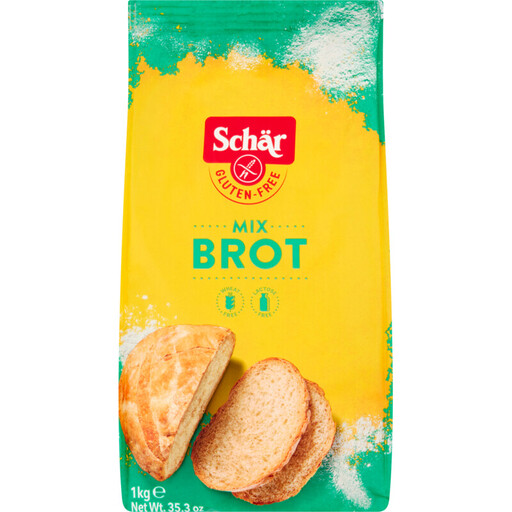
Schär Bread Mix-Mix B Gluten Free, 1 kg
This bread mix is a good option if you want to bake your own bread for lunch. It isn’t ready-made bread; check for a gluten-free label on the current packaging and make sure no regular breadcrumbs get into the mix during preparation.
View on Joybuy
Frequently asked questions
Can I choose regular wholemeal or spelt bread if I have coeliac disease?
No. Regular wholemeal bread made from gluten-containing grains and spelt bread aren’t gluten-free alternatives. Spelt is a type of wheat, so if you have coeliac disease, choose bread labelled gluten-free on its current packaging.
Does gluten-free tell me anything about the fibre content?
No, the gluten-free label doesn’t tell you how much fibre the bread contains. Compare the nutritional information per 100 g of the breads you’re considering. For example, PLUS lists 9.9 g of fibre per 100 g for Schär Meesterbäcker Mehrkorn.
What should I bear in mind when preparing gluten-free bread?
If you’re making lunch for someone with coeliac disease, avoid contact with regular breadcrumbs. Use clean or separate knives, chopping boards and other utensils that come into contact with the bread or toppings.
Does gluten-free bread always contain iodised salt?
No, that isn’t implied by the gluten-free label. The Netherlands Food and Consumer Product Safety Authority says iodine compounds may be used in bread. Check the ingredients list for the individual product to see which type of salt it contains.


