What should you look for when choosing?
Start by checking that the exact product is labelled gluten-free. Then consider how you will use the bread at home and which other features matter to you.
| What to consider |
What to check when buying |
Who is this most important for? |
| Gluten-free and crumb-free handling |
Look for the explicit ‘gluten-free’ label and consider whether you can use clean utensils and a crumb-free surface at home. |
If I have coeliac disease, I want bread that is clearly labelled and a way to prepare it without contact with ordinary bread. This combination is the top priority for around 42% of consumers. |
| Nutritional information and salt |
Compare the fibre per 100 g and the ingredients; check the label for baker’s salt or iodised salt. |
People who eat bread regularly want to assess how a gluten-free alternative fits into their diet in terms of fibre and ingredients. This is the top priority for around 33% of consumers. |
| Other allergens and availability |
Read the ingredients and ‘may contain’ information for your chosen product, and check availability shortly before buying. |
If I have another food allergy, I want to find bread whose other ingredients are suitable and that I can actually buy. This is the main concern for around 25% of consumers. |
Brands and shops to consider
These shops list different types of gluten-free bread or mention gluten-free bread options. Always check the pack you have chosen and availability at your shop before buying.
Albert Heijn
The online gluten-free bread category includes AH own-brand products and other brands, including Schär and Consenza.
- You can compare different types of bread in one category.
- A category listing does not tell you whether a specific product is suitable for additional allergies or available at your shop.
Jumbo
Jumbo lists products including Céréal Gluten Free Lactose Free Wholemeal Bread on a dedicated product page.
- The product page provides ingredients, nutritional information, allergen details and storage instructions.
- According to this information, Céréal bread may contain egg, milk, mustard, sesame and soya.
Lidl
Lidl lists gluten-free options in its range and also promotes additional gluten-free products.
- Range information can help you find gluten-free options.
- Lidl says that additional gluten-free products are not always available. Check the specific bread and its current availability.
Aldi
Aldi mentions gluten-free bread alongside other bread options in its bakery information.
- Gluten-free bread options are explicitly mentioned.
- For a specific product, check the pack for the gluten-free label, ingredients and allergens.
PLUS
PLUS’s online gluten-free bread category includes own-brand products and other brands, including YAM.
- Individual product pages provide information on ingredients, allergens and nutritional value.
- PLUS warns that product information and ingredients may change, so the pack of your chosen product remains important.
Dirk
Dirk’s search results include gluten-free bread options from brands such as Schär.
- The search results can help you find specific products.
- For ingredients and allergens, check the information for the exact product and its packaging.
Joybuy product for baking your own bread
Baking at home is a different option from buying ready-sliced gluten-free bread. This bread mix is for anyone who wants to bake at home. You should still check the ingredients and avoid contact with crumbs from ordinary bread.
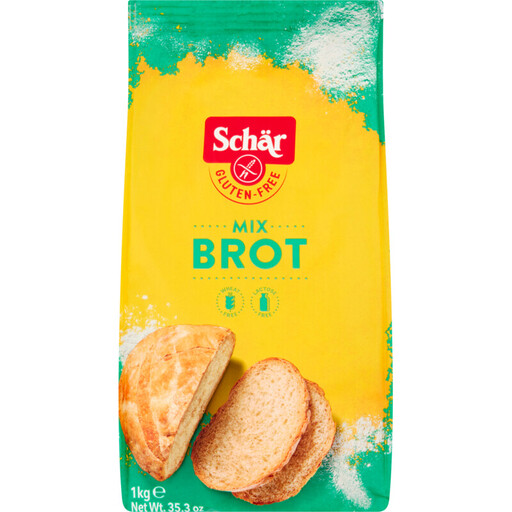 Image unavailable
Schär Bread Mix-Mix B Gluten Free – 1 kg
For anyone who wants to bake gluten-free bread at home instead of buying it ready-made. This is a 1 kg bread mix, not sliced bread; the ‘gluten-free’ label does not mean the baked bread has the same composition as wholemeal bread. The product information lists soya, so check the ingredients if you have a soya allergy. Also check which salt you use when baking if iodine is a consideration in your diet.
View on Joybuy
Frequently asked questions
When can bread be labelled ‘gluten-free’?
According to the European Commission, bread sold to consumers may carry this label if it contains no more than 20 mg of gluten per kg. If you have coeliac disease, choose bread based on the explicit gluten-free label, not just words such as ‘brown’ or ‘wholemeal’.
Can gluten-free bread still contain other allergens?
Yes. According to the product information, Céréal Gluten Free Lactose Free Wholemeal Bread listed by Jumbo may contain egg, milk, mustard, sesame and soya. If you have an additional allergy, read the ingredients and information about possible traces on the pack of your chosen product.
How can I keep gluten-free bread free from crumbs from ordinary bread at home?
Use clean kitchen utensils and a crumb-free worktop, and store the bread separately from ordinary bread. The Dutch Coeliac Society also highlights the risk of contact via shared knives, chopping boards and butter.
Does gluten-free bread always contain iodine from baker’s salt?
No, you cannot tell from the name of the bread. The Netherlands Nutrition Centre says that baker’s salt contains iodine, but bakers do not have to use it. Check the label to see which salt has been used if the iodine in bread is relevant to your diet.
Which shops can I look in for gluten-free bread?
Albert Heijn, Jumbo, PLUS and Dirk list gluten-free bread options online. Aldi mentions gluten-free bread in its bakery range, and Lidl promotes gluten-free options. This does not tell you which product is suitable for any additional allergies you have or whether it is available at your shop. Check the exact product shortly before buying.


