If you have coeliac disease, first choose bread explicitly labelled ‘gluten-free’. Terms such as ‘wholemeal’, ‘multigrain’ or ‘white and wholemeal’ do not tell you whether bread is suitable for a gluten-free diet. Next, compare the ingredients, fibre per 100 g and allergen information if you’re looking for a wholemeal-style loaf. If you’d prefer a lighter slice, check the type of bread without assuming it’s wholemeal too. Check the salt used separately on the packaging you choose.
Who is this choice important for?
Families buying bread for someone with coeliac disease
You want to avoid mistaking an appealing-sounding white and wholemeal blend for gluten-free bread. So you check the label on the exact product and take care to avoid contact with crumbs from ordinary bread when preparing it.
People with coeliac disease who want to compare fibre
You’re looking for gluten-free bread that suits your wholemeal or fibre preferences. Once you’ve checked that it’s labelled gluten-free, compare the listed ingredients and the amount of fibre per 100 g.
Fussy eaters looking for a lighter slice
You prefer a light, familiar type of bread, but that preference shouldn’t come before the gluten-free label. You also check the allergen information on the packaging you choose.
What should you look for when choosing?
Start by checking that the exact bread is labelled gluten-free. Then compare its fibre and wholemeal profile, or choose the type of bread that’s most practical for you at home.
| What to consider |
What to check when buying |
Especially relevant for |
| Choosing and keeping bread gluten-free |
Look for ‘gluten-free’ on the exact packaging. Also consider whether you can slice and toast the bread at home using clean or separate equipment. |
When I prepare bread for someone with coeliac disease, I want to prevent crumbs from ordinary bread getting onto it. For around 50% of consumers, choosing gluten-free comes first. |
| Wholemeal and fibre profile |
Check which wholegrain ingredients are listed and compare fibre per 100 g; a dark colour or a multiseed name isn’t enough. |
I want to find gluten-free bread that suits my wholemeal or fibre preferences. Around 30% of consumers give this profile top priority. |
| Type of bread and everyday use |
Choose the type of bread you want and read the allergen and storage information for that exact variety. Check the type of salt used if iodine is a consideration for you. |
For a fussy eater, I want a type of bread that’s practical at home, without overlooking any relevant allergens. For around 20% of consumers, everyday practicality matters most. |
Common mistakes
-
Assuming ‘wholemeal’ or ‘multigrain’ means ‘gluten-free’
These words don’t tell you whether the bread is suitable for someone with coeliac disease. An ordinary white and wholemeal blend may contain gluten-containing grains.
First check that the product is explicitly labelled gluten-free. Only then compare the type of bread and its nutritional information.
-
Preparing gluten-free bread alongside ordinary bread
According to the Dutch Coeliac Society, crumbs and residue can get onto gluten-free food via worktops and kitchen utensils.
Wash your hands and clean the work surface. Use clean or separate equipment for slicing and toasting.
-
Assuming all bread contains the same type of salt
The type of salt listed varies by recipe. Jumbo lists iodised salt for Schär Meesterbakker Classic; Albert Heijn lists sea salt for Céréal Wholemeal Bread. This doesn’t tell you how much iodine another bread contains.
Check the ingredients list on the packaging you’re buying if the type of salt matters to your choice.
-
Mistaking a range page for the product label
An overview of different types of bread doesn’t tell you which ingredients and allergens are currently listed for the variety you’ve chosen. Nor does it confirm whether that variety is available in your shop.
Check the current packaging and availability of the exact bread you want to buy.
Brands and ranges to explore
Albert Heijn
Albert Heijn’s AH Gluten-Free range includes, among other options, light and dark multiseed bread. The range offers different types of bread to compare individually.
- You can compare different types of bread within the AH Gluten-Free range.
- A range overview doesn’t confirm the ingredients, allergens or availability of a particular variety. Check the latest product information and packaging for those details.
Jumbo
Jumbo’s gluten-free bread range includes, among other options, Jumbo Lekker Vrij van Gluten, Céréal and Schär, with different types of bread available.
- The range overview can help you find a light, brown or wholemeal-style bread to compare further.
- Check the gluten-free label, ingredients, allergens and availability at your shop for each product.
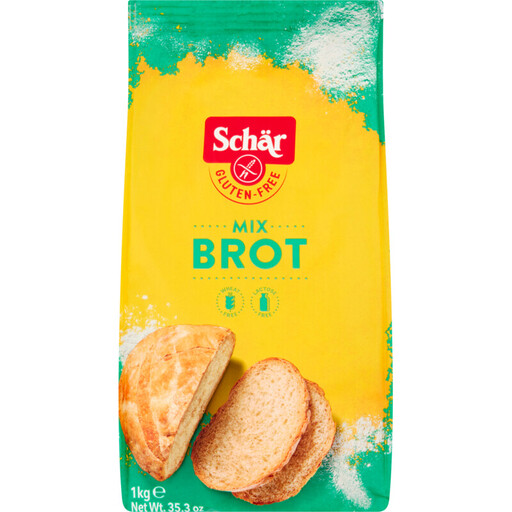
Bread mix for home baking on Joybuy
This bread mix is an option if you want to bake gluten-free bread at home. It isn’t a ready-made wholemeal loaf, so assess the mix’s ingredients and nutritional information separately from those of packaged bread.
 No image available
Schär Bread Mix-Mix B, gluten-free, 1 kg
For anyone who wants to bake bread at home instead of buying a ready-made loaf.
The pack contains 1 kg of bread mix. Before buying, check the ingredients, allergens, nutritional information and preparation instructions on the packaging you choose. When baking for someone with coeliac disease, use clean or separate kitchen utensils.
View on Joybuy
Frequently asked questions
Can I buy ordinary wholemeal bread or a white and wholemeal blend if I have coeliac disease?
Only if the exact bread is explicitly labelled gluten-free. ‘Wholemeal’ and ‘white and wholemeal blend’ don’t tell you whether a product is gluten-free; the Dutch Nutrition Centre explains that a gluten-free diet is essential for people with coeliac disease.
What does ‘gluten-free’ mean on bread in the Netherlands?
Under Commission Implementing Regulation (EU) No 828/2014, published in the Official Journal of the European Union, a food sold to the final consumer may be labelled ‘gluten-free’ if it contains no more than 20 mg of gluten per kg. Check the label on the bread you’re actually buying.
Can I slice gluten-free bread on the same chopping board as ordinary bread?
Only use the board after cleaning it thoroughly, or use separate equipment. The Dutch Coeliac Society warns that crumbs and residue can get onto gluten-free food from a chopping board, worktop or other kitchen utensils.
Does gluten-free bread always contain iodised salt?
Don’t assume that all gluten-free bread contains the same type of salt. Jumbo lists iodised salt for Schär Meesterbakker Classic, while Albert Heijn lists sea salt for Céréal Wholemeal Bread. So if the type of salt matters to you, check the ingredients list on the packaging you choose.


