If you’re buying bread for someone with coeliac disease, start by checking that the current packaging says ‘gluten-free’, then check the ingredients and allergen information for that exact product. Gluten-free doesn’t automatically mean free from soya, milk, eggs, nuts or oats, for example. Only compare fibre, iodised salt and loaf style once the product meets the relevant dietary and allergy requirements.
Who is this choice important for?
Anyone buying bread for someone with coeliac disease
You’re looking for bread clearly labelled gluten-free, and checking the current packaging rather than relying on the type of bread or the front of the pack alone. The Voedingscentrum recommends reading the label on gluten-free products.
Anyone taking multiple allergies into account
As well as gluten, ingredients such as soya or oats, and information about other allergens, may affect your choice. Always check both the ingredients list and the allergen information for the specific loaf.
Anyone comparing nutritional information on everyday bread
Once you’ve found a suitable gluten-free loaf, you can compare the fibre per 100 g and check the ingredients list for iodised salt or baker’s salt. Don’t assume that all gluten-free breads have the same nutritional value.
What should you look for when buying?
First, check that the bread is suitable for the person you’re buying it for, including any additional allergies. Then compare the nutritional information, loaf style and availability.
| What to consider |
What to check when buying |
Especially important for |
| Gluten-free labelling |
Look for a gluten-free label on the current packaging. For unpackaged bread, ask for specific allergen information before buying. |
When I’m buying for someone with coeliac disease, I want to be able to check that the bread I’ve chosen is suitable. For around 42% of consumers, this reassurance comes first. |
| Additional allergens |
Check the ingredients and allergen information for the exact product, even if the bread is labelled gluten-free. |
If I’m buying for someone with an additional allergy, I need to know whether the bread contains soya, for example, or lists other relevant allergens. Around 25% of consumers give this check their highest priority. |
| Fibre and iodised salt |
Compare the fibre per 100 g and check whether iodised salt or baker’s salt is listed in the ingredients. |
If I eat gluten-free bread regularly, I also want to compare the nutritional information for suitable products. This matters most to around 17% of consumers. |
| Loaf style and availability |
Choose a suitable loaf style and check that the specific product is currently available. |
If I need a particular type of loaf, I want to know whether that exact gluten-free product is available before I count on it. This is the top priority for around 16% of consumers. |
Common mistakes
-
Assuming gluten-free means free from other allergens
Gluten-free bread may contain soya or oats, and may carry warnings about the possible presence of other allergens. So a gluten-free label doesn’t answer every allergy-related question.
Check the ingredients and allergen information on the packaging of the exact product every time you buy it.
-
Assuming spelt or sourdough is automatically gluten-free
Spelt is a type of wheat. A bread’s name, method of preparation or appearance doesn’t confirm that it’s gluten-free.
If you’re buying for someone with coeliac disease, look for an explicit gluten-free label and read the packaging.
-
Relying on a range page as if it were a product label
A shop may show gluten-free bread without a general range page confirming the current ingredients or availability of the specific product you’ve chosen.
Check the specific product information and the packaging. Don’t simply choose ordinary bread if the gluten-free option you want isn’t available.
-
Comparing loaf style alone
Breads in the same shape don’t necessarily have the same fibre per 100 g or use the same type of salt.
After checking the allergens, compare the nutritional information and ingredients lists of the products that are suitable for you.
Brands and shops to explore
These ranges can help you narrow down your search. Always check the ingredients and allergens for each loaf on its current packaging.
Albert Heijn
Albert Heijn lists gluten-free bread from its own brand and other brands, including Schär and Consenza.
- AH Gluten-Free Light Multiseed Bread, half loaf, lists 9,9 g of fibre per 100 g and iodised salt.
- The same product states that it may contain egg, milk, soya, oats, almonds and hazelnuts, among other ingredients. This information doesn’t automatically apply to other AH breads.
Jumbo
Jumbo lists gluten-free bread from its own Lekker Vrij brand and other brands.
- The brown and white 500 g Lekker Vrij loaves described list iodised salt and carry the Crossed Grain trademark.
- Both products described contain soya and warn that other allergens may be present. Check the packaging of the product you choose.
PLUS
PLUS lists its own-brand gluten-free white, brown and multiseed bread, alongside bread from other brands.
- PLUS Multiseed Gluten Free lists 7,285 g of fibre per 100 g and iodised salt.
- This product contains oats and soya, and warns that other allergens may be present. Check the current product information.
Dirk
Dirk stocks gluten-free bread products including Schär Meisterbackers Classic, Vital and Mini Baguette.
- A separate product page is available for Schär Meisterbackers Classic, 300 g.
- If you have additional allergies, check the information for the exact product and its packaging.
Lidl
Lidl describes a gluten-free range alongside its standard range.
- The range page can be a starting point for finding gluten-free options.
- For bread, rely on the current label and allergen information for the specific product, not the general range description.
ALDI
ALDI mentions gluten-free options among bread rolls and products from shops with an in-store bakery.
- If you’re looking for bake-at-home rolls, check which specific gluten-free products are available.
- For unpackaged products, ask about relevant allergens before buying. For packaged rolls, check the label.
Products to prepare at home
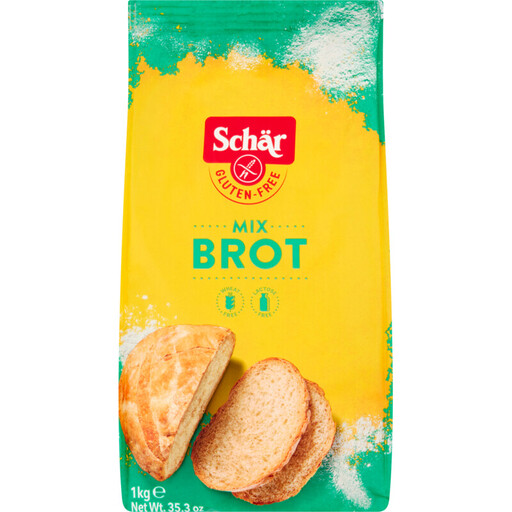
These Joybuy products suit two different plans: preparing small gluten-free baguettes or baking your own bread with a gluten-free bread mix. A bread mix isn’t ready-made bread, so check the current packaging and preparation instructions for both products.
 No image available
Gv Baguette Mini, 7 pieces
For anyone who wants to prepare small gluten-free baguettes at home. Check the preparation instructions on the packaging before choosing.
If you have additional allergies, check the current information about soya, lupin and mustard.
View at Joybuy
 No image available
Schär Bread Mix-Mix B Gluten Free, 1 kg
A gluten-free bread mix for anyone who wants to make and bake their own bread; it isn’t ready-made bread.
If you have a soya allergy, check the current allergen information on the packaging. Also check the type of salt used if iodised salt is important to your comparison.
View at Joybuy
Frequently asked questions
When can bread be labelled gluten-free?
Under Commission Implementing Regulation (EU) No 828/2014, the term ‘gluten-free’ may only be used if the food, as sold to the final consumer, contains no more than 20 mg of gluten per kg. If you’re buying for someone with additional allergies, check the other allergen information too.
Is wheat-free bread suitable for someone with coeliac disease?
No. Wheat-free doesn’t automatically mean gluten-free: rye and barley also contain gluten. If you’re buying for someone with coeliac disease, look for an explicit gluten-free label and check the current packaging.
How do I check allergens in unpackaged bread?
Ask for allergen information about the specific bread before buying. According to the Netherlands Food and Consumer Product Safety Authority, this information must also be available for unpackaged foods. Ask about both gluten-containing cereals and any other allergens relevant to the person.
Why should I look for iodised salt?
Iodised salt is an ingredient to check when comparing gluten-free breads for regular use. The Voedingscentrum points out that eating little bread, or choosing bread without iodised salt, can affect your iodine intake. Check the ingredients list for the product you choose.


