
Anyone buying bread for someone with coeliac disease
The gluten-free statement, ingredients, other allergens and steps to prevent cross-contamination all determine which products are suitable.


If you’re buying bread for someone with coeliac disease, start by checking the gluten-free statement on the packaging. Then take care to avoid contact with crumbs from ordinary bread. For everyday use, compare ingredients and fibre per 100 g; for a special lunch, the right type of bread may matter more. For every product, check the allergens too and, if iodine is relevant to your choice, look for iodised salt or baker’s salt on the label.
The gluten-free statement, ingredients, other allergens and steps to prevent cross-contamination all determine which products are suitable.
For regular breakfasts and lunches, ingredients, fibre per 100 g and whether the label mentions iodised salt or baker’s salt are useful points of comparison.
For brunch or a special lunch, ciabatta, baguettes, bagels or bread rolls may suit the occasion better than sliced bread.
If the bread is for someone with coeliac disease, check that it is labelled gluten-free before comparing its nutritional value or shape. Then compare only products that meet the relevant ingredient and allergen requirements.
| What to consider | What to check when buying | Who it matters most to |
|---|---|---|
| Gluten safety | Read the gluten-free statement, ingredients and allergens on the packaging. At home, avoid contact with crumbs and shared kitchen utensils. | When I buy bread for someone with coeliac disease, I also want to prevent it coming into contact with ordinary bread after opening. Around 33% of consumers put gluten safety first. |
| Everyday ingredients | Compare fibre per 100 g and, if iodine matters to you, check whether the label mentions iodised salt or baker’s salt. | When I eat bread regularly, I want to compare the nutritional information and ingredients. For around 27% of consumers, everyday ingredients are the most important consideration. |
| Type of bread | Choose a type that suits the meal and check the ingredients of each individual product. | For brunch or a lunch with fillings, I’m more likely to look for suitable rolls than ordinary slices. The type of bread comes first for around 20% of consumers. |
| Availability | Check the current range at your local shop or in your delivery area, then read the packaging of the product you choose. | If I want to keep buying the same suitable bread, I need to know whether my usual supermarket stocks it. Around 20% of consumers give availability top priority. |
For someone with coeliac disease, a statement that a product contains no wheat is not enough to determine whether it is suitable.
Look for an explicit gluten-free statement on the packaging, and check the ingredients and allergens too.
According to the Dutch Coeliac Society, gluten-free bread can still come into contact with gluten through crumbs and shared kitchen utensils.
Keep the bread well wrapped and use a separate or thoroughly cleaned chopping board, knife and preparation area.
A name such as multiseed, or a distinctive shape, doesn’t tell you how much fibre the product contains or which other allergens it may include. The Netherlands Nutrition Centre also says that bakers are not required to use baker’s salt.
Compare the nutritional information per 100 g and read the ingredients list if iodine or particular allergens are relevant to your choice.
The gluten-free breads available may vary by shop and over time.
Check the range before you plan to buy, and consider which other types of bread might suit you.
Finding an alternative can take extra time if your chosen bread is unavailable.
Jumbo lists several gluten-free Schär bread types, including sliced bread, mini baguettes and ciabatta.
Jumbo lists a frozen brown loaf from Consenza, as well as bagels, pitta breads and white bread rolls.
PLUS lists own-brand options such as white, brown and multiseed gluten-free bread, as well as gluten-free bread rolls.
These products represent two different options: a product described as mini baguettes for a sandwich-style meal, and a mix for anyone who wants to bake their own bread. Before choosing either for someone with coeliac disease, check the current packaging.
 No image available
An option to consider if you’re looking for a small type of bread for lunch or brunch. Check the exact product type and preparation method on the packaging before treating this as ready-to-eat bread rolls or as a mix.
Also check the gluten-free statement and current allergen information, paying particular attention to soya and possible traces of lupin and mustard.
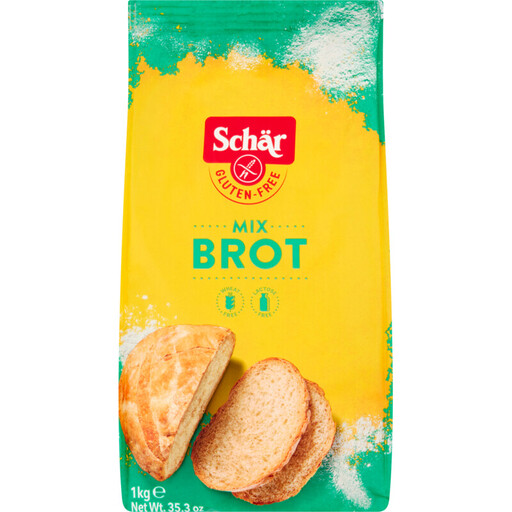 No image available
For anyone who would rather bake their own bread than buy it ready-made. This is a 1 kg mix, so allow time for preparation and follow the instructions on the packaging.
Before use, check the gluten-free statement, ingredients and allergens on the current label, including the information about soya.
No. Being wheat-free isn’t enough. Check the explicit gluten-free statement, ingredients and allergens on the packaging of the product you’re buying.
Keep the bread wrapped until you’re ready to use it, and use clean hands and utensils. The Dutch Coeliac Society points out that crumbs on a chopping board, knife or worktop can also cause cross-contamination.
No, don’t assume it does. According to the Netherlands Nutrition Centre, bakers are not required to use baker’s salt, so check the label to see whether iodised salt or baker’s salt is listed among the ingredients.
Follow the storage instructions on the packaging of the bread you’ve chosen. For Schär Meesterbäcker Mehrkorn, PLUS recommends storing it in a cool, dry place, resealing it after opening and eating it within a few days or freezing it straight away. These instructions don’t necessarily apply to other breads.