What should you look for when choosing?
First, check that the bread is clearly labelled as gluten-free for people with coeliac disease. Then choose based on the nutritional information, ingredients and pack size that suits how much you’ll actually use.
| What to consider |
What to check when buying |
Who it matters to |
| Gluten-free labelling |
Look for ‘gluten-free’ or the Crossed Grain symbol, and read the ingredients and allergen information. |
When I buy bread for someone with coeliac disease, I first need to know whether it’s suitable for a gluten-free diet. Around 36% of consumers give this check top priority. |
| Fibre and ingredients |
Compare fibre per 100 g and check which ingredients form the base; ‘seeded’ doesn’t automatically mean wholemeal. |
If you usually choose wholemeal bread, you’ll want to compare the fibre levels of gluten-free options. Around 29% of consumers put this comparison first. |
| Iodised salt |
Check whether the ingredients list mentions iodised salt or baker’s salt; don’t assume it’s included based on the type of bread. |
If bread is often on the table, I want to know how my choice may affect my iodine intake when switching to gluten-free bread. This is the main consideration for around 21% of consumers. |
| Pack size |
Compare the weight with how much you use, and consider whether you want to freeze the bread in portions. |
In a household that doesn’t eat much bread, I don’t want to buy more than we can eat or store. For around 14% of consumers, choosing the right pack size is the main buying priority. |
Brands to consider
These bread ranges show some of the different product names and pack sizes available. Check the current label for each variety; a brand name is no substitute for checking the packaging.
AH Glutenvrij
Albert Heijn lists light and dark seeded bread in this range, including a 480 g loaf.
- A packaged option if you’re looking for a larger gluten-free loaf.
- Albert Heijn warns that product information can change. Check the packaging for the latest ingredients, fibre and type of salt.
Jumbo Lekker Vrij van Gluten
This range includes brown bread weighing 500 g and a seeded loaf, according to Jumbo.
- Jumbo states that its brown bread bears the Crossed Grain symbol.
- According to Jumbo, its seeded bread is made with a tapioca starch base, plus kernels and seeds. The name alone doesn’t tell you the fibre per 100 g or whether it’s wholemeal.
Schär
Albert Heijn and Jumbo list gluten-free Schär breads, including Meisterbäcker Vital and Meisterbäcker Mehrkorn.
- The varieties listed give you different types of bread and pack sizes to compare.
- Check the nutritional information and ingredients for each variety; the brand name doesn’t tell you what fibre or salt information is shown on the packaging.
Céréal Gluten Free
Jumbo includes Céréal Gluten Free Lactose Free Wholemeal Bread, 240 g, in its list of gluten-free breads.
- The product name includes both ‘gluten-free’ and ‘wholemeal’, making it easier to search for this combination.
- Check the weight, ingredients and availability of the variety you actually want to buy.
Yam
Jumbo and PLUS include Yam Desem in their lists of gluten-free breads.
- A bread range to explore if you’re looking for a gluten-free sourdough option.
- Check the label of your chosen variety for ingredients, fibre and other nutritional information.
Bread-related products at Joybuy
These options are mini baguettes and a bread mix for home baking, not ready-to-eat gluten-free wholemeal loaves. If you have coeliac disease, always check the gluten-free labelling on the packaging. Compare fibre and type of salt separately if these matter to your choice.
 No image available
Gv Baguette Mini, 7 pieces
An option if you’re looking for small rolls to bake at home. The product name states that the pack contains 7 pieces; check the current packaging for gluten-free labelling and nutritional information. This bread isn’t explicitly labelled as wholemeal.
View at Joybuy
 No image available
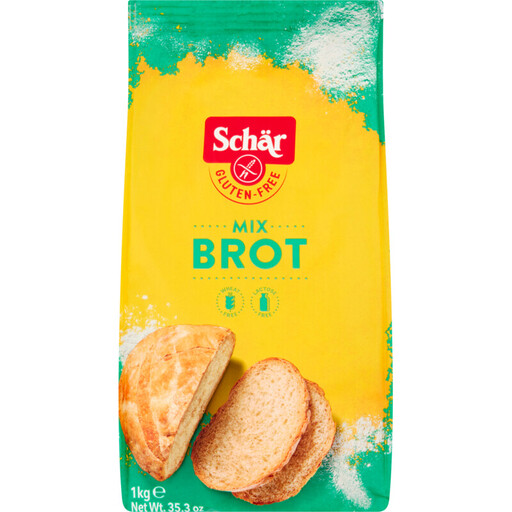
Schär Bread Mix-Mix B Gluten Free, 1 kg
A gluten-free bread mix for making and baking your own bread, not a ready-made wholemeal loaf. The pack weighs 1 kg; check the current ingredients and preparation instructions, including any additions you plan to use.
View at Joybuy
Frequently asked questions
Can I eat ordinary wholemeal bread if I have coeliac disease?
No. Ordinary wholemeal bread made with wheat, spelt, rye or barley isn’t suitable for a gluten-free diet for coeliac disease. Choose bread labelled ‘gluten-free’ or bearing the Crossed Grain symbol. Commission Implementing Regulation (EU) No 828/2014 only allows food sold to the final consumer to be labelled ‘gluten-free’ if it contains no more than 20 mg/kg of gluten.
Is dark gluten-free seeded bread also wholemeal?
Not necessarily: colour and seeds don’t prove that gluten-free bread is wholemeal. Read the ingredients and compare fibre per 100 g. For example, Jumbo describes its gluten-free seeded bread as being made with a tapioca starch base, plus kernels and seeds.
How can I check for iodine in gluten-free bread?
For packaged gluten-free bread, check whether the ingredients list includes iodised salt or baker’s salt. The Voedingscentrum advises checking for iodine in bought or home-baked gluten-free bread; bakers in the Netherlands aren’t required to use baker’s salt.
Can I choose oat bread if I have coeliac disease?
If you have coeliac disease, only choose oat bread that’s explicitly labelled gluten-free or bears an appropriate certification symbol. Oats can come into contact with gluten-containing grains; according to the Dutch Coeliac Association, some people with coeliac disease also react to pure oats. Discuss any symptoms with your doctor or specialist dietitian.
How can I avoid contact with ordinary bread crumbs?
Store and prepare gluten-free bread separately from ordinary bread, and avoid contact with any crumbs left behind. For example, use a separate chopping board or thoroughly cleaned utensils; the Voedingscentrum points out that even a stray bread crumb can cause symptoms in people with coeliac disease.


