If you have coeliac disease, start with bread labelled ‘gluten-free’ or bearing the Crossed Grain symbol; white, brown and multigrain tell you nothing about whether it’s suitable. If you’re looking for a white-style loaf, compare it with explicitly gluten-free multi-seed options for taste, ingredients and fibre per 100 g. A loaf made with ordinary wheat isn’t a gluten-free compromise.
Who is this choice for?
Anyone buying bread for someone with coeliac disease
You’ll want to make sure a loaf is gluten-free before considering its colour or taste. The Netherlands Nutrition Centre says that the ‘gluten-free’ label and the Crossed Grain symbol can help with this first step; always check the current packaging too.
Fussy eaters who are used to white bread
You’re looking for a familiar white bread style, but don’t want to assume that a light colour means it’s gluten-free. Compare options labelled gluten-free and, if you’re unsure, try one pack first.
Anyone comparing fibre and bread texture
You may also be open to a darker or multi-seed loaf. If so, compare the nutritional information per 100 g and the ingredients of individual gluten-free loaves, rather than judging them by their colour.
What should you look for?
First, check that the bread is labelled gluten-free. Then compare the style of loaf and the nutritional information that matter for how you’ll use it.
| What to consider |
What to check when buying |
Who it matters to |
| Gluten-free labelling |
Look for ‘gluten-free’ or the Crossed Grain symbol, and check the ingredients and warnings on the packaging. |
When I’m buying bread for someone with coeliac disease, I don’t want to rely on its colour or the term ‘wheat-free’. An estimated 36% of consumers put this check first. |
| White bread style |
Check the product description, pack size and storage advice; try one pack first if needed. |
For a fussy eater, I’m looking for a style of bread that suits what they like to eat. An estimated 29% of consumers give this preference priority. |
| Fibre and texture |
Compare fibre and salt per 100 g, and check whether iodised salt is listed in the ingredients. |
If I’m also considering a heartier loaf, I want to compare the nutritional information without treating ‘multigrain’ as proof. This matters most to an estimated 21% of consumers. |
| Packaging and availability |
Check the pack weight, freezing advice and range at the shop you’re buying from. |
If I don’t eat bread every day, I want to choose a pack I can store and buy again. This is the main concern for an estimated 14% of consumers. |
Common mistakes
-
Assuming brown, wholemeal or multigrain means gluten-free
These words describe a style of bread or its ingredients, not whether it’s suitable for coeliac disease. Ordinary bread made with wheat, spelt, rye or barley contains gluten.
Use the gluten-free label as your first filter, then compare colour, taste and nutritional information.
-
Assuming ‘wheat-free’ or standard oats are enough
‘Wheat-free’ doesn’t rule out other gluten-containing grains. The Netherlands Nutrition Centre also points out that oats are only suitable for people with coeliac disease when the product is clearly labelled gluten-free.
For oat products, check for a gluten-free label or the Crossed Grain symbol, and read the packaging.
-
Relying on one nutritional value to tell you everything
A fibre value doesn’t tell you what other ingredients or nutrients a loaf contains. The Netherlands Nutrition Centre describes baker’s salt as a source of iodine in many standard breads; don’t assume every gluten-free loaf has the same ingredients.
Compare the nutritional information and ingredients for each product. If you have questions about following a gluten-free diet long term, speak to a specialist dietitian.
-
Relying only on online product information
Ingredients and other product information can change. The information on the packaging you receive is therefore important when making your final choice.
Read the packaging before use and follow the storage advice if you want to store the bread in portions.
Brands and shops to explore
These examples show the types of bread you could compare; a brand or shop name is never a substitute for checking the individual product.
Albert Heijn / AH Glutenvrij
Albert Heijn describes AH Glutenvrij Wit brood half as a white loaf labelled gluten-free.
- A specific white option to compare with gluten-free multi-seed bread; Albert Heijn also says it can be frozen.
- Check the packaging for the latest ingredients and any other allergens that are relevant to you.
Schär
Schär offers a range of bread options labelled gluten-free in different styles.
- Meisterbäcker Vital and Meisterbäcker Mehrkorn, listed by PLUS, are separate multigrain options you can compare for ingredients and nutritional information.
- Don’t assume all Schär products have the same fibre content, ingredients or allergen information; check the specific option you’ve chosen.
PLUS / PLUS huismerk
PLUS lists a selection of its own white, brown and multi-seed breads labelled gluten-free online.
- You can compare different styles of bread across the range shown.
- Check the current product packaging and the range at the shop you’re buying from.
Jumbo
Jumbo’s gluten-free bread category includes a variety of options, such as multi-seed bread, ciabatta and rolls.
- These different bread types give you a starting point for comparing products for different occasions.
- An online category listing doesn’t tell you which options are available at your local shop; always check the product label too.
Dirk
Dirk’s search results include Schär Meisterbäckers Classic, Vital and Mini Baguette, labelled gluten-free.
- These individual products give you options to compare in terms of bread style and packaging.
- Search results don’t guarantee that a product is available at every branch.
Joybuy products for this bread choice
Below you’ll find mini baguettes and a bread mix labelled gluten-free for baking at home. These are different types of product: if you’re choosing bread for someone with coeliac disease, check the current packaging for each product. Remember that you’ll still need to prepare the mix.
 No image available
Gv Mini Baguette, 7 pieces
This pack of seven mini baguettes is worth considering if you’re comparing smaller rolls. Check the packaging to make sure they’re explicitly labelled gluten-free, and read the ingredients and allergen information before choosing them for someone with coeliac disease.
View at Joybuy
 No image available
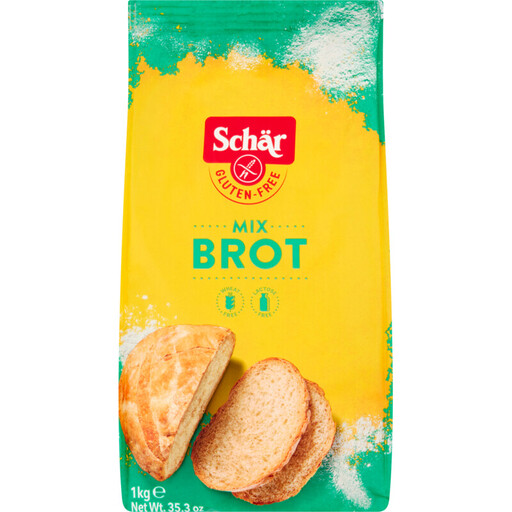
Schär Bread Mix-Mix B Gluten Free, 1 kg
If you want to bake your own bread, this is a 1 kg bread mix labelled gluten-free, not a ready-made loaf. Check the current packaging for the ingredients, allergens and preparation instructions.
View at Joybuy
Frequently asked questions
Is ‘wheat-free’ enough when buying bread for someone with coeliac disease?
No. ‘Wheat-free’ on its own doesn’t mean a loaf is gluten-free: rye and barley also contain gluten. Choose bread labelled ‘gluten-free’ or bearing the Crossed Grain symbol, and read the label, as the Netherlands Nutrition Centre advises.
Is a loaf made with a mix of white and wholemeal flour a suitable middle ground?
Not if it contains ordinary wheat, spelt, rye or barley. For someone with coeliac disease, it’s better to compare separate white and multi-seed options labelled gluten-free. For each product, consider taste preferences, ingredients and fibre per 100 g.
How should I store gluten-free bread once it’s opened?
Follow the storage advice on the packaging of the bread you’ve chosen. Albert Heijn says AH Glutenvrij Wit brood half can be frozen at home; don’t assume the same advice applies to other products.
Does all gluten-free bread contain iodised salt?
Don’t assume it does. The Netherlands Nutrition Centre describes baker’s salt as a source of iodine in many standard breads, but check the ingredients of each gluten-free product for iodised salt. For questions about your overall diet with coeliac disease, you can speak to a specialist dietitian.


