If you have coeliac disease, choose bread or a bread mix whose current packaging clearly says ‘gluten-free’ or carries the Crossed Grain symbol, and avoid contact with crumbs from ordinary bread at home. For a quick weekday breakfast, ready-sliced bread or rolls are more practical than a mix you still need to bake. Then compare fibre and salt on a like-for-like basis, and check the ingredients if you want to know whether baker’s salt has been used.
Which breakfast format is right for you?
People with coeliac disease
If you need to avoid gluten strictly, start by checking the information on the current packaging. Breakfast at home also calls for care around crumbs and shared kitchen utensils, as the Netherlands Nutrition Centre explains.
Busy weekday planners
Sliced bread is easy to portion out for breakfast, while rolls offer a different format. The online ranges at Albert Heijn and Jumbo both include gluten-free bread.
Gluten-free eaters comparing nutritional values
Alongside the gluten-free label, they want to compare fibre and salt per product and check whether baker’s salt is listed in the ingredients. A bread’s name alone won’t tell you how it compares with other products on these points.
What to look for in gluten-free breakfast bread
Start by checking the current packaging and taking steps to prevent cross-contamination. Then choose a format that suits your mornings, and compare the nutritional information of the remaining options.
| What to consider |
What to check when buying |
Who it matters to |
| Gluten-free and protected from cross-contamination |
Look for ‘gluten-free’ or the Crossed Grain symbol on the packaging, and read the current ingredients and allergen information. At home, keep the bread away from crumbs containing gluten. |
If I have coeliac disease, I want to check that my bread is suitable and prevent it coming into contact with ordinary bread through shared kitchen utensils. Around 42% of consumers put avoiding gluten first. |
| Convenience in the morning and stocking up |
Compare sliced bread and rolls by pack size and portion, and follow the storage instructions if you want to stock up for several days. |
On working days, I want to be able to grab breakfast without baking bread first, and buy an amount that suits my week. Around 33% of consumers put convenience first. |
| Fibre, salt and baker’s salt |
Compare fibre and salt per 100 g or per equal-sized portion. Check the ingredients to see whether baker’s salt has been used. |
When choosing between gluten-free breads, I don’t want to rely only on words such as ‘dark’ or ‘seeds’; I also want to check the nutritional information. For around 25% of consumers, this comparison is the main factor in their choice. |
Common mistakes when choosing and preparing gluten-free bread
-
Assuming spelt, sourdough or multigrain means gluten-free
Spelt is a type of wheat and contains gluten. Sourdough describes a method of preparation; a bread style or flavour name does not, by itself, mean the bread is gluten-free.
If you have coeliac disease, check for a gluten-free label or the Crossed Grain symbol, and read the current packaging too.
-
Relying on a pack you bought before
Albert Heijn says that ingredients, nutritional values and allergen information can change, even if a product looks familiar.
Read the packaging again each time you buy a new pack, especially if the design or ingredients have changed.
-
Skipping the nutrition table
‘Dark’, ‘seeds’ and ‘wholemeal’ are no substitute for comparing nutritional information. The Netherlands Nutrition Centre points out that the ingredients in gluten-free bread can vary.
Compare fibre and salt on a like-for-like basis, and check separately whether baker’s salt is listed.
-
Forgetting about crumbs and shared kitchen utensils
The Netherlands Nutrition Centre says that even a stray bread crumb can cause symptoms if you have coeliac disease.
Store gluten-free bread separately from ordinary bread and, where needed, use separate kitchen utensils, a toaster and spreads.
Gluten-free bread brands to compare
These brands and own-label ranges offer different bread formats to help you start comparing. Always check the packaging of the specific variety before making your final choice.
AH Glutenvrij
According to Albert Heijn’s online range, this own-label range includes sliced bread and rolls for everyday breakfasts.
- Albert Heijn lists, among other options, light and dark multiseed loaves weighing 480 g.
- Ingredients, nutritional values and allergen information can change; check the label on the pack you choose.
Jumbo Lekker Vrij
Jumbo lists 500 g white and brown gluten-free bread in this own-label range, a format to consider for several breakfasts.
- The white and brown varieties listed make it possible to compare like-for-like bread formats.
- Check what’s available at your chosen store and the latest information on the packaging.
Schär
Schär appears in the online ranges at Albert Heijn and Jumbo, with options including sliced loaves and rolls.
- The formats shown let you compare a sliced loaf with smaller bread products.
- Check availability and nutritional values for each product and store.
Consenza
Albert Heijn lists a gluten-free seed bread with chia from Consenza; compare it with other breads using the nutritional information on the packaging.
- The variety listed gives you a specific seed bread to compare with other types.
- Don’t infer the amount of fibre, salt or iodine from the product name; check the current packaging.
Céréal
Jumbo lists a Céréal wholemeal loaf with ‘Gluten Free Lactose Free’ in the product name.
- If you’re also avoiding lactose, check the claims on the packaging of this specific product.
- A lactose-free label says nothing by itself about the nutritional value or suitability of other Céréal products.
Joybuy product for home-baked bread
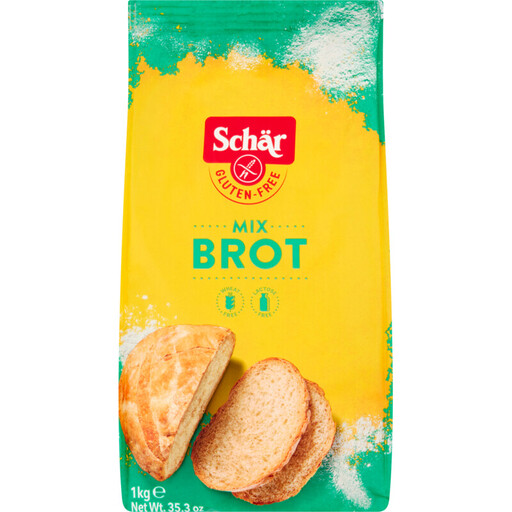
This bread mix is suited to anyone who wants to bake gluten-free bread in advance for weekday breakfasts. If you want breakfast without having to bake in the morning, a ready-made loaf is another option.
 No image available
Schär Bread Mix-Mix B Gluten Free, 1 kg
For anyone who wants to bake bread in advance: this is a 1 kg bread mix, not ready-made breakfast bread. Check the current gluten-free label, ingredients and allergen information on the packaging, and avoid contact with crumbs containing gluten while preparing it.
View at Joybuy
Frequently asked questions about gluten-free breakfast bread
How can I tell which bread is suitable to consider if I have coeliac disease?
Look for ‘gluten-free’ or the Crossed Grain symbol on the current packaging, and also read the ingredients and allergen information, as recommended by the Netherlands Nutrition Centre. At home, also avoid contact with crumbs and kitchen utensils used for ordinary bread.
Is spelt or sourdough bread automatically gluten-free?
No. Spelt is a type of wheat and contains gluten, while sourdough is a method of preparation that does not automatically make bread gluten-free. Check the specific bread against the information on its current packaging.
Does gluten-free bread always contain baker’s salt with iodine?
No. The Netherlands Nutrition Centre says that bakers are not required to use baker’s salt, including in gluten-free bread. Check the ingredients of the product you choose if you want to know whether baker’s salt has been used.
How can I plan gluten-free bread for working days?
Choose a pack size that suits the number of breakfasts you want to make with it, and follow the storage instructions on the packaging. A Jumbo recipe suggests freezing as an option for home-baked gluten-free bread; for ready-made products, check the instructions on the specific pack.


