
Visitor with coeliac disease
Wants to check whether a roll is gluten-free and how it was prepared before eating it. The Dutch Coeliac Society points out that cross-contamination with gluten can also affect people with coeliac disease.


If you have coeliac disease and want to take bread to the Christmas market, start by choosing a packaged product that is explicitly labelled ‘gluten-free’. A dark colour or the name ‘multiseed’ is no guarantee. Before buying an unwrapped roll, ask about allergens and whether it is stored and prepared using separate utensils. Only then compare ingredients and fibre per 100 g: gluten-free bread isn’t automatically wholemeal.
Wants to check whether a roll is gluten-free and how it was prepared before eating it. The Dutch Coeliac Society points out that cross-contamination with gluten can also affect people with coeliac disease.
Alongside an explicitly gluten-free product, they want to know what it contains and how much fibre it provides per 100 g. A dark colour or the name ‘multiseed’ won’t answer those questions.
Prefers to bring a packaged roll from home or bake bread in advance, rather than relying on what’s available at a stall. Clean, separate baking utensils are important at home, too.
Start with the gluten-free labelling and how the bread is prepared. Then check whether the ingredients and fibre content suit your preferences.
| What to look for | What to check when buying | Who it matters most to |
|---|---|---|
| Gluten-free labelling | Look for the explicit ‘gluten-free’ label on the packaging and check the information about other allergens, too. Don’t judge whether it’s suitable by its maize content, colour or seeds. | If I’m bringing bread for someone with coeliac disease, I want to see a clear gluten-free label first. This product claim is the top priority for around 42% of consumers. |
| Cross-contamination at a stall | Before buying, ask for allergen information and how the bread and fillings are stored and prepared, including whether separate knives, tongs and chopping boards are used. | If I’m buying a freshly filled roll, I want to know it won’t come into contact with crumbs or shared utensils. Preventing cross-contamination is the main concern for around 33% of consumers. |
| Fibre and wholemeal status | Compare the ingredients and fibre per 100 g, and check any wholemeal claim separately. If you’re buying bread from a baker, you can also ask what kind of salt they use. | Once I’ve settled on a gluten-free option, I want to know how its fibre content compares with what I usually eat. This nutritional information is the top priority for around 25% of consumers. |
Colour, seeds and maize in the name are no substitute for a gluten-free label. The Dutch Coeliac Society notes that maize bread may also contain wheat.
If you’re buying for someone with coeliac disease, check for an explicit gluten-free label on the product instead of judging by its appearance.
Even if the recipe contains no gluten, a roll may come into contact with gluten-containing crumbs during storage, slicing or filling.
Ask how the stall keeps the bread and fillings separate and what utensils are used. If the answers aren’t clear, it’s better to choose a packaged alternative.
A gluten-free label doesn’t tell you how much wholemeal flour or fibre the bread contains. According to the Netherlands Nutrition Centre, wholemeal bread is made from 100% wholemeal flour; ‘brown’ and ‘multiseed’ don’t prove this on their own.
Compare the ingredients and fibre per 100 g. If you also want to know whether baker’s salt was used, check the label or ask the baker. The Netherlands Nutrition Centre says bakers aren’t required to use this salt.
A listed range doesn’t tell you which bread will actually be available when you visit, or how an individual stall prepares it.
Check what’s available just before you leave and, if necessary, take a packaged gluten-free alternative with you.
These bread options can help you narrow down what to look for on the packaging. Always check the current labelling, ingredients and allergen information when you buy.
Albert Heijn’s AH Glutenvrij range includes multiseed bread, rolls and sourdough bread.
Jumbo’s Lekker Vrij range includes 500 g loaves of brown and white gluten-free bread.
PLUS lists brown, multiseed and white gluten-free bread, as well as gluten-free rolls.
ALDI lists gluten-free bread and rolls alongside standard wholemeal rolls.
Lidl describes gluten-free options in its standard range.
Dirk lists Schär gluten-free bread products, including Mehrkorn, multigrain rolls and ciabatta.
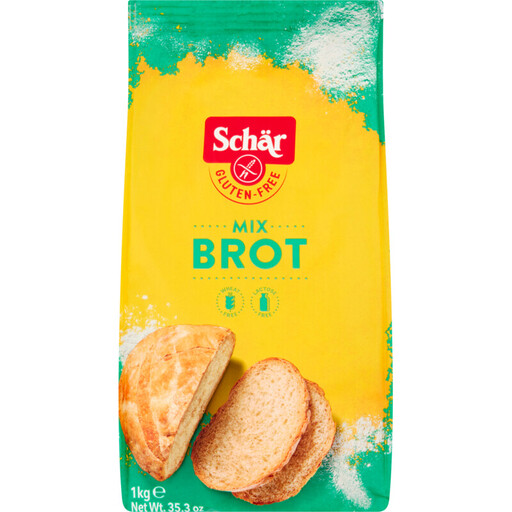
If you want to make your own bread before visiting the Christmas market, you could try a gluten-free bread mix. When preparing it at home, you’ll still need to take care to avoid contact with gluten-containing products.
 No image available
This gluten-free bread mix is for anyone who wants to bake their own bread to take along before visiting a Christmas market.
The pack contains 1 kg of mix. To compare fibre content, check the nutritional information for the baked bread; don’t assume it’s wholemeal based on the name of the mix. Use clean utensils when baking and avoid contact with gluten-containing crumbs.
No. According to the Dutch Coeliac Society, maize bread may also contain wheat. If you have coeliac disease, choose bread with an explicit gluten-free label rather than judging by its colour or a single ingredient.
Yes. According to the Netherlands Food and Consumer Product Safety Authority, sellers in the Netherlands must also make information about allergens available for unpackaged food. If you have coeliac disease, also ask how they prevent contact with gluten during storage and preparation.
That doesn’t necessarily mean it’s suitable. A roll may come into contact with gluten-containing crumbs or shared utensils when it’s sliced or filled. Ask the seller how they prepare it and, if you’re unsure, choose a packaged gluten-free product instead.
Not automatically: gluten-free labelling says nothing about the fibre content or whether the bread is wholemeal. Compare the ingredients and fibre per 100 g. According to the Netherlands Nutrition Centre, wholemeal bread is made from 100% wholemeal flour; a brown colour alone doesn’t prove this.
No. According to the Netherlands Nutrition Centre, baker’s salt contains iodine, but bakers aren’t required to use it. For packaged bread, check the ingredients; for unwrapped bread, ask what kind of salt was used.