
Hosts with a guest who has coeliac disease
You want to serve gluten-free bread alongside other buffet dishes. The Dutch Coeliac Society advises using a clean work surface and utensils, and keeping the bread separate from food containing gluten.


For a Boxing Day buffet with a guest who has coeliac disease, choose bread clearly labelled gluten-free, and prepare and serve it separately from food containing gluten. Individual rolls work well for separate portions; sliced bread is ideal for topped slices. Also check the label if fibre, allergens or the use of iodised salt matter to your choice.
You want to serve gluten-free bread alongside other buffet dishes. The Dutch Coeliac Society advises using a clean work surface and utensils, and keeping the bread separate from food containing gluten.
You’re looking for rolls that guests can pick up individually, with as little slicing as possible. PLUS, for example, lists individually wrapped Schär Mini Baguettes that still need to be baked.
As well as checking that it’s labelled gluten-free, you want to compare the nutritional information, such as the amount of fibre per 100 g. If the use of iodised salt matters, check the ingredients; according to the Netherlands Nutrition Centre, using baker’s salt is not compulsory.
First, decide how you can prepare and serve the gluten-free bread separately. Then choose a bread style that suits the portions on your buffet.
Choose these if: guests need to be able to take individual portions of bread and you have space in the oven.
Bear in mind: you’ll need a clean, separate time to prepare them if you’re also baking products containing gluten. PLUS lists individually wrapped Schär Mini Baguettes.
Choose this if: you mainly want to serve topped half-slices or offer a bread basket.
Bear in mind: you’ll need a clean board, a clean knife and separate utensils for spreads. The name ‘multiseed’ doesn’t tell you how much fibre the bread contains.
| What to consider | What to check when buying | Who it matters to |
|---|---|---|
| Preparing and serving gluten-free food | Look for ‘gluten-free’ on the packaging or the Crossed Grain symbol. Set aside a separate serving area and use clean utensils. | If there’s regular bread on the table, I want to stop crumbs or shared utensils coming into contact with the gluten-free bread. This precaution is the top priority for around 46% of consumers. |
| Bread style and preparation | Compare the number of portions and the preparation instructions; decide whether you want bake-off bread or to make topped slices. | For individual buffet portions, I want to be able to serve rolls without much slicing, but I’ll need time and oven space. This convenience is the top priority for around 36% of consumers. |
| Nutritional information | Compare fibre per 100 g and check the ingredients if the use of iodised salt matters. | If I eat gluten-free bread regularly, I want to be able to compare the nutritional value of different loaves. Around 18% of consumers give this the highest priority. |
According to the Dutch Coeliac Society, crumbs and shared knives or boards can bring the bread into contact with gluten during preparation and serving.
Keep the bread wrapped until you need it, serve it separately, and use clean, separate utensils or clean your utensils thoroughly.
A separate serving area and utensils take up space and need advance preparation.
A bread style or a claim about one ingredient doesn’t tell you whether the product is labelled gluten-free. The Netherlands Nutrition Centre identifies the ‘gluten-free’ label and the Crossed Grain symbol as things to look for.
Check the label on the exact loaf you plan to serve.
‘Multiseed’ or ‘brown’ in a product name doesn’t tell you how much fibre it contains or whether it has iodised salt. According to the Netherlands Nutrition Centre, baking with baker’s salt is not compulsory.
Compare the fibre figures in the nutritional information and check the ingredients if iodised salt matters to your choice.
A bread style shown online may not be available at the shop where you do your food shopping. Lidl also reported that its extra gluten-free products were unavailable at the time of its range announcement.
Before you shop, check the specific product and its availability at the shop you plan to use.
These ranges can help you choose a bread style; always check the packaging of the specific product when you buy it.
Albert Heijn’s AH Gluten-Free range includes bread, rolls and bread rolls, among other products.
Jumbo lists a range of Schär products, including mini baguettes, ciabatta and Meesterbakker bread.
PLUS lists gluten-free white, brown and multiseed bread under its own brand, as well as Schär bake-off options.
Among the products in its gluten-free bread search results, Dirk lists Schär Meisterbackers Classic, Vital and Mini Baguette.
Lidl has a page about gluten-free products, but reported that its extra gluten-free products were unavailable at the time.
ALDI lists gluten-free bread among its bake-off rolls and snacks.
These products suit two different buffet bread plans: a pack of mini baguettes or a bread mix for making your own loaf. For the mini baguettes, check the exact product type and preparation method on the packaging; the bread mix is not a ready-made loaf.
 Image unavailable
The mini baguettes may suit a buffet with individual portions. Before buying, check the packaging to see whether it contains rolls or a mix, how many portions you can serve and how to prepare the product.
Check the gluten-free label and any allergens on the packaging. Prepare and serve the product separately from food containing gluten.
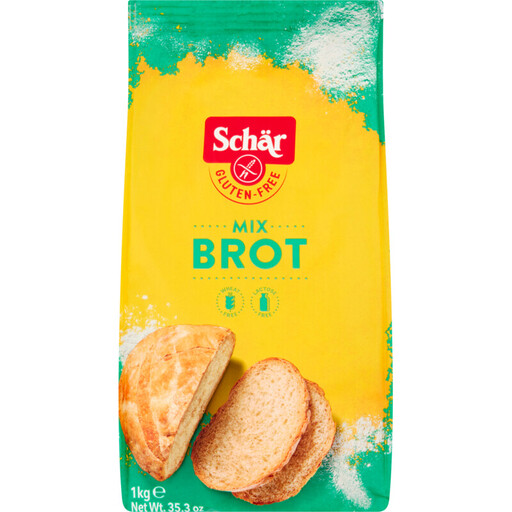 Image unavailable
This mix is a good choice if you want to make your own bread for the buffet; you’ll still need to prepare the loaf. Make sure you have a clean work surface and utensils that haven’t come into contact with products containing gluten.
Check the preparation instructions and ingredients on the packaging, including if you want to know whether iodised salt has been used.
That label alone isn’t enough to choose the bread as gluten-free. The Netherlands Nutrition Centre advises checking that the specific packaging says ‘gluten-free’ or carries the Crossed Grain symbol.
Serve it in a separate area with clean, separate utensils. The Dutch Coeliac Society also recommends using a clean work surface and keeping it separate from food containing gluten during preparation; ideally, leave the packaging closed until you need the bread.
No. According to the Netherlands Nutrition Centre, using baker’s salt is not compulsory. Read the ingredients of your chosen bread if the use of iodised salt matters to your choice; don’t assume anything from the ‘gluten-free’ label.
Choose bake-off rolls if you want individual portions and have time and oven space; sliced bread is better if you want to make topped slices. In either case, make sure you have a clean, separate preparation and serving area for your guest with coeliac disease.