What should you look for?
Start by checking for a gluten-free label and thinking about how you’ll serve the bread at home. Then compare the nutritional information, type of bread and preparation needed for your weekend breakfast.
| What to consider |
What should you check? |
Who is this most important for? |
| Gluten and cross-contamination |
Check the packaging for a ‘gluten-free’ label. If you’re sharing breakfast, keep the board, knife and spreads free from crumbs from ordinary bread. |
If someone with coeliac disease is eating with me, I want to choose both the bread and how it’s served carefully. Around 39% of consumers put this gluten check first. |
| Fibre and nutritional information |
Compare fibre per 100 g and per serving. Check the ingredients list too, rather than judging by colour or seeds. |
When I replace wholemeal bread, I want to know how the fibre content of the alternatives compares. For around 23% of consumers, this is the most important question when buying. |
| Availability |
Check whether your chosen shop or delivery service stocks the specific bread, and inspect the packaging when it arrives. |
I want to be able to pick up the bread with my usual weekend shopping, without relying on a general product range page. Practical availability comes first for around 23% of consumers. |
| Preparation and type of bread |
Check whether the product is ready to serve or needs baking or other preparation first; follow the instructions on the packaging. |
For a relaxed breakfast, I want to know in advance how much preparation is needed and whether I can keep it separate from ordinary bread. Around 15% of consumers mainly choose based on preparation. |
Brands to explore
These brands offer a useful starting point for comparing different types of bread. Always check the label of the specific product: a brand name doesn’t mean all its products have the same ingredients or nutritional value.
AH Glutenvrij
Albert Heijn’s AH Glutenvrij range includes different types of bread, such as dark multiseed bread, rolls and pistolets.
- The different options let you choose between slices and rolls for breakfast.
- Albert Heijn says that ingredients, nutritional values and allergen information may change, so check the packaging of the product you buy.
Céréal Glutenfree
Jumbo lists a 230 g Céréal Glutenfree & Lactosefree Volkorenbrood; Albert Heijn also lists a Céréal Volkoren Brood.
- This is a specific product range to explore if you’re looking for ‘gluten-free’ and ‘wholemeal bread’ in the product name.
- Check the packaging of the variant you buy for its fibre, ingredients and allergens.
Schär
Dirk lists products including Schär Meisterbackers Classic, Meisterbackers Vital and gluten-free mini baguettes.
- These products give you a choice of loaves and smaller types of bread.
- The product names don’t mean the variants have the same fibre content or ingredients; compare each label individually.
Consenza
Consenza’s range includes gluten-free bread to bake at home, as well as fresh bread for breakfast and lunch.
- Bread to bake at home is an option if you have time to prepare bread for breakfast.
- Check the preparation instructions, ingredients and allergens on the current packaging of each product.
Product for homemade bread
If you’d like to make your own gluten-free bread for the weekend, you could consider a bread mix. This product isn’t a ready-to-serve alternative to a bought loaf or a roll that needs baking.
 No image available
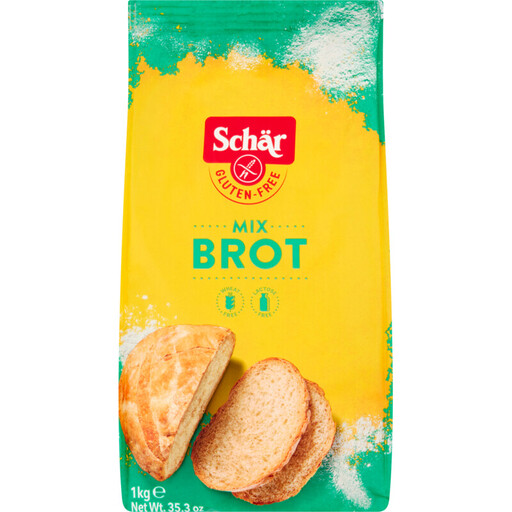
Schär Bread Mix-Mix B Gluten Free, 1 kg
A gluten-free bread mix for anyone who wants to make bread at home for a planned breakfast.
Pack size: 1 kg. If you’re also using ordinary bread, keep the utensils and preparation separate, and follow the instructions on the packaging.
View at Joybuy
Frequently asked questions
Is ordinary wholemeal bread gluten-free?
No. Ordinary wholemeal bread made from wheat, spelt, rye or barley isn’t suitable as gluten-free bread for someone with coeliac disease. When choosing an alternative, check the current packaging for a ‘gluten-free’ label; ‘wholemeal’ on its own isn’t enough.
What does ‘gluten-free’ on the packaging mean?
Under EU Regulation 828/2014, a food may be labelled ‘gluten-free’ if it contains no more than 20 mg/kg of gluten when sold to the final consumer. The label doesn’t, on its own, tell you anything about fibre content or other allergens.
Can oat bread be part of a gluten-free breakfast?
If you have coeliac disease, don’t choose a product based only on the word ‘oat’. Check that it’s labelled gluten-free. EU Regulation 828/2014 also sets requirements for oats in food presented as gluten-free, to prevent contamination with wheat, rye and barley.
How do you serve gluten-free and ordinary bread at the same table?
Prepare and serve the gluten-free bread using a clean board, a clean knife and separate spreads. This helps stop crumbs getting onto the gluten-free bread from utensils or a shared spread jar, a risk highlighted by the Dutch Coeliac Society.
Why might iodine need attention when you choose a different type of bread?
The Netherlands Nutrition Centre lists bread as a possible source of iodine, so changing the type of bread you eat may raise questions about your overall diet. Check the nutritional information of the products you use, and speak to a specialist dietitian if you have questions about following a gluten-free diet long term.


