If you’re buying biscuits for someone with coeliac disease, choose only those whose packaging explicitly says ‘gluten-free’ or carries the Crossed Grain symbol, then check the current ingredients and allergen information. If lactose, other allergens or oats are also a concern, use that information to find the right gluten-free option. For a day out, also think about how you’ll keep the biscuits separate when packing and serving them. Standard Lotus Biscoff Speculoos 250 g is not a gluten-free option: according to Joybuy’s product information, it contains wheat flour.
Who is this relevant to?
Families shopping for someone with coeliac disease
For parents and carers looking for a biscuit for the school holidays and wanting to check the gluten-free label before buying. When taking biscuits out or sharing them, they also want to avoid contact with ordinary snacks.
Shoppers checking for other allergens too
For anyone who needs to consider other allergens alongside gluten, such as milk, eggs, nuts, soya, sesame or lupin. A gluten-free label alone says nothing about the presence of these other allergens, as product information from Jumbo and Joybuy shows.
Holidaymakers comparing flavours and shops
For anyone weighing up different types of biscuits for a day out. Albert Heijn and Jumbo list a range of gluten-free options; check which specific products are available at the shop you plan to visit before you set off.
What should you look for when choosing?
Start by checking for a gluten-free label on the packaging. Then consider any other dietary restrictions and how you plan to take the biscuits with you or share them.
| What to consider | What to check when buying | Who it matters to |
|---|
| Gluten-free label |
Look for ‘gluten-free’ or the Crossed Grain symbol on the packaging. Under EU Regulation 828/2014, the ‘gluten-free’ label means the food as sold contains no more than 20 mg/kg of gluten. |
If you’re buying biscuits for someone with coeliac disease, don’t rely on ‘wheat-free’ or ‘vegan’ alone. For around 42% of consumers, this basic gluten-free requirement comes first. |
| Other allergens |
Check the ingredients and any ‘may contain’ warnings for allergens relevant to the person eating them; check separately for a lactose-free label. |
If you also need to consider, for example, milk or soya, that extra restriction will determine which gluten-free pack you can choose. Around 25% of consumers prioritise this additional check. |
| Packing and sharing |
Take a clearly identifiable pack with you and keep the biscuits separate from snacks containing gluten when serving them. |
When sharing snacks, you’ll want to avoid mix-ups or contact with ordinary biscuits. For around 17% of consumers, keeping food separate when packing and serving is the first practical concern. |
| Choice and availability |
Compare specific products and check what’s currently available in store; always read the packaging when you buy. |
If you’re looking for different flavours for a holiday outing, you’ll want to know which suitable biscuits are available at your shop. For around 16% of consumers, choice or availability makes the difference once the gluten-free requirement has been checked. |
Common mistakes
-
Assuming ‘vegan’ or ‘wheat-free’ means ‘gluten-free’
These labels are not interchangeable with ‘gluten-free’. Standard Lotus Biscoff Speculoos 250 g contains wheat flour, according to Joybuy, and lists wheat as an allergen.
For someone with coeliac disease, choose a pack explicitly labelled gluten-free and read the label on the specific product you’ve chosen.
-
Stopping your checks at the gluten-free label
Gluten-free biscuits can contain other allergens. Jumbo’s gluten-free filled biscuit, for example, lists almonds, eggs, lupin, milk and soya.
Compare the ingredients and warnings on the packaging with the dietary restrictions of the person who’ll be eating the biscuits.
-
Treating an online product page as the definitive label
Albert Heijn advises shoppers to read the packaging because product information can change. So a previous purchase is no substitute for checking the pack you’re taking with you now.
Use the product page to help narrow down your options, then check the current packaging before serving.
-
Serving gluten-free and ordinary biscuits together
Gluten-free biscuits on a shared plate can come into contact with crumbs from biscuits containing gluten.
Put them on a separate plate and use clean serving utensils to keep your chosen gluten-free biscuits separate.
Brands and own-label ranges to explore
Albert Heijn / AH Glutenvrij
A useful category page for comparing AH own-brand biscuits with other gluten-free options before you shop.
- Albert Heijn lists options including double cookies and chocolate chip cookies.
- Check the packaging when you buy: Albert Heijn warns that product information can change.
Jumbo Lekker Vrij
A Jumbo own-label range to explore, with options including gluten-free speculaas, syrup waffles and digestives.
- Jumbo lists several types of biscuits in this range.
- According to the product label, Jumbo’s gluten-free filled biscuit contains almonds, eggs, lupin, milk and soya, and may contain sesame.
Céréal
Céréal’s chocolate biscuits are worth considering if you need a product labelled both gluten-free and lactose-free.
- Jumbo describes this option as gluten-free and lactose-free.
- The same product information lists soya and says it may contain, among other things, eggs, milk, nuts, sesame and lupin.
Verkade
The Gv Oaties option is an oat biscuit labelled gluten-free, with milk chocolate, for anyone who can eat oats.
- Joybuy’s product information lists gluten-free oats and milk chocolate.
- According to that information, the product contains milk and soya, may contain nuts, and a small number of people with coeliac disease may be sensitive to avenin in oats.
Lotus Biscoff
Standard Lotus Biscoff Speculoos 250 g is not a gluten-free option for someone with coeliac disease.
- Joybuy lists wheat flour as an ingredient and wheat as an allergen for this standard option.
ALDI
A shop where you can look for a specific gluten-free biscuit, such as Heerlijck Banket Coconut Macaroons.
- ALDI describes these coconut macaroons as gluten-free.
- Check availability in store and read the packaging of the product you buy.
Product examples for different needs
This selected order compares three products labelled gluten-free, each suited to a different additional shopping need. It is not a ranking of quality or popularity; check the packaging of each product and any allergens relevant to the person eating it.
| Rank | Biscuit | Features | Why it’s included | Retailer |
|---|
| 1 |
Céréal gluten-free and lactose-free chocolate biscuits 150 g |
Gluten-free and lactose-free according to Jumbo; contains soya and may contain eggs, milk, nuts, sesame and lupin. |
For anyone avoiding lactose as well as gluten, who will still need to check for the other allergens. |
Jumbo |
| 2 |
Jumbo Gluten-Free Filled Biscuit 60 g |
Gluten-free according to Jumbo; contains almonds, eggs, lupin, milk and soya, and may contain sesame. |
A filled biscuit to consider if the other allergens listed aren’t a concern. |
Jumbo |
| 3 |
Verkade Gv Oaties milk chocolate 150 g |
Made with gluten-free oats according to Joybuy; contains milk and soya and may contain nuts. |
An oat biscuit with milk chocolate to consider if oats are suitable and you’ve checked the allergens listed. |
Joybuy |
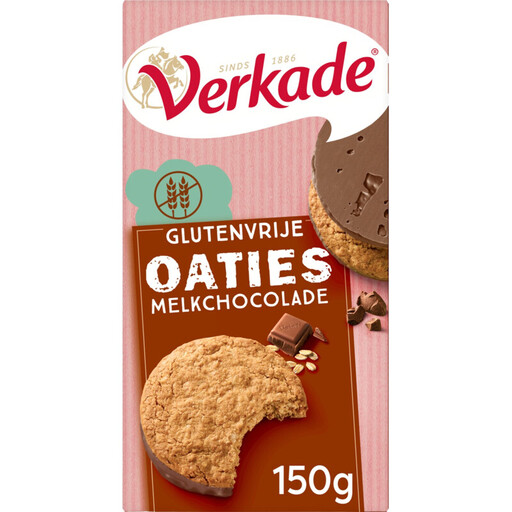
Gluten-free oat biscuits at Joybuy
This product is an option if you’re looking for an oat biscuit labelled gluten-free, with milk chocolate. Check that oats are suitable for the person eating it and read the current packaging before serving.
 No image available
Verkade Gv Oaties milk chocolate 150 g
A biscuit to consider if you’re looking for an oat biscuit labelled gluten-free, with milk chocolate, and oats are suitable for the person eating it.
The product information lists gluten-free oats and a 150 g pack. According to that information, the biscuit contains milk and soya, may contain nuts, and a small number of people with coeliac disease may be sensitive to avenin in oats. Check the current packaging for ingredients and allergens.
View at Joybuy
Frequently asked questions
Does ‘wheat-free’ mean the same as ‘gluten-free’ for coeliac disease?
No. A ‘wheat-free’ label doesn’t mean a biscuit is gluten-free; gluten is also found in other grains. Choose a pack labelled ‘gluten-free’ or carrying the Crossed Grain symbol. Under EU Regulation 828/2014, ‘gluten-free’ can be used when the food as sold contains no more than 20 mg/kg of gluten.
What should I check on a biscuit I’ve found online before taking it with me?
Read the physical packaging of the biscuits you’re actually taking with you. Check the gluten-free label, ingredients, relevant allergens and warnings; Albert Heijn notes that product information can change.
Can I choose gluten-free oat biscuits if I have coeliac disease?
A biscuit labelled gluten-free and made with oats may be an option if oats are suitable for your individual dietary requirements. Check the other allergens too: according to Joybuy, Verkade Gv Oaties contain milk and soya and may contain nuts. The product information also warns that a small number of people with coeliac disease may be sensitive to avenin in oats.
How can I share gluten-free biscuits alongside ordinary biscuits?
Keep the gluten-free biscuits clearly identifiable and separate from snacks containing gluten. Use clean serving utensils and make sure crumbs from ordinary biscuits don’t get onto the gluten-free ones.
Can I count on finding gluten-free biscuits at Lidl or ALDI for a day out?
Check what the shop has in stock shortly before you go shopping. Lidl’s range page says that its additional gluten-free products are unavailable, while ALDI directs shoppers to stores for its Heerlijck Banket Coconut Macaroons, which are labelled gluten-free. Always read the packaging of the product you choose when you buy it.


