If your child has coeliac disease, choose a biscuit whose current packaging says ‘gluten-free’ or displays the Crossed Grain symbol, then check the ingredients and allergen information. A familiar, individually wrapped portion is handy for school, but other allergens and contact with food containing gluten also affect whether it’s suitable. Lotus Biscoff Original is not gluten-free: Lotus Bakeries Nederland lists wheat flour and gluten.
Who is this choice relevant for?
Parents of a child with coeliac disease
When packing a lunchbox, it’s not just the gluten-free claim that matters. Check the current ingredients too, and avoid contact with crumbs from food containing gluten. The Dutch Coeliac Society highlights the importance of preventing cross-contamination.
Parents taking biscuits in for a school occasion
A clearly identifiable portion of your own makes it easier to agree with the school in advance which biscuit is for your child. Keep it wrapped until it’s time to eat.
Shoppers checking for other allergens too
A gluten-free biscuit may still contain ingredients or warnings that matter for your child. So compare the allergen information for the exact variant with your child’s needs and the arrangements agreed with the school.
What should you look for when choosing?
Start by checking that it’s suitable for someone with coeliac disease. Only then compare the portion size and nutritional information of the biscuits that are suitable for your child.
| What to consider |
What to check when buying |
Who it matters most to |
| Gluten-free status and cross-contamination |
Look for ‘gluten-free’ or the Crossed Grain symbol on the current packaging. Also read any warnings about cereals containing gluten. |
If my child has coeliac disease, I want to be sure this particular biscuit is suitable before it goes into their lunchbox. For around 36% of consumers, this check would be their main concern when buying. |
| Other allergens |
Read the allergen information and ‘may contain’ statements for the exact variant. Check them against your child’s needs and any arrangements with the school. |
For a child who needs to avoid allergens as well as gluten, a single ingredient can determine the choice. This additional allergen check would be the top priority for around 29% of consumers. |
| Portion size and hygiene |
Check whether the biscuit is individually wrapped or can be portioned hygienically at home. Keep the portion separate from food containing gluten. |
If I’m taking biscuits from a larger pack, I want to be able to wrap an individual portion without it coming into contact with bread crumbs. For around 21% of consumers, this would be the main practical consideration. |
| Ingredients and nutritional information |
Compare the nutritional information per 100 g and per portion, including sugars and fibre, if these differences matter to your choice. |
When several biscuits are suitable, I want to see how their portions and nutritional information differ. For around 14% of consumers, the ingredients and nutritional content would carry the most weight. |
Common mistakes when choosing biscuits for school
-
Assuming a familiar biscuit is a gluten-free alternative
Lotus Bakeries Nederland lists wheat flour among the ingredients of Lotus Biscoff Original and identifies gluten as an allergen. This product isn’t suitable for a strictly gluten-free school lunch.
Don’t rely on the brand or the size of the biscuit: check the gluten-free claim on the packaging of the specific product.
-
Reading only the gluten-free claim
Among the gluten-free biscuits listed by Jumbo are variants containing ingredients such as egg, milk, soya or oats, as well as variants that may contain nuts. Gluten-free doesn’t tell you which other allergens are present.
Read all the allergen information, including ‘may contain’ statements, and choose in line with your child’s needs and the arrangements with the school.
-
Putting biscuits from a large pack loose in the lunchbox
When portioning biscuits or at school, gluten-free biscuits may come into contact with crumbs containing gluten. The Dutch Coeliac Society warns that even a crumb can be harmful to someone with coeliac disease.
Use clean hands and utensils, wrap the portion separately and keep it sealed for as long as possible.
-
Treating every gluten-free biscuit as the same kind of lunch item
Portion sizes, ingredients and nutritional values vary from one biscuit to another. A biscuit is also a snack, and doesn’t automatically replace the other parts of lunch.
For suitable variants, compare the nutritional information per 100 g and per portion, as well as the allergens.
Brands and ranges to explore
A brand name alone doesn’t determine whether a biscuit is suitable for a child with coeliac disease. Always check the exact variant and its current packaging.
Jumbo Lèkkér Vrij van Gluten
Jumbo lists, among other products in this range, a 50 g roze koek and 165 g milk chocolate digestives.
- Jumbo displays the Crossed Grain symbol for both of these variants.
- Their allergens differ: check the roze koek and the digestives separately before packing a portion.
Consenza
The raisin and cranberry biscuits listed by Jumbo are gluten-free oat biscuits in a 150 g pack.
- Jumbo labels this variant ‘gluten-free’ and displays the Crossed Grain symbol.
- The biscuits contain oats and may contain nuts. The larger pack also needs to be portioned hygienically for school.
Schär
Jumbo features several types of Schär biscuits, including Choco Chip Cookies and Butterkeks.
- The biscuits shown offer a choice of types and pack sizes.
- Check the ingredients, allergens and portion details for each variant; they aren’t the same for every type of biscuit.
Albert Heijn Glutenvrij
Albert Heijn features several types of gluten-free biscuits, including oat biscuits, filled biscuits and roze koeken.
- You can compare different types of biscuits and pack sizes.
- Albert Heijn advises checking the packaging before eating, so make sure you check the details of the product you choose.
Lotus Biscoff
Lotus Biscoff Original is a standard speculoos biscuit, not a gluten-free alternative for this school lunch.
- Lotus Bakeries Nederland lists wheat flour and gluten. Don’t choose this product for a child who needs to follow a strict gluten-free diet because of coeliac disease.
Oat biscuits for school lunches at Joybuy
This option is for anyone who wants to take a portion of oat biscuits from a larger pack. Before packing them for a child with coeliac disease, check the current gluten-free claim and allergen information for the specific variant.
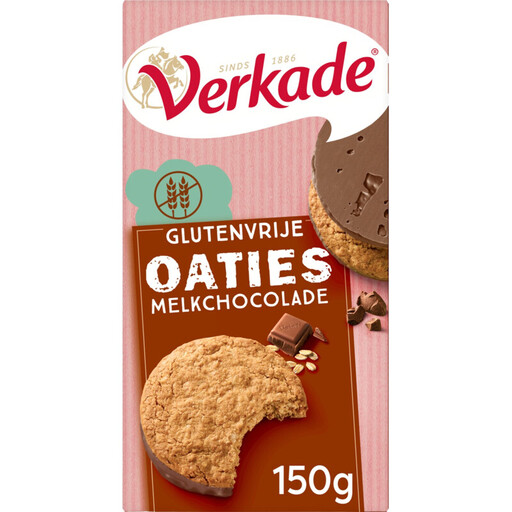 Image unavailable
Verkade Gv Oaties Milk Chocolate 150 g
A handy option if you want to prepare a portion at home from a 150 g pack. Check that oats are suitable for your child, and read the current packaging for the gluten-free claim, allergens and any cross-contamination warnings. Pack the portion separately using clean utensils.
View at Joybuy
Frequently asked questions
Is ‘wheat-free’ enough for someone with coeliac disease?
No. ‘Wheat-free’ doesn’t mean the same as ‘gluten-free’. The Netherlands Nutrition Centre recommends looking for the gluten-free claim or the Crossed Grain symbol; also check the current ingredients and warnings on the packaging.
Can a gluten-free oat biscuit go to school?
Yes, if the specific variant is labelled gluten-free and oats are suitable for your child. Check for other allergens too: the Consenza raisin and cranberry biscuits listed by Jumbo contain oats and may contain nuts.
How can I pack a gluten-free biscuit without it coming into contact with gluten?
Use clean hands and utensils, wrap the biscuit separately and keep it sealed for as long as possible. The Dutch Coeliac Society stresses the importance of preventing cross-contamination with gluten.
What should I agree with the school about lunch or treats?
Discuss in advance which biscuit is suitable for your child and how it should be stored and handed out separately. Take both the allergens listed on the packaging and the school’s arrangements into account.


