
Runners with coeliac disease
For you, the gluten-free label comes first. Check the ingredients and allergen information too, especially if the biscuit contains oats. Only then compare flavour and nutritional value.


If you have coeliac disease, start by choosing a biscuit clearly labelled gluten-free and checking the current packaging. For a small snack before training, consider the portion size and how comfortable it feels on your stomach. If you’re planning to eat it during a long run, you’ll also need to know how many carbohydrates a realistic portion provides and whether it’s easy to eat on the move.
For you, the gluten-free label comes first. Check the ingredients and allergen information too, especially if the biscuit contains oats. Only then compare flavour and nutritional value.
You’re looking for a modest portion that you’ve tolerated well during previous training sessions. Voedingscentrum advises being cautious with large portions and foods high in fat, protein or fibre around exercise.
You want to know how many carbohydrates you’ll actually take with you and eat. It also matters whether the biscuit is easy to open and eat on the move, and whether you can comfortably have it with a drink.
If you have coeliac disease, check the gluten-free label first. Then choose according to when you plan to eat the biscuit, and compare the nutritional information per portion.
| What to consider | What to check before buying | Who it matters most to |
|---|---|---|
| Gluten-free label | Read the current gluten-free claim and allergen information. If the biscuit contains oats, check that the product is labelled gluten-free too. | With coeliac disease, I want to be sure the biscuit fits my gluten-free diet before considering flavour or nutritional value. An estimated 36% of these consumers put that reassurance first. |
| Stomach comfort before running | Compare the portion size and the amount of fat and fibre per portion; try the biscuit during a training session first. | If I eat shortly before setting off, I don’t want a large portion that feels heavy on my stomach. An estimated 29% of these consumers consider stomach comfort the most important factor. |
| Carbohydrates on the move | Check the carbohydrates per portion you’ll actually eat, not just per 100 g, and consider whether you can eat that portion while running. | On a long run, I want to know how many carbohydrates I can actually get from my snack. An estimated 21% of these consumers give this the highest priority. |
| Carrying and portioning | Check how many biscuits are in the pack, the portion size and how easy the packaging is to open on the move. | When I train outdoors, I want to take a suitable amount without dealing with awkward packaging. An estimated 14% of these consumers prioritise this practical convenience. |
A product name doesn’t tell you whether a biscuit is suitable for someone with coeliac disease. According to Lotus Bakeries Nederland, regular Lotus Biscoff contains wheat flour; oats also need careful consideration when it comes to gluten-free status.
Choose a product with a clear gluten-free label or a suitable certification, and check the current packaging when you buy it.
According to Voedingscentrum, foods high in fat, protein or fibre may feel less comfortable just before exercise. What you tolerate also depends on the portion size and when you eat it.
Keep your snack small if you’re eating shortly before a run, and try that particular biscuit during a training session first.
A value per 100 g doesn’t tell you how many carbohydrates you’ll get from one biscuit. A dry or crumbly biscuit can also be difficult to eat while running.
Use the portion weight and nutritional information on the packaging to work out what’s in your own portion. Also test whether eating and drinking on the move works for you.
Ingredients, allergen information and product ranges can change. This is particularly important when you’re buying a familiar gluten-free product again.
Check the packaging and current product information again each time you buy it.
Albert Heijn’s gluten-free range includes several biscuit-style products, including speculaas and cookies. Compare the individual packs if you want to weigh up flavour, portion size and nutritional information side by side.
Schär Avena is an oat biscuit that Albert Heijn labels gluten-free. It’s one to compare if you’re specifically looking for an oat biscuit.
Albert Heijn lists Prewett's White chocolate & cranberry cookies in its overview of gluten-free biscuits.
Regular Original Speculoos is a useful product to rule out when you’re looking for biscuits suitable for coeliac disease.
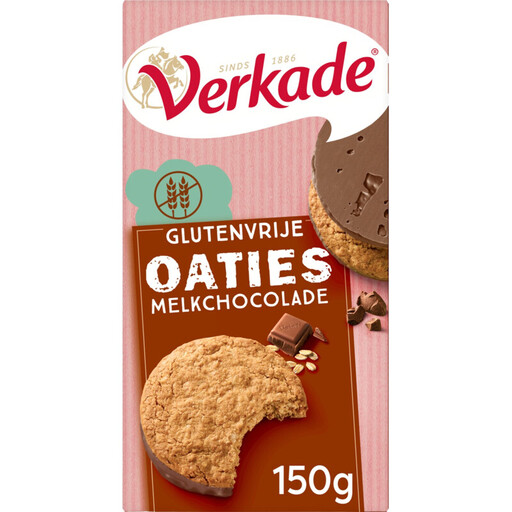
You could consider this oat biscuit as a small snack before an easy or shorter training session. Try it during training first to see whether the product and portion suit you; that doesn’t automatically make it a good choice for fuelling on the move.
 No image available
An oat biscuit to consider as a small snack before an easy run, as long as you’ve found it sits well during training.
The product information describes it as gluten-free and lists oats. Check the current label and allergen information on the packaging. If you’re planning your carbohydrate intake for a long run, check how much one biscuit provides according to the label.
No, the name alone isn’t enough. Choose a biscuit with a clear gluten-free label or suitable certification, and read the current allergen information. According to Lotus Bakeries Nederland, regular Lotus Biscoff contains wheat flour.
Not without considering your own tolerance too. Check that the product is explicitly labelled gluten-free; the Dutch Coeliac Society also points out that some people with coeliac disease react to pure oats.
You can, if you tolerate it well while running and the carbohydrates in a portion you can eat fit your plan. Check the nutritional information on the packaging and practise eating and drinking on the move during training. A biscuit isn’t automatically as easy to use as a drinkable option.
Choose a small portion that you’ve tried during a training session before. Voedingscentrum advises being cautious with large portions and foods high in fat, protein or fibre around exercise.
Don’t rely on a biscuit as a complete meal after a hard training session. Voedingscentrum also recommends having something containing protein and carbohydrates, or a balanced meal; a biscuit can be part of that if you wish.