
People with coeliac disease and diabetes
You need a clearly labelled gluten-free biscuit and also want to know how many carbohydrates you’ll get in your portion. Check both the gluten-free label and the nutritional information on the packaging.


If you have coeliac disease, first choose a biscuit clearly labelled gluten-free, then compare the carbohydrate and sugar content and serving size. Gluten-free doesn’t mean low-carb: diabetes.nl says there is no single amount of carbohydrate that is best for everyone with diabetes. So work out the amount for the number of biscuits you actually eat, even if the packaging highlights that they contain less or no sugar.
You need a clearly labelled gluten-free biscuit and also want to know how many carbohydrates you’ll get in your portion. Check both the gluten-free label and the nutritional information on the packaging.
You want to include a snack in your carbohydrate tracking. The amount in the number of biscuits you eat matters more than a general claim on the front of the pack.
You compare products with less or no sugar, but also want to take total carbohydrates, serving size and any polyols into account.
If you need to avoid gluten because of coeliac disease, start by checking the gluten-free label. Then use the nutritional information to compare biscuits and work out the carbohydrate content of your own portion.
| What to consider | What to check when buying | Who it matters to |
|---|---|---|
| Gluten-free label | Check for the words ‘gluten-free’ or the Crossed Grain symbol on the current packaging. Check other allergens separately. | If I have coeliac disease, I first need to be sure that the biscuit is a gluten-free choice; only then can I weigh up its nutritional values. For around 45% of consumers, confirmed gluten-free suitability comes first. |
| Carbohydrates per serving | Compare carbohydrates per 100 g and calculate the amount for the number of biscuits you eat; check ‘of which sugars’ too. | People who count carbohydrates want to know what a snack adds to their intake, rather than seeing a value per 100 g alone. Around 36% of consumers give the carbohydrate content of the portion they eat the highest priority. |
| Less sugar and polyols | As well as ‘of which sugars’, check total carbohydrates. If the product contains polyols, consider the serving size and any warnings. | I’m looking for less sugar, but don’t want to overlook other carbohydrates or a warning about polyols. For roughly 19% of consumers, balancing sugar choices with tolerance is the first consideration. |
The gluten-free label tells you nothing about the amount of carbohydrates. Albert Heijn lists AH Glutenvrij Koekjes amandel as containing 64 g of carbohydrates and 29 g of sugars per 100 g.
If you have coeliac disease, check the gluten-free label first, then compare the carbohydrate and sugar content for the portion you plan to eat.
A product with no sugars can still contain carbohydrates and polyols. Damhert lists Zonder Suikers Madeleines as containing 13.0 g of carbohydrates and 8.8 g of polyols per 30 g serving, with a warning that excessive consumption may have a laxative effect.
Check total carbohydrates and serving size alongside the sugar information, and read any warnings on the packaging.
A value per 100 g isn’t automatically the amount you eat. Jumbo lists Schär Choco Chip Cookies as containing 6.8 g of carbohydrates per 11 g biscuit; eating more biscuits changes the total.
Use the per-100 g figure to compare products, then calculate the carbohydrates for the number of biscuits you’ll actually eat.
Ingredients and allergen information can change, so a product page you looked at previously may not match the packaging in your hands.
Check the current packaging before eating, especially if you need to avoid gluten or other allergens.
Albert Heijn’s own-brand gluten-free range includes almond biscuits labelled gluten-free.
Jumbo’s own-brand range includes a filled biscuit labelled gluten-free.
With Schär Choco Chip Cookies, you can use the stated value per biscuit to calculate your portion.
Damhert describes its Zonder Suikers Madeleines as gluten-free and sugar-free. Check the nutritional information for the specific product before choosing it.
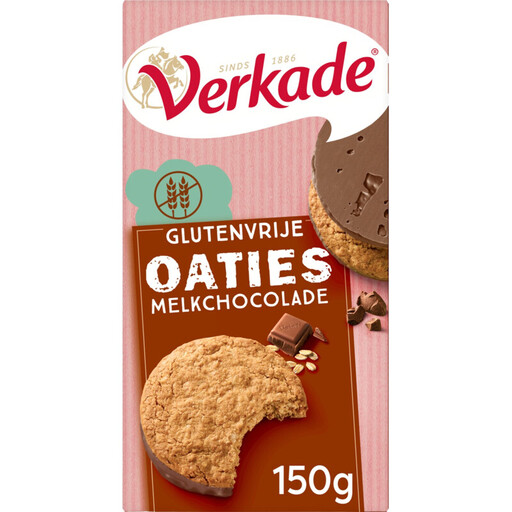
This biscuit is labelled gluten-free. Use the nutritional information on the packaging to assess the carbohydrate content of your own portion too.
 No image available
A biscuit to consider if you start by looking for a gluten-free label, then compare the nutritional values.
The nutritional information lists carbohydrates, sugars and fibre per 100 g. Work out the carbohydrate content of your own portion based on the weight you eat.
The product contains gluten-free oats; according to the product description, some people with coeliac disease may be sensitive to oat protein (avenin). If you’re unsure, speak to your healthcare professional and check the current packaging and allergen information.
No. The gluten-free label is about gluten, not carbohydrates or sugars. Compare the nutritional information for the portion you eat; diabetes.nl says there is no single amount of carbohydrate that is best for everyone with diabetes.
Look for the words ‘gluten-free’ or the Crossed Grain symbol on the current packaging. Under Commission Implementing Regulation (EU) No 828/2014, ‘gluten-free’ may only be used in the EU for food sold to the final consumer if it contains no more than 20 mg/kg of gluten. Check other allergens separately.
Use the per-100 g value to compare products, then use the value for the portion you eat to work out your own intake. The Netherlands Nutrition Centre explains that nutrition tables show values per 100 g. If a serving value is also given, check that it matches the number of biscuits you eat.
No. Check total carbohydrates and serving size too. For example, Damhert lists its Zonder Suikers Madeleines as containing 13.0 g of carbohydrates and 8.8 g of polyols per 30 g serving, with a warning that excessive consumption may have a laxative effect.