For guests with coeliac disease, choose biscuits whose gluten-free claim and allergen information you can check on the packaging delivered. Make sure they are served separately too: individually wrapped portions are practical for self-service, while serving biscuits loose calls for separate, clean utensils and clear allergen information.
Who is this choice important for?
Conference buyers catering for guests with coeliac disease
For these organisers, the gluten-free claim on the product is only part of the picture. They also need to check the allergen information and work out how to keep the biscuits separate when serving them.
Organisers of self-service coffee breaks
With several buffets or coffee stations, staff need to be able to identify and serve the gluten-free biscuits separately. The Dutch Coeliac Society highlights the risk of cross-contamination when serving food.
Buyers catering for additional dietary requirements
If you’re also looking for lactose-free or vegan options, check each requirement separately for every product variant. A gluten-free biscuit won’t automatically meet another dietary requirement.
What should you look for when buying?
Start with the exact product variant, then decide how the biscuits will be kept separate and easy to identify when served at the conference.
| What to consider |
What to check before buying |
Who is this most important for? |
| Gluten-free claim |
Check for a gluten-free claim or suitable certification, and read the allergen information on the current packaging. |
If guests with coeliac disease are attending, I want to be able to check exactly which biscuits are being served. This is the top priority for around 42% of consumers. |
| Separate serving |
Check that the chosen packaging, trays and serving utensils will allow you to serve the biscuits separately. |
At a busy coffee break, I want to prevent biscuits, crumbs or shared tongs from coming into contact with one another. Around 25% of consumers give this serving consideration top priority. |
| Additional dietary requirements |
Check the packaging of each variant for other dietary claims and allergen information. |
If lactose-free or vegan options are also needed, I don’t want to assume that gluten-free covers those requirements. This combination matters most to around 17% of consumers. |
| Range and pack size |
Compare the available variants by pack size, portioning and current labelling information. |
For several coffee stations, I want a practical choice of biscuit types and pack sizes. This is the main consideration for around 16% of consumers. |
A gluten-free label doesn’t solve the serving question by itself. The Dutch Coeliac Society explains that cross-contamination can occur through contact with products containing gluten. Before ordering, consider whether you need individually wrapped portions or whether the catering team can store and serve loose biscuits separately.
Common serving mistakes
-
Assuming wheat-free or plant-based means gluten-free
These labels don’t confirm that a biscuit is suitable as a gluten-free option. The Dutch Coeliac Society advises checking the gluten-free claim on the label.
When the biscuits arrive, check the variant supplied, including its allergen information, rather than relying on another dietary claim.
-
Serving gluten-free and regular biscuits with the same tongs
Even after you’ve bought the biscuits, contact with crumbs or shared serving utensils can cause cross-contamination, as the Dutch Coeliac Society explains.
Use separate, clean utensils and keep the biscuits apart. Individually wrapped portions can make this easier for self-service.
-
Checking only the online product listing
Ingredients, nutritional values and allergen information can change. Albert Heijn makes this clear in its product information.
Check the packaging of the variant actually delivered again before serving the biscuits.
-
Putting out loose biscuits without accessible allergen information
For unpackaged products, allergen information must be provided to consumers in another way, according to the Netherlands Food and Consumer Product Safety Authority.
Make sure guests can check the information before choosing a biscuit, for example on a card at the buffet or by asking clearly identified staff.
Brands and product ranges to explore
Albert Heijn / AH Glutenvrij
Albert Heijn has a gluten-free biscuits category, which includes AH Glutenvrij Almond Biscuits.
- A dedicated category makes it easier to find variants to consider for your order.
- Albert Heijn warns that ingredients and allergen information can change, so check the packaging delivered.
Jumbo Lekker Vrij
Jumbo’s Lekker Vrij van Gluten range includes speculaas biscuits in 125 g packs and syrup waffles in 240 g packs.
- The variants mentioned offer different types of biscuits and pack sizes to consider for each conference.
- Check the current labelling of each variant you choose and make sure the pack suits your serving plans.
Consenza
Consenza describes its own range of gluten-free biscuits, including syrup waffles.
- The range is a useful starting point if you want to compare different types of biscuits.
- The brand’s description is no substitute for checking the ingredients and allergens on the exact variant.
Céréal
Jumbo lists Céréal Gluten-Free & Lactose-Free Chocolate Biscuits, 150 g, for those who need both claims.
- This specific variant is listed as both gluten-free and lactose-free.
- Don’t assume the same applies to other Céréal products; check the other allergen information on the pack you choose too.
Biscuits for a gluten-free selection on Joybuy
This 150 g pack is one option to consider for a separate gluten-free selection. Check the label when it arrives and decide how to serve it without contact with regular biscuits.
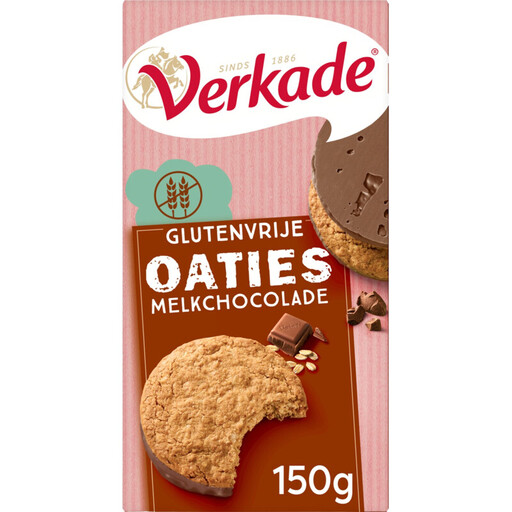 Image unavailable
Verkade Gv Oaties Milk Chocolate, 150 g
For a separate gluten-free biscuit selection; check the gluten-free claim on the packaging delivered.
150 g pack. The product information lists milk, oats and soya as allergens and states that it may contain nuts. Check the label for the guests you’re buying for.
For self-service, check whether the biscuits are individually wrapped. If they aren’t, provide separate serving utensils and make the allergen information available before guests choose.
View on Joybuy
Frequently asked questions
How do I choose biscuits for guests with coeliac disease?
Choose a specific variant with a clear gluten-free claim or suitable gluten-free certification, and check the packaging delivered. Then keep the biscuits separate from products containing gluten, as the Dutch Coeliac Society advises to help prevent cross-contamination.
Can I simply put gluten-free biscuits out on the buffet?
Only if you can prevent contact with regular biscuits and shared serving utensils. Serve loose biscuits in a separate area using clean utensils, or consider whether individually wrapped portions would work better for self-service.
What allergen information should I provide for loose biscuits?
Make the allergen information available before guests choose a biscuit. The Netherlands Food and Consumer Product Safety Authority says that, for unpackaged products, this information must be provided in a way other than on a label.
Are lactose-free or vegan biscuits also gluten-free?
No, those labels don’t automatically mean a biscuit is gluten-free. Check each requirement separately on the exact variant. For example, Jumbo lists its 150 g Céréal chocolate biscuits as both gluten-free and lactose-free.


