If you’re hosting someone with coeliac disease, start by choosing biscuits labelled ‘gluten-free’ and checking the current label for any other relevant allergens. Keep the biscuits separate from ordinary biscuits when serving them. After that, you can focus on flavour, portion size and preferences such as lactose-free or vegan.
Who is this relevant for?
Hosting someone with coeliac disease
You want to offer something with coffee without taking a chance on a brand name or an ingredient. Choose biscuits labelled ‘gluten-free’ and make sure they don’t come into contact with crumbs from ordinary biscuits on the table, as the Dutch Coeliac Society also advises.
A coffee group with different allergies
As well as gluten, you need to consider any allergens that are relevant to your guests. Gluten-free biscuits can still contain nuts, milk, soya or egg, for example, so check the allergen information for the exact variety you’ve chosen.
A group with additional dietary or flavour preferences
You’re looking for gluten-free biscuits that also suit your guests’ tastes and portion preferences, perhaps with a lactose-free or vegan label. These labels don’t replace the need to check for allergens.
What should you look for when choosing?
When you’re having coffee with friends, the order matters: first check for a gluten-free label and any relevant allergens, then think about how to serve the biscuits separately. After that, compare the varieties by flavour and portion size.
| What to consider |
What to check before buying |
Who it matters to |
| Gluten-free label |
Look for ‘gluten-free’ on the packaging and read the current ingredients and allergen label. Under Commission Implementing Regulation (EU) No 828/2014, products carrying this label must contain no more than 20 mg/kg of gluten in the final product. |
If I’m buying biscuits for someone with coeliac disease, I don’t want to rely on ‘wheat-free’ or a familiar brand name. For around 50% of consumers, this basic gluten-free requirement comes first. |
| Serving separately |
Choose biscuits that are easy to set out separately, and use a separate plate or napkin if ordinary biscuits are also on the table. |
At a mixed coffee table, I want to stop crumbs or shared plates from coming into contact with the gluten-free biscuits. Around 30% of consumers give this the highest priority when serving. |
| Flavour and other preferences |
Compare the allergens, pack weight and any lactose-free or vegan labels for each variety. |
Once the gluten-free requirement and separate serving are taken care of, I also want a flavour and portion size that suit my guests. This combination matters most to around 20% of consumers. |
Common mistakes when buying and serving
-
Assuming ‘gluten-free’ means ‘free from all allergens’
Gluten-free biscuits can still contain other allergens. The varieties described include hazelnut, soya, almond, egg, lupin and milk.
Ask which allergens are relevant to your guests and check the information on the packaging of the variety you’ve chosen.
-
Putting gluten-free biscuits on a shared plate
Crumbs and shared plates can transfer gluten from ordinary biscuits to gluten-free ones. The Dutch Coeliac Society advises keeping a separate part of the table clear for gluten-free food.
Use a separate plate and make sure ordinary biscuits don’t end up in a gluten-free plate or dip.
-
Relying only on the brand or online category
Varieties within the same product range can have different ingredients and allergens. Albert Heijn also points out that product information can change.
Read the physical label on the exact variety you’re offering shortly before buying and serving it.
-
Overlooking an allergen warning
On 9 September 2026, the Netherlands Food and Consumer Product Safety Authority warned that almond may not be listed on the label of AH Glutenvrij Speculaasbrok.
If someone has a relevant allergy, check whether a safety warning applies to your pack. Don’t serve the product in question to anyone with an almond allergy until this has been clarified.
Brands and product ranges to consider
AH Glutenvrij
Albert Heijn has a dedicated gluten-free range that includes biscuits such as AH Glutenvrij Haverkoekjes hazelnoot.
- Albert Heijn says these oat biscuits are made in a fully gluten-free production environment and labels them gluten-free, lactose-free and vegan.
- This variety contains oats and hazelnut. Check whether these ingredients are suitable for your guest.
Jumbo Lekker Vrij
Jumbo’s Lekker Vrij range includes gluten-free speculaas, syrup waffles and digestives with milk chocolate.
- The different types of biscuits give you a choice of flavours and formats for a coffee break.
- Check the ingredients and allergens for each variety. A label for the product range doesn’t replace the need to read the packaging.
Schär
Jumbo describes Schär Choco Chip Cookies as gluten-free biscuits with chocolate chips.
- This particular variety is also labelled lactose-free and vegan.
- The allergen information for this variety lists soya. Don’t assume the same product features apply to other Schär biscuits.
Céréal
Jumbo lists Céréal Glutenvrije & Lactosevrije Chocoladekoekjes in a 150 g pack.
- This variety is labelled both gluten-free and lactose-free.
- The product page says these biscuits aren’t suitable for people with galactosaemia. Also check the packaging for any other allergens.
Lotus Biscoff
Lotus Biscoff is a biscuit brand, but the brand name alone doesn’t mean a product is gluten-free.
- If you’re buying for someone with coeliac disease, don’t choose a product based on the brand name. Check the label and allergens on the packaging of the specific product.
Joybuy products to enjoy with coffee
This biscuit variety is a good fit for a coffee break when you want to offer gluten-free biscuits with milk chocolate. Before serving, check that the current packaging meets your guests’ dietary requirements and takes account of their allergies.
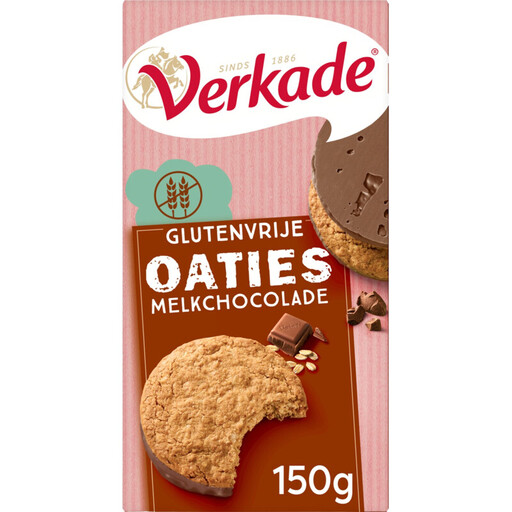 Image unavailable
Verkade Gv Oaties Milk Chocolate, 150 g
A good choice if you’re looking for gluten-free biscuits with milk chocolate to serve with coffee. Check the gluten-free label on the current packaging before serving them to a guest with coeliac disease.
For this variety, also check for milk, oats and soya, and note the warning that the product may contain nuts. Ask the guest concerned whether oats are suitable for them.
View on Joybuy
Frequently asked questions
What does ‘gluten-free’ mean on a packet of biscuits?
Under Commission Implementing Regulation (EU) No 828/2014, the label can be used if the final product contains no more than 20 mg/kg of gluten. If you’re buying for someone with coeliac disease, also check the current label for any other relevant allergens.
Are wheat-free biscuits automatically gluten-free?
No. ‘Wheat-free’ isn’t the same product label as ‘gluten-free’. If you’re buying for someone with coeliac disease, look for an explicit gluten-free label on the product you choose.
How should I serve gluten-free biscuits alongside ordinary biscuits?
Serve the gluten-free biscuits separately, in their own area of the table. Make sure crumbs, shared plates or dips don’t bring them into contact with ordinary biscuits, in line with the advice of the Dutch Coeliac Society.
What should I look out for with AH Glutenvrij Speculaasbrok?
If someone has an almond allergy, check the packaging and any relevant safety warning. On 9 September 2026, the Netherlands Food and Consumer Product Safety Authority reported that almond may not be listed on the label of AH Glutenvrij Speculaasbrok. Don’t serve the product in question to that guest until this has been clarified.


