If you’re looking for something like a kano for someone with coeliac disease, a filled biscuit clearly labelled gluten-free is the closest match. The standard roomboterkano described by Albert Heijn contains wheat flour, so it isn’t suitable. A gluten-free oat biscuit or cake offers a different texture, but not the same filling. Check the packaging for other allergens, whatever you choose, and keep the treat away from crumbs from ordinary biscuits when serving it, as advised by the Dutch Coeliac Society.
Who is this choice important for?
A coffee guest with coeliac disease
They want to be able to choose a treat that’s clearly labelled gluten-free. If ordinary biscuits are on the table too, how the treat is stored and served matters as well: the Dutch Coeliac Society warns that gluten can be transferred via crumbs and utensils.
A fan of filled biscuits
They’re mainly looking for the filling and shape of a kano. A gluten-free filled biscuit is a good match, but the label is still important for other allergens, including almonds.
A host looking to offer a choice
They want to serve something crisp or soft alongside a filled biscuit. For every option, check that it’s labelled gluten-free, look for other allergens and serve it separately.
What should you look for when choosing?
If you’re choosing for a guest with coeliac disease, start by checking that the product is labelled gluten-free and can be served without contact with ordinary biscuits. Then choose between a filled biscuit, an oat biscuit and a cake, depending on the filling and texture you’re after.
| What to consider |
What to check when buying |
Who is this most important for? |
| Gluten-free and served separately |
Check the current gluten-free labelling. Keep the biscuit separate from ordinary biscuits when serving, and use clean utensils. |
If I’m welcoming someone with coeliac disease, I want to make sure a suitable biscuit doesn’t come into contact with crumbs. For around 50% of consumers, choosing the right product and serving it safely go hand in hand. |
| A filling like a kano |
Look for a gluten-free filled biscuit and check the filling and allergens listed on that specific pack. |
For me, it’s the filled-biscuit texture that makes this treat feel familiar; a plain biscuit doesn’t meet the same need. Around 30% of consumers give this similarity top priority. |
| A choice of textures |
Compare a crisp oat biscuit with a soft cake. For oat products, check for an explicit gluten-free label and read the allergen information for each product. |
If I want to cater for different tastes at the coffee table, I’m more interested in variety than a kano-style filling. Around 20% of consumers put this need first. |
Common mistakes
-
Offering a standard kano as a gluten-free option
The roomboterkano described by Albert Heijn contains wheat flour; its label lists gluten-containing cereals and wheat as allergens. So the biscuit’s shape tells you nothing about whether it’s suitable for someone with coeliac disease.
Instead, choose a biscuit or cake clearly labelled gluten-free and let your guest check the packaging.
-
Putting a gluten-free biscuit on a shared plate
The Dutch Coeliac Society says that crumbs, hands and kitchen utensils can transfer gluten to gluten-free food.
Keep the gluten-free treat separate, use clean hands and utensils, and leave it in its packaging for as long as possible.
-
Assuming gluten-free means free from other allergens
As well as being labelled gluten-free, a filled biscuit may list almonds, eggs or other allergens. The gluten-free label doesn’t tell you whether these are present.
Ask which ingredients your guest needs to avoid and check the allergen information for the option you’ve chosen.
-
Choosing any oat biscuit
Under EU rules, oats intended for gluten-free use must be produced, prepared or processed in a way that prevents contamination with gluten-containing cereals. So an oat biscuit without a gluten-free label isn’t an obvious choice for someone with coeliac disease.
Check that the specific oat biscuit is labelled gluten-free.
Brands and product ranges to consider
These product ranges give you an idea of the types of treats that might suit; always check the packaging of the individual product.
AH Glutenvrij
AH Glutenvrij Gevulde koek is an option for anyone who mainly wants a kano-style filling with their coffee.
- Albert Heijn lists almond paste and confectioner’s custard among the fillings for this filled biscuit, and says it’s made in a completely gluten-free environment.
- The biscuit reviewed also lists other allergens, including almonds and wheat in the form of gluten-free wheat starch. Check the label if anything besides gluten needs to be avoided.
Jumbo Lekker Vrij
Jumbo offers both a filled biscuit described as gluten-free and mini cakes: two different options for the coffee table.
- The filled biscuit suits anyone looking for a treat with a filling, while the mini cakes offer a soft alternative. Jumbo says its mini cakes carry the Crossed Grain trademark.
- A cake doesn’t have the filling of a kano. Also check the allergens on the packaging you choose; the mini cakes described contain eggs and may contain nuts.
Verkade
Verkade Glutenvrije Oaties naturel is an oat biscuit for anyone who’d prefer a crisp biscuit to a filled one.
- The ingredients for the plain version listed by Albert Heijn include gluten-free oat flakes and gluten-free oat flour.
- An oat biscuit doesn’t have an almond paste filling. Don’t assume the ingredients of the plain version are the same for another Oaties variety.
Schär
Schär also offers gluten-free madeleines as another biscuit or cake option to enjoy with coffee.
- The product listing at Albert Heijn is a useful option for anyone who isn’t specifically looking for a filled biscuit.
- A madeleine isn’t a kano-style filled biscuit. Check the ingredients and allergens for each Schär product.
Oat biscuits to enjoy with coffee on Joybuy
This Oaties variety is a good fit if you’d like an oat biscuit rather than a filled kano. If you’re after an almond paste filling, this is a different type of product; for a guest with coeliac disease, always check the current gluten-free label and allergens on the packaging.
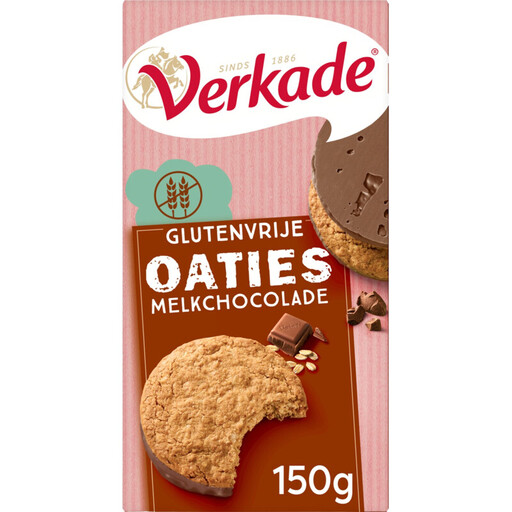 Image unavailable
Verkade Gv Oaties Milk Chocolate 150 g
An oat biscuit for anyone who’d like something different from a filled biscuit with their coffee. This is the Milk Chocolate variety in a 150 g pack; before offering it to a guest with coeliac disease, check the current packaging for the gluten-free label, oats and other allergens.
View on Joybuy
Frequently asked questions
Are ordinary kano biscuits gluten-free?
Not the roomboterkano biscuits described by Albert Heijn: they contain wheat flour and list gluten-containing cereals and wheat as allergens. For someone with coeliac disease, choose a treat that’s clearly labelled gluten-free.
Can wheat appear on a label even if the product is described as gluten-free?
Yes, for example when it contains gluten-free wheat starch. According to the Netherlands Food and Consumer Product Safety Authority, a product containing a gluten-containing cereal may be labelled ‘gluten-free’ if it meets the requirements of Commission Implementing Regulation (EU) No 828/2014. If you also have a wheat allergy, check the ingredients and allergens; the gluten-free label doesn’t answer that separate question.
Is gluten-free packaging enough to serve the biscuit safely?
No. You also need to prevent the biscuit from coming into contact with crumbs from ordinary biscuits while serving it. The Dutch Coeliac Society recommends using clean hands and utensils; keep the gluten-free treat separate and in its packaging for as long as possible.
What should I look for in gluten-free oat biscuits?
Check that the specific oat biscuit is clearly labelled gluten-free. For oats to be used in gluten-free products, they must be produced, prepared or processed in a way that prevents contamination with wheat, rye and barley. So check the current packaging rather than relying on the word ‘oat’ in the product name.
Is a gluten-free filled biscuit suitable for someone with a nut allergy too?
Not necessarily: a filled biscuit may contain almonds even if it’s gluten-free. Ask which allergens need to be avoided and check the ingredients and allergen information for the specific biscuit you plan to serve.


