If you’re choosing for someone with coeliac disease, first look for a biscuit that is explicitly labelled ‘gluten-free’ on the current packaging or carries the Crossed Grain symbol, as recommended by the Netherlands Nutrition Centre. Under Commission Implementing Regulation (EU) No 828/2014, the term ‘gluten-free’ may be used for products containing no more than 20 mg of gluten per kg. Then choose a flavour to go with the coffee or cake, check for any other allergens and avoid contact with crumbs from regular biscuits or cake.
Who is this choice relevant to?
Coffee drinkers with coeliac disease
A biscuit served with coffee should be clearly labelled gluten-free and kept separate from crumbs containing gluten. The Netherlands Nutrition Centre advises checking the packaging, while the Dutch Coeliac Society offers advice on preventing cross-contamination.
Fans of classic biscuits to enjoy with coffee
If you’re looking for the flavour of speculaas or a plain petit-beurre, you can compare these styles without assuming that a regular biscuit from the same brand is gluten-free.
Households needing to check for other allergens
As well as the gluten-free claim, you may need to check for milk, egg, soya, lupin, nuts or oats. Ingredients and warnings vary between biscuits and packaging.
What should you look for when choosing?
If you’re choosing for someone with coeliac disease, first check the gluten-free claim and how the biscuits will be served. Only then compare flavours to go with coffee or cake, and check for any other allergens.
| What to consider |
What to check when buying |
Who it matters most to |
| Gluten-free and served separately |
Look for ‘gluten-free’ or the Crossed Grain symbol on the current packaging. Keep the biscuits and serving equipment free from crumbs containing gluten. |
When I’m making coffee for someone with coeliac disease, I want to be able to serve a clearly labelled gluten-free biscuit without it coming into contact with regular cake. For around 42% of consumers, this reassurance comes first when choosing. |
| Flavour and texture |
Compare, for example, spiced speculaas, a plain petit-beurre and an oat biscuit; check the gluten-free claim again for each style. |
I might want a mild biscuit to go with cake, while with coffee on its own I might fancy speculaas spices or oats. For around 33% of consumers, flavour is the deciding factor. |
| Other allergens |
Check the ingredients and the ‘contains’ and ‘may contain’ statements for your chosen variety, even if the front of the pack says ‘gluten-free’. |
If other ingredients also need to be avoided, I want to know whether everyone at the table can eat the same biscuit. For around 25% of consumers, these additional checks are the top priority. |
Common mistakes
-
Assuming a familiar biscuit for coffee is gluten-free
According to Albert Heijn’s product information, regular Lotus Biscoff Speculoos contains wheat flour and cereals containing gluten. A familiar flavour or brand name doesn’t make this product a suitable gluten-free choice.
Check the gluten-free claim and ingredients for the exact variety you want to buy.
-
Assuming gluten-free also means free from other allergens
According to Albert Heijn’s product information, AH Glutenvrij Speculaas contains egg, while Schär Butterkeks contains milk and egg. Other ingredients and warnings vary by product.
Read the allergen information on the packaging you’ve chosen, especially if you’re buying for several people.
-
Serving gluten-free biscuits alongside regular cake without keeping them separate
Crumbs and shared serving equipment can lead to cross-contamination. The Dutch Coeliac Society recommends, among other things, using new, unopened packs.
Put gluten-free biscuits on a separate, clean plate and use clean serving equipment.
-
Treating every oat biscuit as gluten-free
Oat products can come into contact with cereals containing gluten. For people with coeliac disease, the Netherlands Nutrition Centre advises checking the gluten-free claim for the specific product.
Check the current packaging of every oat biscuit before serving it.
Brands and product ranges to consider
AH Glutenvrij
Albert Heijn’s gluten-free range includes speculaas and other biscuits. Check the label on the specific variety you choose.
- Albert Heijn describes AH Glutenvrij Speculaas as crunchy and spiced, and says it is made in a completely gluten-free environment.
- The speculaas described contains egg and may contain sesame and nuts.
Schär
The Schär Butterkeks petit-beurre reviewed here is a plain-style biscuit for anyone who doesn’t want a strongly spiced flavour alongside cake.
- According to Albert Heijn’s product information, Butterkeks is gluten- and wheat-free and individually wrapped.
- This variety contains milk and egg, and may contain soya and lupin.
Nairn's
Nairn's Oaties with chocolate chips is an oat biscuit for anyone looking for a different flavour with their coffee from speculaas or petit-beurre.
- The ingredients for this variety listed by Albert Heijn include 60% gluten-free wholegrain oats.
- The variety reviewed contains milk and soya; also check the gluten-free claim on the current packaging.
Verkade
Verkade Glutenvrije Oaties naturel is an oat biscuit without chocolate in the product range reviewed here.
- Albert Heijn’s product information lists gluten-free rolled oats and gluten-free oat flour among the ingredients.
- Check both the gluten-free claim and any other relevant allergens on the specific packaging.
Lotus Biscoff
Regular Lotus Biscoff Speculoos is a familiar biscuit to enjoy with coffee, but it isn’t a gluten-free option in this selection.
- Albert Heijn’s product information lists wheat flour, wheat and cereals containing gluten for the regular variety reviewed here.
Biscuits for a coffee break on Joybuy
This milk chocolate oat biscuit is one option to consider with your coffee. If you’re buying for someone with coeliac disease, first check the gluten-free claim and allergens on the current packaging.
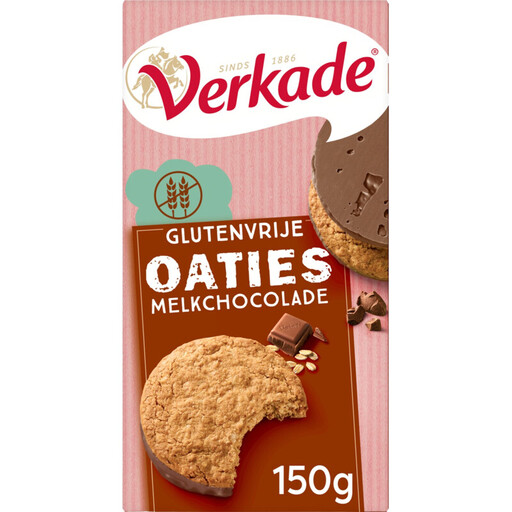 Image unavailable
Verkade Gv Oaties Milk Chocolate, 150 g
For anyone looking for an oat biscuit with milk chocolate to enjoy with their coffee. The product name states that the pack contains 150 g; if you have coeliac disease, check the gluten-free claim and the current allergen information before buying.
View on Joybuy
Frequently asked questions
When can a biscuit be labelled ‘gluten-free’?
In the EU, under Commission Implementing Regulation (EU) No 828/2014, the term ‘gluten-free’ may be used for products containing no more than 20 mg of gluten per kg. If you’re choosing for someone with coeliac disease, check the claim on the current packaging of the specific biscuit.
Is regular Lotus Biscoff Speculoos gluten-free?
No: the ingredients for regular Lotus Biscoff Speculoos listed by Albert Heijn include wheat flour, and the allergen information lists cereals containing gluten. Don’t rely on the brand name if you’re looking for a gluten-free biscuit to enjoy with coffee.
Can I serve oat biscuits to someone with coeliac disease?
Only choose a specific oat biscuit with a gluten-free claim on the packaging. According to the Netherlands Nutrition Centre, oat products may be unsuitable because of contact with cereals containing gluten. Check the product you’ve chosen rather than relying on oats as an ingredient.
How should I serve gluten-free biscuits if there’s regular cake too?
Keep the gluten-free biscuits separate from the cake and use a clean plate and clean serving equipment. The Dutch Coeliac Society suggests using new, unopened packs as a practical way to prevent contact with gluten.


