
Walkers with coeliac disease
You don’t want to rely on a familiar brand name or a biscuit that looks suitable. Check the gluten-free statement on the current packaging first, and keep your snack separate from other food.


If you have coeliac disease, start by choosing a biscuit with a clear gluten-free statement on the current packaging, and keep it separate from gluten-containing food when you’re out and about. A small pack is handy for a short walk; you can also take a portion from a larger pack, as long as you pack it somewhere dry and protected. Also check for other allergens and the nutritional information for the portion you’re actually taking with you.
You don’t want to rely on a familiar brand name or a biscuit that looks suitable. Check the gluten-free statement on the current packaging first, and keep your snack separate from other food.
You have limited room in your coat pocket or daypack and don’t want to carry an opened large pack. Compare the contents of small packs with how much you want to eat on the go.
Once you’ve checked the gluten-free statement, you might want to choose between oat biscuits and other varieties. Ingredients, other allergens and nutritional information vary between products.
When choosing biscuits for a walk with coeliac disease in mind, start by checking the gluten-free statement. Packaging, specific ingredients and availability then help you decide which biscuits are practical to take with you.
| What to look for | What to check when buying | Who it matters to |
|---|---|---|
| Gluten-free statement | Check the current packaging for ‘gluten-free’ or the Crossed Grain symbol. Keep the biscuits separate from gluten-containing crumbs when you’re out and about. | With coeliac disease, I don’t want to have to guess whether my snack is suitable. For around 33% of consumers, confidence in the gluten-free statement comes first. |
| Packaging and portion size | Compare the net weight and check whether you can take an opened pack with you while keeping it dry and protected. | For a short walk, I want to take a measured portion without putting a large pack in my rucksack. Around 27% of consumers give this convenience top priority. |
| Ingredients and nutritional information | Read the allergen information and compare nutritional values per 100 g and per portion. For oat biscuits, check the gluten-free statement on the specific product. | When choosing between oat, chocolate and other biscuits, I want to know which ingredients and other allergens they contain. For around 20% of consumers, comparing products is most important. |
| Range | Check which variety you can buy and whether the pack suits the walk you have planned. | I want to be able to choose a suitable biscuit in advance rather than relying on one shop when I’m out and about. Around 20% of consumers prioritise availability and choice. |
A gluten-free biscuit may still contain other allergens. For AH Glutenvrij Koekjes amandel, Albert Heijn lists egg, soya, almonds and wheat among the allergens.
As well as checking the gluten-free statement, read the full ingredients and allergen information on the exact pack you’re buying.
A biscuit brand name alone tells you nothing about whether a particular flavour or pack size is gluten-free.
Check each variety separately on the current packaging before taking it with you as a walking snack.
Supermarkets stock different gluten-free biscuits and pack sizes. A variety you’ve seen before may not be available when you need it for a walk.
Check current availability before you set off and, if necessary, take a snack you’ve already checked.
Under this label, Albert Heijn stocks gluten-free biscuits, including Koekjes amandel in a 45 g pack.
Jumbo’s range includes various gluten-free biscuits, including speculaas.
Schär’s Dutch range includes Butterkeks, Digestive, Choco Chip Cookies and Maxi Break.
Verkade describes Oaties as gluten-free oat biscuits available in various varieties.
ALDI stocks a 360 g pack of six gluten-free coconut rings from Heerlijck Banket.
Lotus Biscoff is a well-known biscuit brand, but the name alone doesn’t mean that a particular variety is gluten-free.
This product is a good choice if you want to take oat biscuits with milk chocolate and portion them out from a larger pack at home. Check the gluten-free statement and allergens on the current packaging when you buy them.
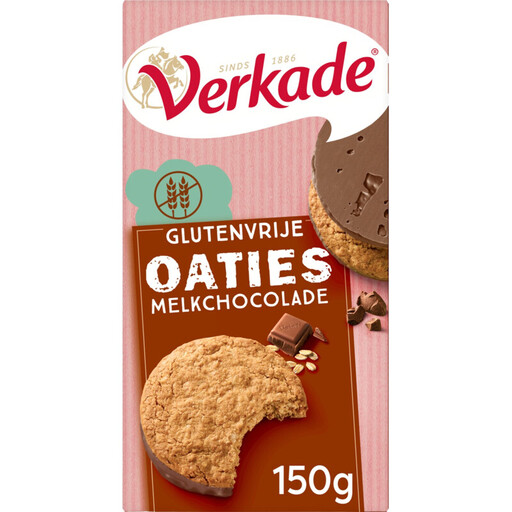 Image unavailable
For anyone who wants to take oat biscuits with milk chocolate and measure out a portion for a walk.
The pack contains 150 g. Keep the portion you take with you dry and separate from gluten-containing food. When checking the allergen information, also look out for milk, oats and soya.
No, the statement doesn’t literally mean zero gluten. Under Commission Implementing Regulation (EU) No 828/2014, a product sold to the final consumer may be labelled ‘gluten-free’ if it contains no more than 20 mg/kg of gluten. Check the statement on the current packaging.
Don’t assume so if you have coeliac disease: the absence of wheat flour isn’t the same as a gluten-free statement. Choose a biscuit specifically labelled gluten-free and avoid contact with gluten-containing crumbs when you’re out and about, as advised by the Voedingscentrum.
AH Glutenvrij Koekjes amandel lists gluten-free wheat starch and wheat in its allergen information. A gluten-free statement doesn’t mean the product is free from wheat as an allergen; if you have a wheat allergy, check the specific allergen information separately.
No, the word ‘oat’ alone isn’t a gluten-free statement. For oat biscuits, check the specific packaging for ‘gluten-free’ or the Crossed Grain symbol, and read the other ingredients and allergens too.
A small pack is handy if you want to take one portion without repacking it first. You can take a portion from a larger pack, but pack it somewhere dry, protect the biscuits from breaking and keep them separate from gluten-containing food.