
Sportspeople with coeliac disease
You want to take a biscuit with you without relying on a recipe that merely appears to be wheat-free. An explicit gluten-free label and the information on the current packaging are the first things to check.


If you have coeliac disease, choose a biscuit for your sports bag that is explicitly labelled ‘gluten-free’; a biscuit that merely appears to be wheat-free isn’t an equivalent choice. Then check the current packaging for warnings, other allergens and a size that’s easy to carry. A biscuit made with gluten-free oats is only suitable if oats are suitable for you too.
You want to take a biscuit with you without relying on a recipe that merely appears to be wheat-free. An explicit gluten-free label and the information on the current packaging are the first things to check.
You want a sealed pack that fits in your sports bag. Check the pack size and contents: for example, Albert Heijn lists its AH Gluten-free Almond Biscuits as 45 g.
As well as gluten, you need to check for something else, such as milk, soya, nuts or oats. According to the Dutch Coeliac Society, a small number of people with coeliac disease also react to pure oats.
When choosing biscuits for your sports bag, the gluten-free label comes before convenience: only then should you decide which pack and ingredients suit you.
| What to consider | What to check when buying | Most important for |
|---|---|---|
| Gluten-free label | Look for ‘gluten-free’ on the packaging and read any warnings about cereals containing gluten. | If I have coeliac disease, I don’t want to have to judge a biscuit by its appearance or name. For around 50% of these consumers, clear information about gluten comes first. |
| Size and packaging | Compare the pack sizes and choose a sealed, undamaged pack that you can take with you. | For a snack in my sports bag, I want a pack that takes up little space and stays sealed until I eat it. Around 30% of these consumers put easy portability first. |
| Oats and other allergens | Read the full ingredients and allergen information; if the product contains oats, check for a gluten-free label too. | If I also need to avoid oats or another allergen, I can’t stop at the gluten-free claim. Around 20% of these consumers put these additional checks first. |
Having oats in the product name doesn’t tell you whether the biscuit is gluten-free. With coeliac disease, possible cross-contamination matters too.
Check whether the product is explicitly labelled gluten-free, then read the ingredients and warnings.
According to the Dutch Coeliac Society, this kind of warning indicates a risk of cross-contamination. A recipe that looks gluten-free doesn’t cancel out the warning.
If you have coeliac disease, choose an alternative without this warning and check the packaging again before eating the biscuit.
The AH, Jumbo and Verkade biscuits mentioned here have different ingredients. A gluten-free label doesn’t mean a product is also free from milk, soya, nuts, eggs or oats.
As well as checking for gluten, always check the ingredients and allergens that matter to you.
Albert Heijn lists AH Gluten-free Almond Biscuits in a 45 g pack.
Jumbo lists gluten-free digestives and speculaas biscuits among the products in this range; they are different products with their own ingredients.
Verkade Gv Oaties Milk Chocolate is an oat biscuit covered in milk chocolate, listed by Joybuy in a 150 g pack.
This chocolate oat biscuit is worth considering if you’re looking for a biscuit with a gluten-free label for your sports bag and oats are suitable for you. Check the current packaging before buying, especially if you also need to avoid other allergens.
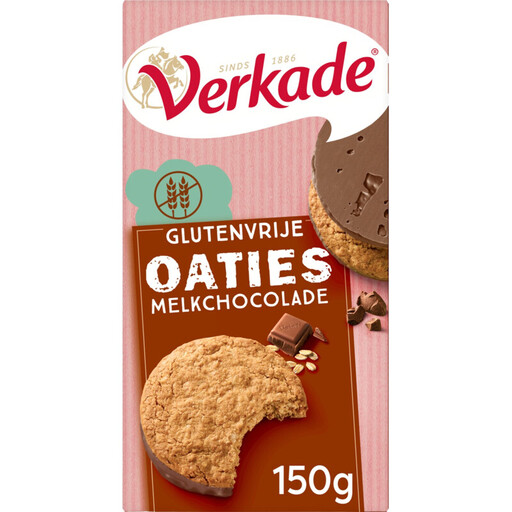 No image available
A biscuit to consider if you tolerate gluten-free oats and want a sealed pack for your sports bag.
The product description lists gluten-free oats. This variety contains milk, oats and soya, and may contain nuts; check the current allergen information on the packaging.
Store in a cool, dry place and don’t use damaged packaging.
No. A product being free from wheat doesn’t by itself mean it’s gluten-free. The European Commission also lists rye and barley as cereals containing gluten, so choose a biscuit that is explicitly labelled gluten-free and check the packaging.
If you have coeliac disease, a biscuit with this warning isn’t a suitable everyday choice. According to the Dutch Coeliac Society, the warning indicates a risk of cross-contamination; look for an alternative without it.
No. Gluten-free oats aren’t suitable for everyone. The Dutch Coeliac Society says that a small number of people with coeliac disease react to pure oats. If you’re unsure about your own tolerance, speak to your doctor or a specialist dietitian.
Take a sealed, undamaged pack with you and follow the storage instructions on the label. Verkade Gv Oaties Milk Chocolate should be stored in a cool, dry place. Check the current packaging again for the ingredients and allergen information too.