Who are these biscuits relevant for?

Anyone who needs to eat strictly gluten-free

If you have coeliac disease, a clear gluten-free statement is more important than the flavour or look of the packaging. The Netherlands Nutrition Centre recommends checking the label whenever you buy gluten-free products. Also check the ingredients, allergens and warnings on the pack.

Anyone who wants to compare nutritional values

For a biscuit with your morning coffee, you can compare fibre, sugars and saturated fat per 100 g. The Netherlands Nutrition Centre points out that snacks can contain a lot of sugar or saturated fat; a gluten-free statement won’t tell you anything about that.

Anyone who wants to take a portion with them

If you’re taking biscuits to work or on the go, the pack size and stated number of portions are useful details. Also check the weight of each portion on the label, so you can see the nutritional information for the amount you’ll eat.

What should you look for when choosing?

If you follow a strictly gluten-free diet, first check the statement and allergen information on the pack. Then compare nutritional values and portions, and consider which products are practical for your shopping.

What to considerWhat to checkMost relevant for
Gluten-free statement Read the ‘gluten-free’ statement, ingredients, allergens and any warnings on the current packaging. If I need to eat strictly gluten-free because of coeliac disease, I don’t want to rely on a brand name alone or assume a product is gluten-free because it looks wheat-free. For around 36% of consumers, checking the label comes first.
Nutritional value Compare fibre, sugars and saturated fat per 100 g; check how much you actually eat per portion. When choosing a biscuit to enjoy regularly in the morning, I want to know how the nutritional values of different options compare. This is the first consideration for around 29% of consumers.
Portion and packaging Check the net weight, number of portions and whether the biscuits are individually wrapped. If I’m taking something to work or out and about, I want to know in advance how many biscuits to take. Around 21% of consumers say portion convenience is the deciding factor.
Product range Check which specific product the retailer offers, and read its own ingredients and allergen information. If I plan my shopping around one retailer, I want to be able to choose from products available there at the time. For around 14% of consumers, this practical choice matters most.

Common mistakes

  • Assuming ‘gluten-free’ means ‘suitable for a wheat allergy’

    A gluten-free product may still contain an ingredient derived from wheat. Albert Heijn lists gluten-free wheat starch in AH Glutenvrij Koekjes amandel and names wheat in the allergen information.

    If you have a wheat allergy, check the full ingredients and allergen list; don’t rely on the gluten-free statement alone.

  • Assuming gluten-free also means low in sugars

    A gluten-free statement tells you nothing about the other nutritional values. For Consenza Rozijn-Cranberry Koekjes, Jumbo lists 23 g of sugars and 17 g of saturated fat per 100 g.

    Compare biscuits on the same basis, such as per 100 g, and then consider how much you plan to eat.

  • Relying on a product range you saw in a shop previously

    Product ranges can change, so a particular biscuit may not always be available at your usual shop.

    Check the current range before making a special trip for a particular product, and think about which alternative biscuit would meet your needs.

Relevant brands to consider

Schär

Schär offers a range of gluten-free biscuits, including Digestive Landtaler and Choco Chip Cookies.

  • Jumbo lists 7,4 g of fibre per 100 g for Digestive Landtaler.
  • Check the allergens for each variety: Digestive Landtaler may contain traces of lupin and egg.

Consenza

The range includes gluten-free Rozijn-Cranberry Koekjes with oats.

  • Jumbo lists 6,4 g of fibre per 100 g for this variety.
  • The same variety contains 23 g of sugars and 17 g of saturated fat per 100 g; check the allergen information too.

AH Glutenvrij

Albert Heijn’s own-brand range includes several types of gluten-free biscuits, including almond biscuits.

  • Albert Heijn lists the almond biscuits in a 45 g pack.
  • For this variety, the product information lists almond, egg, soya and wheat. So check the allergens separately from the gluten-free statement.

Jumbo Lekker Vrij

Jumbo’s own-brand range includes a variety of gluten-free biscuits and snacks, including speculaas and digestives.

  • The range of product types gives you room to choose based on flavour and packaging.
  • Ingredients, allergens and nutritional values vary by product, so always read the information for the variety you choose.

ALDI / Heerlijck Banket

ALDI lists gluten-free coconut macaroons from Heerlijck Banket in a pack of six.

  • A clear option if you’re specifically looking for coconut macaroons.
  • Check the current in-store range, and read the product information for ingredients, allergens and nutritional values.

Biscuits at Joybuy

This biscuit could be a good choice if you’re looking for something to enjoy mid-morning. If you follow a strictly gluten-free diet, check the statement and allergens on the current packaging before choosing.
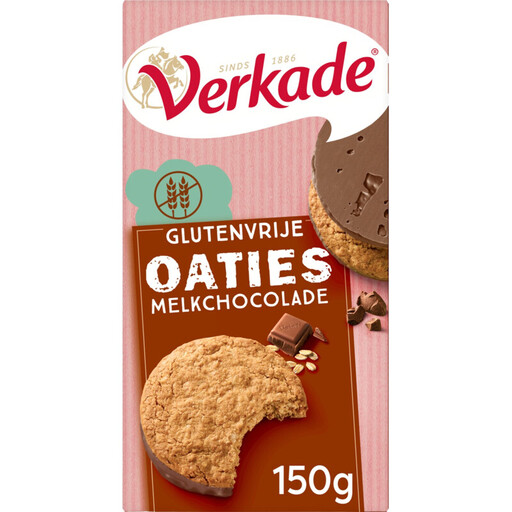
Verkade Gv Oaties Milk Chocolate, 150 g pack

Verkade Gv Oaties Milk Chocolate 150 g

A biscuit for a mid-morning snack. If you need to eat strictly gluten-free, check the statement on the pack and read the latest allergen information, particularly if milk, soya or nuts are a concern for you.

View at Joybuy

Frequently asked questions

What does ‘gluten-free’ mean on a biscuit?

Under Commission Implementing Regulation (EU) No 828/2014, the term ‘gluten-free’ may be used if the gluten content of the finished product is no more than 20 mg/kg. Also check the ingredients and allergens if you need to avoid a specific ingredient.

If I have coeliac disease, should I read the back of the pack too?

Yes. The Netherlands Nutrition Centre advises checking the label on all gluten-free products. Check the current ingredients, allergens and any warnings every time you buy, even if you already know the product.

Are all oat biscuits gluten-free?

No. If you follow a strictly gluten-free diet, only choose an oat biscuit that is labelled ‘gluten-free’, and check the other allergens too. Albert Heijn also states that Schär Avena oat biscuit is not suitable for anyone with an allergy to avenin protein.

Is Lotus Biscoff Original gluten-free?

No. Lotus Bakeries Nederland lists wheat flour as an ingredient and gluten as a present allergen in Lotus Biscoff. So don’t choose this biscuit if you need to eat gluten-free.

Does ‘gluten-free’ tell you anything about sugars or saturated fat?

No. The gluten-free statement doesn’t refer to these nutritional values. Compare the nutritional information per 100 g and, if a portion size is given, also consider how much of the biscuit you plan to eat.
