
Home bakers baking for someone with coeliac disease
A gluten-free base alone isn’t enough if crumbs or flour from other bakes are left on the worktop. The Dutch Coeliac Society also advises preventing cross-contamination during preparation.


If you’re baking for someone with coeliac disease, first choose a base that is explicitly labelled gluten-free and check the current packaging. A mix designed for biscuits and cakes means fewer choices when preparing the dough, while gluten-free self-raising flour gives you more freedom to adapt your own recipe. In a shared kitchen, you’ll also need to prevent gluten from getting into the dough via ingredients, crumbs or utensils.
A gluten-free base alone isn’t enough if crumbs or flour from other bakes are left on the worktop. The Dutch Coeliac Society also advises preventing cross-contamination during preparation.
You’re looking for gluten-free flour or a baking mix that the product description says is suitable for biscuits, but you want to choose the recipe and additional ingredients yourself.
You don’t want to combine different types of flour yourself. A mix specifically designed for biscuits and cakes gives you a clearer starting point for your chosen bake.
For coeliac disease, first check the gluten-free label and the packaging. Then choose between a mix for biscuits and cakes or a more versatile base for your own recipe.
| What to consider | What to check when buying | Who it matters to |
|---|---|---|
| Gluten-free preparation | Check the gluten-free label and the current packaging. Use ingredients from packs that haven’t come into contact with gluten. | If I’m baking for someone with coeliac disease, I want to prevent gluten from getting into the dough via ingredients or the worktop; around 50% of consumers put this check first. |
| Ease of baking | Check whether the mix is specifically designed for biscuits or cakes, and which ingredients you still need to add. | If you want to bake biscuits without creating your own flour blend, you’ll want a base designed for that specific purpose. Around 30% of consumers give this convenience top priority. |
| Flexibility to use your own recipe | Check the suggested uses, ingredients and pack size before adapting the recipe. | If I’m making biscuits from my own recipe, I want to choose the ingredients I add; around 20% of consumers value this freedom most. |
Lotus Biscoff Speculoos, as described by Albert Heijn, contains wheat flour. A label such as vegan doesn’t mean a biscuit is gluten-free.
Don’t use regular speculoos as an ingredient in biscuits you’re baking for someone with coeliac disease. If you choose an alternative, check the gluten-free label and the ingredients list.
According to the Dutch Coeliac Society, crumbs and residue on hands, worktops or utensils can transfer gluten to gluten-free food.
Clean your hands, worktop and utensils, and keep ingredients containing gluten separate from the biscuit dough.
A general baking products page doesn’t confirm that a specific mix is gluten-free or designed for biscuits.
Check the individual product and, before using it, check the intended use and the label on the packaging.
AH Glutenvrij Self-Raising Baking Mix is a base for a range of bakes.
According to its product description, Schär Mix Kuchen und Kekse is designed for cakes and biscuits.
Jumbo lists gluten-free baking mixes, including a bread mix from its own range.
Regular speculoos can be a flavour reference, but the Lotus Biscoff Speculoos reviewed here isn’t a gluten-free ingredient.
Lidl has a range page for additional gluten-free products.
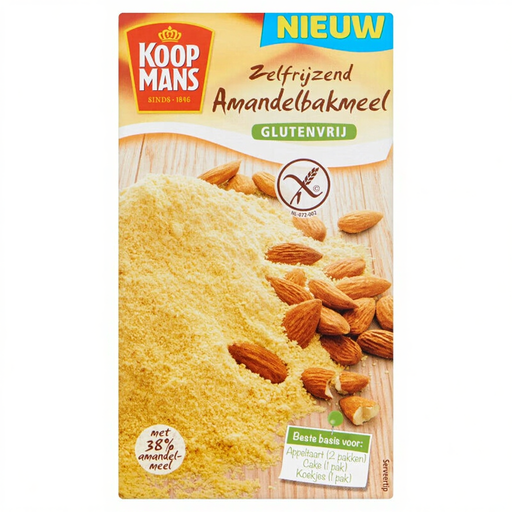
This self-raising almond flour could be a suitable base if you want to adapt your own biscuit recipe. If you’re baking for someone with coeliac disease, check the gluten-free label on the packaging before use.
 No image available
If you want to adapt your own biscuit recipe, this self-raising almond flour could be a suitable base; check whether the current packaging explicitly labels the product gluten-free.
Also read the allergen information for almonds and lupin, and keep your worktop and utensils separate from ingredients containing gluten.
Check that the packaging explicitly labels the mix gluten-free, and read the current ingredients and allergen information. Also check whether the mix is designed for biscuits; another gluten-free baking mix won’t necessarily be suitable for the same purpose.
No. Check the gluten-free label and the full ingredients and allergen information, not just whether wheat is listed. When preparing the food, also take care to avoid contact with products containing gluten.
Start with clean hands, a clean worktop and clean utensils, and keep the ingredients separate. The Dutch Coeliac Society advises using new, unopened packs to help prevent cross-contamination.
Not necessarily: gluten-free self-raising flour may work if you want to adapt your own recipe. If you want a base that specifically lists biscuits as a suggested use, choose a mix described for that purpose. With either option, check the label and any additional ingredients required.