
Barbecue host catering for a guest with coeliac disease
You need a gluten-free bread option, and a way to prepare and serve it without contact with regular bread or crumbs. The Voedingscentrum lists rye as a gluten-containing grain.


Traditional rye bread isn’t suitable for a guest with coeliac disease: rye contains gluten, according to the Voedingscentrum (Netherlands Nutrition Centre). Choose a bread alternative clearly labelled gluten-free, check the packaging, and prepare and serve it separately from bread containing gluten. Gluten-free pitta or flatbread works well with fillings; for toppings and dips, consider gluten-free dark or multiseed bread.
You need a gluten-free bread option, and a way to prepare and serve it without contact with regular bread or crumbs. The Voedingscentrum lists rye as a gluten-containing grain.
You’re looking for something to serve with fish, cheese or spreads, but you know that dark gluten-free bread is an alternative to rye bread, not gluten-free rye bread. Albert Heijn and PLUS, for example, list gluten-free dark and multiseed breads.
You want to be able to fill or share pitta, flatbread or rolls. Jumbo and Albert Heijn list gluten-free options in these styles; check the packaging of your chosen product when you buy it.
If the bread is for someone with coeliac disease, first check which product is gluten-free and how you’ll keep it separate. Then choose a type of bread that suits what you’re serving at the barbecue.
| What to consider | What to check when buying | Who is this most important for? |
|---|---|---|
| Choose gluten-free and keep it separate | Look for a clear gluten-free label, read the ingredients and allergen information, and plan to use clean, separate utensils. | When I’m cooking for someone with coeliac disease, I want to make sure rye or crumbs from regular bread don’t end up in their food. For around 50% of consumers, strict gluten-free preparation comes first. |
| Type of bread | Choose pitta or flatbread for fillings, or sliced bread for toppings and dips; also check the pack size and preparation instructions. | I want to serve hot fillings in bread, but prefer to put out slices for spreads. The right type of bread is the first thing around 30% of consumers consider. |
| Range and labelling | Check the current packaging for ingredients and allergens, and make sure the product you want is available. | When planning my shopping, I want to know which alternative I can get and what the chosen bread contains. Around 20% of consumers prioritise this combination of product choice and information. |
The colour of bread and the presence of seeds tell you nothing about whether it contains gluten. According to the Voedingscentrum, rye contains gluten, so traditional rye bread isn’t suitable for a guest with coeliac disease.
Choose an alternative clearly labelled gluten-free and check the ingredients and allergen information on the packaging.
Bread can come into contact with crumbs or used utensils during preparation or serving. So buying the right product isn’t enough on its own.
Use a clean, separate chopping board, pair of tongs and bread basket for the gluten-free bread and its fillings.
Ingredients and allergen information can change. PLUS advises that the packaging is the source to check for the latest product information.
Before serving, check the packaging of the product you’ve actually bought.
The Voedingscentrum says that bread made with iodised baker’s salt can be an important source of iodine, but bakers aren’t required to use baker’s salt.
So don’t assume that a gluten-free bread alternative contains iodised baker’s salt.
The ranges mentioned give you an idea of the types of bread to look for. If you’re catering for someone with coeliac disease, always check the current product label.
Albert Heijn’s gluten-free range includes multiseed bread and Schär flatbreads.
Jumbo lists gluten-free bread and specific gluten-free pittas in its online range.
PLUS lists gluten-free brown, white and multiseed bread, among other options.
ALDI lists gluten-free options on its page for bread and bake-at-home rolls.
Lidl has a page featuring its gluten-free range.
This Joybuy option is suitable if you want to bake gluten-free bread yourself for the barbecue. It’s a mix, not ready-made bread or a confirmed option for cooking directly on the barbecue, so check the instructions on the packaging.
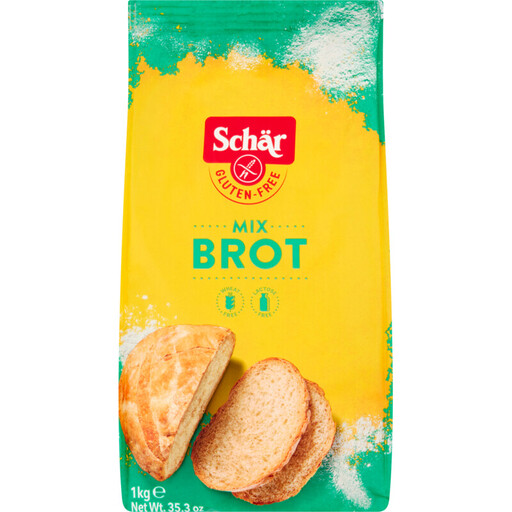 Image unavailable
For anyone who wants to bake their own bread and can prepare it separately from products containing gluten.
1 kg gluten-free bread mix; not ready-made bread. Check the current gluten-free label, allergen information and preparation instructions on the packaging.
No. Traditional rye bread contains rye, a gluten-containing grain according to the Voedingscentrum. Look for an alternative clearly labelled gluten-free for your guest; the colour and texture of bread don’t prove that it’s gluten-free.
Gluten-free pitta or flatbread is a handy way to serve fillings inside or on top; for toppings and dips, you could choose sliced bread. Jumbo lists gluten-free pittas and Albert Heijn gluten-free flatbreads, but check the label of the variety you choose when buying it.
Prepare and serve the bread using clean, separate utensils, and keep it away from regular bread and crumbs. For example, use a separate chopping board, pair of tongs and bread basket, and check the ingredients in the fillings too.
No, you can’t assume that: the Voedingscentrum says that bakers aren’t required to use baker’s salt. Check the label of the specific bread if you want to know what it contains.