For a child with coeliac disease, choose bread or a roll whose current packaging confirms it is suitable for a strict gluten-free diet. Then decide what portion you can prepare at home and pack separately, and agree with the school or after-school club on how to avoid contact with ordinary bread and crumbs. If you regularly replace bread, also consider the nutritional information and your child’s overall diet.
Who is this choice important for?
Parents of children with coeliac disease
They’re looking for a snack that suits a strict gluten-free diet and stays separate from ordinary bread while being packed, stored and handed out. The Dutch Coeliac Society highlights the importance of following this diet at school and in childcare settings.
Families packing food for when their child is out
A separately packed portion can be useful when a child won’t be eating at home after school. Check whether each product needs to be prepared and follow the storage instructions on the packaging.
Families replacing ordinary bread
As well as checking that it’s gluten-free, they’ll want to consider the fibre per 100 g or per portion, and how the bread fits into the overall diet. The Netherlands Nutrition Centre also notes that bread is a source of iodine in the Netherlands.
What should you look for?
Start by checking that the product is suitable for a gluten-free diet and can be kept separate from other food. Then compare portion size, preparation and nutritional information.
| What to consider |
What to check when buying |
Who is this most important for? |
| Gluten-free and kept separate |
Read the current packaging and allergen information. Agree with the school or after-school club on how the snack will be stored and handed out separately. |
If my child has coeliac disease, I want to prevent their bread coming into contact with ordinary bread or crumbs while it’s being packed or handed out. This is the top concern for around 36% of consumers. |
| Portion and preparation |
Check the portion size, whether the product is ready to eat and what preparation and storage instructions apply. |
If the snack needs to go to school or an after-school club, I’d prefer a portion I can prepare at home and pack separately. This is the main need for around 29% of consumers. |
| Fibre and iodine |
Compare the fibre content for the same quantity, for example per 100 g. Check the ingredients if the type of salt used is relevant to your choice. |
If I regularly replace ordinary bread, I want to know how the alternative fits into the overall diet. Around 21% of consumers give this consideration the highest priority. |
| Buying again |
Check whether your preferred type of bread is available and whether there’s another suitable option you could use. |
If I often pack a bread-based snack, I want to be able to buy the same option again without needing a different preparation method each time. This matters most to around 14% of consumers. |
Common mistakes
-
Relying on the online product name alone
Ingredients and allergen information can change. For a child with coeliac disease, the details on a product page you viewed previously are no substitute for checking the packaging of the product you’re packing.
Before use, read the current packaging, including the allergen information and any warnings.
-
Choosing gluten-free but forgetting about crumbs
The Dutch Coeliac Society says that children with coeliac disease need to follow a strict gluten-free diet. This means you’ll also need to take care when packing and handing out food away from home.
Use a clean lunchbox, keep the snack separate and agree with the school or after-school club on storage, handing out food and sharing meals.
-
Assuming brown or seeded bread is gluten-free
The colour and type of bread don’t tell you whether it’s suitable for a strict gluten-free diet. On their own, they also don’t give you a complete picture of its nutritional value.
First check that it’s labelled gluten-free, then compare the nutritional information for the exact products you’re considering.
Brands to consider
Schär
Schär’s range includes Meesterbakker bread and individually wrapped mini baguettes, as listed by Albert Heijn and PLUS.
- The different bread formats make it easy to compare a large loaf with a smaller portion.
- Check the current packaging, preparation and storage instructions for your chosen product, as they can vary.
Consenza
Jumbo lists Consenza brown bread, among other products, as a frozen option.
- Frozen bread gives you another way to prepare portions at home, compared with a roll that’s ready to eat.
- Before packing a portion, check the defrosting and storage instructions, as well as the nutritional information on the exact product packaging.
Jumbo Lekker Vrij
Jumbo lists 500 g loaves of white and brown gluten-free bread in its Lekker Vrij van Gluten range.
- The two bread varieties offer a choice of white or brown bread.
- The colour alone doesn’t tell you enough about the fibre content or whether an individual portion is suitable, so check the packaging.
PLUS
PLUS lists its own gluten-free white bread alongside gluten-free products from other brands.
- At PLUS, you can compare the bread options listed by packaging and how they’re used.
- When buying, check the specific product and the information on its current packaging.
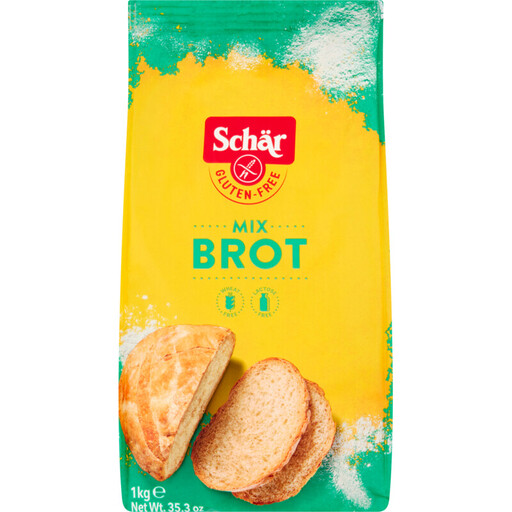
Joybuy product for preparing at home
This bread mix is a good fit if you want to bake gluten-free bread at home before packing a portion for after school. It isn’t a ready-to-eat roll that you can pack as a snack straight away.
 No image available
Schär Bread Mix-Mix B Gluten Free, 1 kg
For anyone who wants to bake bread at home and pack a portion afterwards; this mix isn’t ready to eat as a snack.
Pack size: 1 kg. Check the current ingredients and allergen information, and work out how to pack the baked bread separately from ordinary bread.
View at Joybuy
Frequently asked questions
Can I pack ordinary bread for a child with coeliac disease?
Ordinary bread made with gluten-containing grains isn’t suitable for the strict gluten-free diet recommended for coeliac disease by the Dutch Coeliac Society and the Netherlands Nutrition Centre. Choose a suitable gluten-free product and check the current packaging.
Do I need to keep reading the label on packaged gluten-free bread?
Yes. Read the label on the specific pack you’re using. The Netherlands Food and Consumer Product Safety Authority says that allergens must be clearly shown on the label. Also check the ingredients and any warnings, as product information can change.
How can I pack a gluten-free bread snack for school or an after-school club?
Pack the snack separately and agree with the school or after-school club on how it will be stored and handed out. Also discuss how to prevent contact with ordinary bread, crumbs and shared food. The Dutch Coeliac Society stresses that children with coeliac disease need to follow a strict gluten-free diet.
Why should I consider iodine when replacing ordinary bread?
According to the Netherlands Nutrition Centre, bread is an important source of iodine in the Netherlands, so it’s worth considering how a regular replacement fits into the overall diet. Don’t rely on the bread’s colour or the gluten-free label alone; check the ingredients and discuss individual dietary questions with a specialist dietitian.


